
Quick answer: You can become pregnant again as early as 3 weeks after giving birth, before your first period and even while breastfeeding. Breastfeeding protects you only while all three LAM conditions hold. The progestin-only pill (mini-pill), such as Minicon, is safe during breastfeeding, does not reduce milk, and works well if taken at the same time every day. Combined pills are delayed while you breastfeed.
How soon can I get pregnant again after having a baby?
Sooner than most mothers expect. The NHS says you can get pregnant 3 weeks after the birth, even if you are breastfeeding and your periods have not come back, because ovulation happens about two weeks before a period. Breastfeeding delays fertility only while it is frequent and exclusive; once feeds become less frequent or the baby starts formula or solids, the protection fades. Choose a method by the 6-week postnatal check, not after the first period.
Spacing matters too: WHO maternal and newborn health counselling guidance recommends at least 24 months before attempting the next pregnancy, to reduce risks to mother and baby.
Can breastfeeding alone prevent pregnancy? The LAM method
Yes, but only under strict conditions. The lactational amenorrhoea method (LAM), described in the WHO family-planning handbook, works because frequent suckling suppresses ovulation. All three conditions must hold at once:
- Your monthly bleeding has not returned.
- Your baby is fully or nearly fully breastfed, day and night (CDC: no more than 4 hours between feeds by day, 6 at night).
- Your baby is under 6 months old.
The WHO handbook reports about 2 pregnancies per 100 women in the first 6 months as commonly used, and fewer than 1 per 100 when used correctly. Once any condition fails, you need another method that day. The NHS adds that a dummy, dropping night feeds and expressing milk can weaken it. See our guide to breastfeeding tips and common problems.
What is the mini-pill and how does it work?
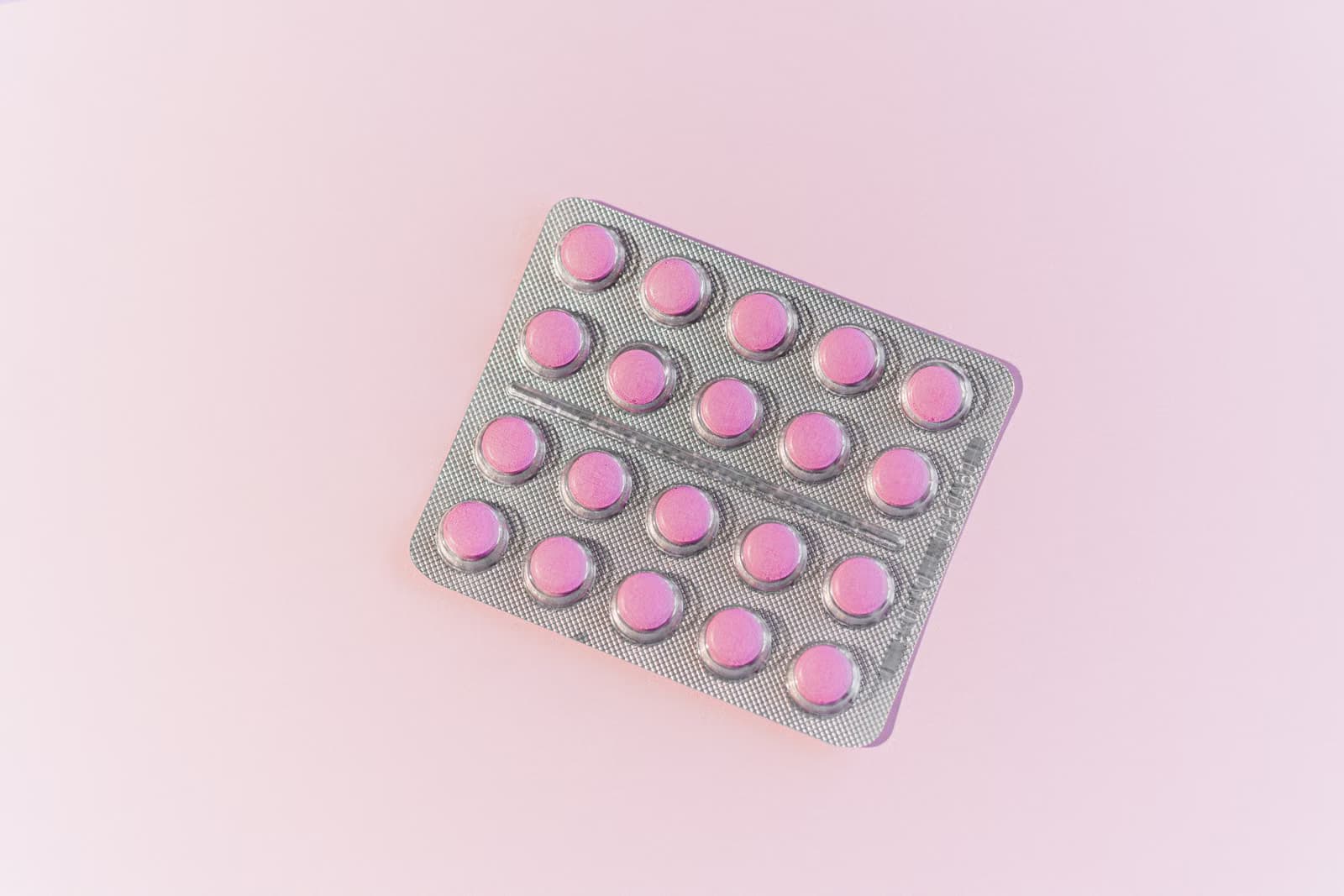
The progestin-only pill (POP), or mini-pill, contains a progestin and no oestrogen. In Bangladesh the SMC brand Minicon is the widely available mini-pill; the MedEasy page lists norgestrel 0.075 mg (75 micrograms) per tablet (check your pack). It thickens the mucus at the neck of the womb so sperm cannot pass and, in many women, stops ovulation.
Taken correctly it is more than 99 percent effective: the WHO handbook reports fewer than 1 pregnancy per 100 breastfeeding women a year with daily use. The same source states that POPs are safe for mother and baby and do not reduce milk supply, which is why it is the pill of choice after birth. You can browse contraceptive pills and other feminine care products on MedEasy; start your first pack after a short check with a doctor, pharmacist or family-planning worker.
How do I take the mini-pill? The 3-hour rule and missed pills
The pack says: one tablet every day at the same time, with no break between packs; start the next pack the day after the last one finishes, whether or not you are bleeding.
When to start: the NHS, CDC and ACOG say it can be started straight after childbirth; the WHO handbook has traditionally advised from 6 weeks. If you are fully breastfeeding with no period and the baby is under 6 months, the CDC says no backup is needed; otherwise use condoms or avoid sex for the first 2 days.
The 3-hour rule
Minicon is a traditional (norgestrel) mini-pill, so its window is short. The pack says that if you take a tablet more than 3 hours late, take it as soon as you remember and use a backup method such as condoms for the next 2 days. The CDC 2024 Selected Practice Recommendations say the same and add: after unprotected sex following a late pill, consider emergency contraception (levonorgestrel 1.5 mg, as soon as possible and within 72 hours). Some desogestrel mini-pills sold abroad allow 12 hours; Minicon's pack says 3.
| Situation | What to do | Backup for 2 days? |
|---|---|---|
| Up to 3 hours late | Take it now; carry on as usual | No |
| More than 3 hours late or one pill missed | Take it as soon as you remember, even if that means two in one day; continue as usual | Yes, until pills are on time for 2 days in a row |
| Two or more missed | Take the most recent missed pill, discard the others, carry on | Yes; consider emergency contraception after unprotected sex |
If you vomit within 3 hours of a pill, take another and use backup until 2 days after the illness ends.
What side effects should I expect, and who should not take it?
Irregular bleeding is the most common side effect and is not harmful. The pack says spotting or irregular bleeding is more frequent than with combined pills; you may bleed more often, less often, or not at all. Headache, breast tenderness, dizziness, mood changes and nausea are also reported; most settle within 3 months.
Who should not use it
- Pregnancy or unexplained vaginal bleeding: the pack says do not use if you may be pregnant, and to get abnormal bleeding checked first.
- Breast cancer, now or in the past: not with any hormonal pill (WHO handbook); the pack says use with caution and medical advice.
- Serious active liver disease or a current blood clot: do not use (WHO handbook; the pack warns about liver disease).
- Interacting medicines: the pack names rifampicin (for tuberculosis), barbiturates and griseofulvin; the WHO handbook adds carbamazepine, phenytoin and other epilepsy drugs. Use another or a backup method.
- Migraine with aura starting on the pill: stop and switch (WHO handbook).
It does not protect against sexually transmitted infections; condoms do.
What other contraception options are safe after childbirth?
Timing for breastfeeding mothers, from the NHS and the CDC U.S. Medical Eligibility Criteria (category 1: no restriction; 2: benefits outweigh risks; 3: risks outweigh benefits; 4: do not use):
| Method | When can a breastfeeding mother start? | Notes |
|---|---|---|
| Condoms | Straight away | Also protect against infections |
| Mini-pill (POP) | Straight away (category 2 under 21 days, 1 from 30 days) | Same time daily |
| Injectable (DMPA) or implant | Straight away (category 2 under 30 days, then 1) | Long-acting; trained provider |
| Copper IUD or hormonal IUS | Within 48 hours of birth, or from 4 weeks | Long-acting; trained provider |
| Combined pill | Not before 6 weeks; often later | See below |
Why combined pills are delayed while breastfeeding
Two reasons. Blood-clot risk is highest in the first 3 weeks after delivery and oestrogen adds to it, so the CDC rates combined methods category 4 under 21 days and category 3 from 21 to 30 days. Second, oestrogen may affect breastfeeding; the evidence is conflicting, so guidelines are cautious: the NHS advises waiting at least 6 weeks, ACOG 4 to 6 weeks, and the WHO handbook tells a fully breastfeeding mother to wait until the baby is 6 months old or no longer mainly breastfed. Before switching later, read our guide to birth control pills, missed-pill rules and who should not use them.
When should I see a doctor, and what are the emergency signs?
Check with a doctor, pharmacist or family-planning worker first if you have high blood pressure, diabetes, liver disease, a history of breast cancer or clots, or take tuberculosis or epilepsy medicines. You can consult a MedEasy doctor online. Also see a doctor if:
- bleeding is heavy (a pad soaked every 1 to 2 hours), lasts over 7 days, or continues beyond 3 months;
- you missed pills and your period is late, or a pregnancy test is positive (stop the pill and get checked);
- new migraine, a breast lump, yellow eyes or dark urine;
- low mood that is not lifting.
Call 999 or go to hospital for severe one-sided lower abdominal pain with faintness (possible ectopic pregnancy), sudden chest pain or breathlessness, a swollen painful calf, sudden severe headache or one-sided weakness, or bleeding soaking more than a pad an hour. For the baby, see our newborn care in the first month guide.
Common beliefs and questions in Bangladesh
“You cannot get pregnant while breastfeeding”
Partly true, and that is the danger. It protects only while all three LAM conditions hold; many unplanned pregnancies happen because one quietly stopped being true.
“The mini-pill dries up breast milk”
No. The WHO handbook states that progestin-only pills do not reduce milk supply. Guidelines are cautious about the oestrogen in combined pills, which is why the mini-pill is the one recommended during breastfeeding.
“You must wait for your first period before starting contraception”
No, and waiting is risky because ovulation comes first. The mini-pill, condoms, injection, implant and IUD can all begin before the first period if you are reasonably certain you are not pregnant.
“The mini-pill is weaker, so take two for safety”
No. One tablet a day, on time, gives more than 99 percent protection. A double dose adds side effects, not protection; lateness is what makes it fail.
References
- Progestin-Only Pills: U.S. Selected Practice Recommendations for Contraceptive Use, 2024 - CDC
- Summary of Classifications for Hormonal Contraceptive Methods and IUDs, U.S. MEC 2024 - CDC
- Lactational Amenorrhea Method, Family Planning: A Global Handbook for Providers - WHO / Johns Hopkins
- Progestin-Only Pills, Family Planning: A Global Handbook for Providers - WHO / Johns Hopkins
- Sex and contraception after birth - NHS
- Family Planning Counselling, Counselling for Maternal and Newborn Health Care - WHO (NCBI Bookshelf)
This article is for general awareness and is not a substitute for advice from a doctor. Products mentioned do not replace a medical consultation. Contraception choices depend on your health history and should be discussed with a doctor, pharmacist or family-planning worker.