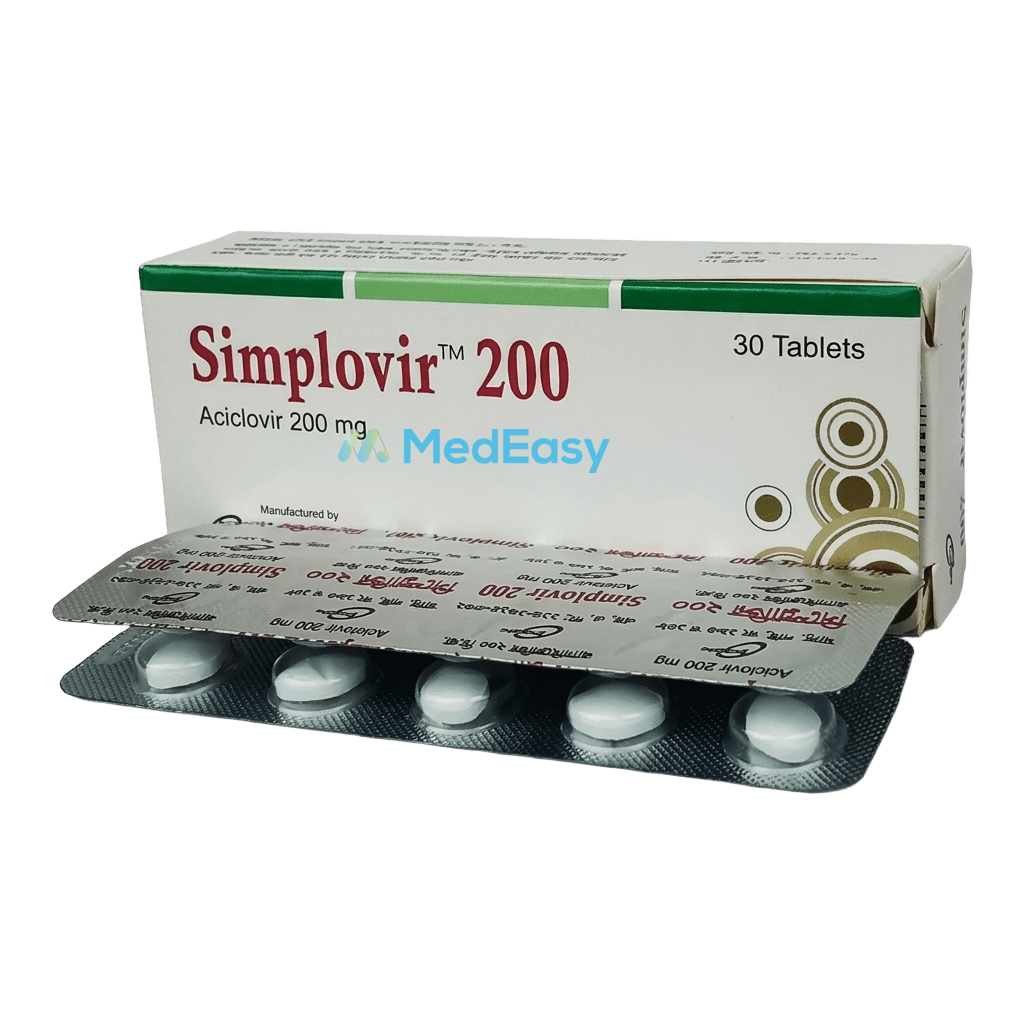
Generic medicine

Acyclovir: Brands, Price & Uses in Bangladesh

Genital Herpes (Oral Acyclovir) Acyclovir is an FDA-approved, guideline-supported (CDC) treatment for genital herpes caused by herpes simplex virus.

Forms:TabletOphthalmic OintmentCreamIV Infusion

About Acyclovir

Indications of Acyclovir

Genital Herpes (Oral Acyclovir)

Acyclovir is an FDA-approved, guideline-supported (CDC) treatment for genital herpes caused by herpes simplex virus. It is indicated for:

  • Initial episode: treatment of the first clinical episode of genital herpes — established indication.
  • Recurrent (episodic) episodes: management of recurrent outbreaks when Acyclovir is started early, in the prodrome or at first sign of lesions — established indication.
  • Chronic suppressive therapy: daily Acyclovir reduces the frequency of recurrences in patients with frequent outbreaks — established, guideline-supported indication.

Herpes Zoster / Shingles (Oral Acyclovir)

Acyclovir is an established, FDA-approved treatment for acute herpes zoster (shingles) in immunocompetent adults, most effective when started within 72 hours of rash onset.

Chickenpox / Varicella (Oral Acyclovir)

Acyclovir is FDA-approved for treatment of chickenpox in patients 2 years and older. However, current CDC/AAP guidance does not recommend routine Acyclovir treatment for otherwise healthy children with typical, uncomplicated chickenpox; oral Acyclovir is guideline-supported specifically for higher-risk groups — healthy individuals older than 12 years, those with chronic skin or lung disease, patients on long-term salicylate or corticosteroid therapy, and secondary household cases — when Acyclovir is started within 24 hours of rash onset.

Herpes Labialis / Cold Sores (Topical Acyclovir Cream)

Acyclovir cream 5% is FDA-approved for treatment of recurrent herpes labialis (cold sores) on the lips and face in immunocompetent adults and adolescents 12 years and older, applied during the prodrome or as soon as lesions appear. Use of Acyclovir cream in immunocompromised patients has not been established.

Severe or Disseminated Herpesvirus Infections (IV Acyclovir)

Intravenous Acyclovir is an established, guideline-supported treatment for infections that are severe, disseminated, or occurring in patients who cannot tolerate oral therapy, including:

  • Mucosal and cutaneous herpes simplex virus infections in immunocompromised patients — established.
  • Severe initial episodes of genital herpes, particularly requiring hospitalization — established.
  • Herpes simplex encephalitis — established.
  • Neonatal herpes simplex virus infection — established, specialist-directed.
  • Varicella-zoster (chickenpox/shingles) infection in immunocompromised patients — established.

IV Acyclovir must be administered by, or under the direction of, a qualified healthcare professional in a hospital setting.

Dosage & Administration of Acyclovir

Acyclovir dosing is not one-size-fits-all — the strength, frequency, formulation (tablet, suspension, cream, or IV infusion), and duration of Acyclovir treatment all depend on the specific infection being treated, the patient's age, weight, kidney function, and immune status. The table below is a general reference; the exact dose and course of Acyclovir must always be determined and prescribed by a qualified healthcare professional.

Side Effects of Acyclovir

Common Side Effects

Acyclovir can commonly cause nausea, vomiting, diarrhea, headache, and tiredness/malaise with oral or IV use, and mild rash or itching. With Acyclovir cream, local skin reactions such as dryness, burning, stinging, cracking, or flaking at the application site may occur. With IV Acyclovir, pain or inflammation at the infusion site is common.

Serious Side Effects — Seek Medical Attention

  • Signs of kidney problems — decreased urination, swelling, unusual tiredness (see Precautions & Warnings for full explanation).
  • Neurological effects — confusion, agitation, hallucinations, tremors, seizures, or unusual drowsiness, more common in elderly patients or those with renal impairment.
  • Signs of thrombotic thrombocytopenic purpura/hemolytic uremic syndrome (TTP/HUS) — unusual bruising or bleeding, severe fatigue, pallor — rare, reported mainly in immunocompromised patients receiving IV Acyclovir.
  • Severe allergic reaction — swelling of the face, lips, or throat, difficulty breathing, hives.
  • Severe skin reactions — blistering or peeling skin (Stevens-Johnson syndrome, toxic epidermal necrolysis) — rare.
  • Signs of liver problems — yellowing of the skin or eyes.

Contraindications of Acyclovir

Acyclovir is contraindicated in patients with known hypersensitivity to Acyclovir or to valacyclovir (which is converted to Acyclovir in the body).

Frequently Asked Questions about Acyclovir

What is Acyclovir used for?

Acyclovir is an antiviral medicine used to treat infections caused by herpes simplex virus and varicella-zoster virus. Depending on the formulation, Acyclovir is used for genital herpes, cold sores (herpes labialis), chickenpox (varicella), shingles (herpes zoster), and — as an IV infusion — severe or disseminated herpesvirus infections in hospitalized or immunocompromised patients.

How is Acyclovir taken?

Acyclovir tablets or oral suspension are usually taken by mouth at evenly spaced intervals, with or without food, and swallowed with a full glass of water; the oral suspension should be shaken well and measured with an accurate device. Acyclovir cream is applied as a thin layer to the affected external skin only. IV Acyclovir is given only by a healthcare professional as a slow infusion in a hospital or clinic setting. The exact schedule of Acyclovir depends on the condition being treated.

Can Acyclovir be taken with other medicines?

Acyclovir can interact with certain medicines, including probenecid, other drugs that can affect the kidneys, and mycophenolate mofetil. Always tell your healthcare professional or pharmacist about every medicine, supplement, or herbal product you are taking before starting Acyclovir.

Is Acyclovir safe during pregnancy?

Acyclovir should be used in pregnancy only if a healthcare professional decides the benefit outweighs the potential risk. A large pregnancy registry with first-trimester exposure to Acyclovir did not find an increased overall rate of birth defects, but this does not guarantee complete safety, and Acyclovir should never be started or stopped during pregnancy without medical guidance.

Can children take Acyclovir?

Yes, in certain situations. Acyclovir is not routinely recommended for otherwise healthy children with typical chickenpox, but it may be used in specific higher-risk children, and IV Acyclovir is used for serious herpesvirus infections in infants and children under specialist hospital care. Any use of Acyclovir in a child should be prescribed and supervised by a qualified healthcare professional.

What are the common side effects of Acyclovir?

Common side effects of Acyclovir can include nausea, vomiting, diarrhea, headache, and tiredness with oral or IV use, and mild skin dryness, burning, or itching at the application site with the cream. Most of these are mild, but any severe or worsening symptoms should be reported to a healthcare professional.

Does Acyclovir cure herpes permanently?

No. Acyclovir helps control outbreaks, reduce symptom severity and duration, and — with suppressive therapy — reduce how often outbreaks occur, but Acyclovir does not eliminate herpes simplex virus or varicella-zoster virus from the body, and the infection can recur after Acyclovir is stopped.

Why is drinking enough water important while taking Acyclovir?

Acyclovir is cleared from the body mainly through the kidneys and can form crystals in the kidney tubules if fluid intake is inadequate, particularly with IV or high-dose oral Acyclovir. Staying well hydrated during treatment with Acyclovir helps reduce the risk of kidney problems.

What should I do if I miss a dose of Acyclovir or think I've taken too much?

If a dose of Acyclovir is missed, take it as soon as remembered unless it is almost time for the next dose — do not double the dose of Acyclovir. If an overdose of Acyclovir is suspected, do not induce vomiting unless directed, and contact emergency medical services or a poison control center immediately.

Disclaimer

The information provided is accurate to the best of our knowledge, but it does not replace professional medical advice. We cannot guarantee its completeness or accuracy, and the absence of specific information about a drug should not be taken as an endorsement. We are not responsible for any consequences arising from this information, so please consult a healthcare professional for any concerns or questions.


DoctorBlogArticles