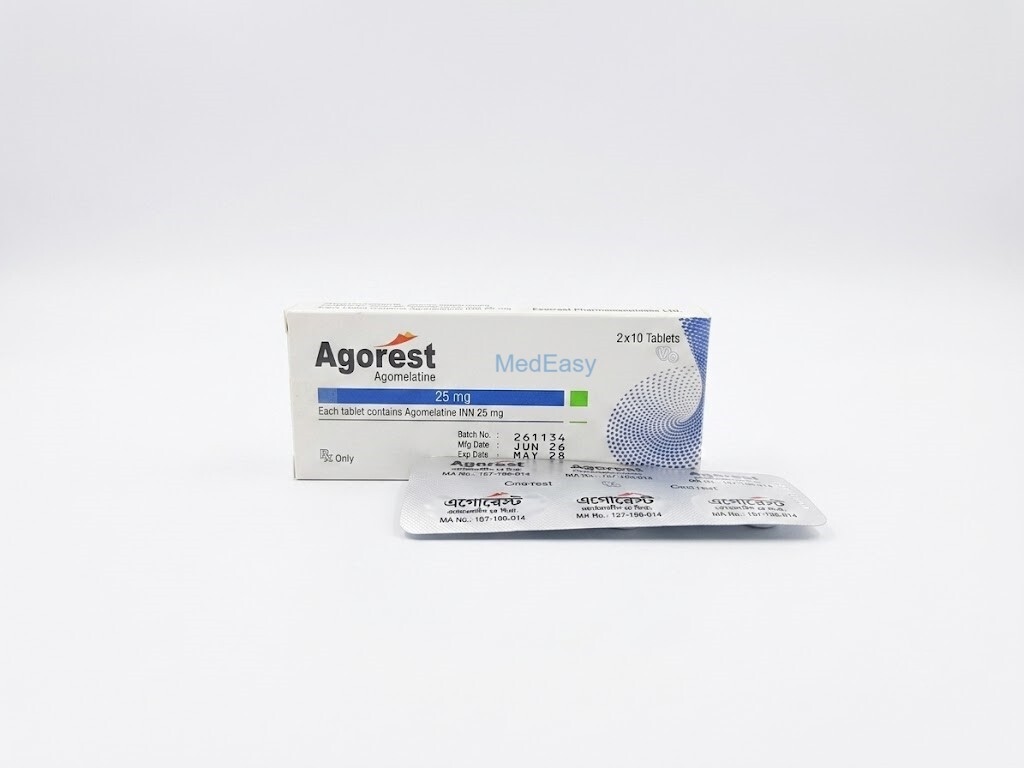
Generic medicine

Agomelatine: Brands, Price & Uses in Bangladesh

Agomelatine is indicated for the following condition: Established/Approved Use Major Depressive Disorder (MDD) in adults - Agomelatine is approved (in regulatory jurisdictions where it is marketed and more.

Forms:Tablet

About Agomelatine

Indications of Agomelatine

Agomelatine is indicated for the following condition:

Established/Approved Use

  • Major Depressive Disorder (MDD) in adults - Agomelatine is approved (in regulatory jurisdictions where it is marketed, e.g. the European Union) for the treatment of major depressive episodes in adults, based on placebo-controlled trials demonstrating antidepressant efficacy along with a favorable profile regarding sexual dysfunction and weight gain compared with many other antidepressants.

Uses With Limited/Emerging Evidence (Not a Primary Approved Indication)

  • Generalized anxiety disorder and sleep-disturbance symptoms associated with depression - some clinical trial data exists, but this is not a formally approved indication in most markets; use for this purpose should only be under a physician's direction.

Agomelatine is not approved or recommended for use in children or adolescents, and it is not a first-line treatment for bipolar depression or psychotic depression.

Dosage & Administration of Agomelatine

Adults (Major Depressive Disorder)

StepDoseNotes
Starting dose25 mg once dailyTaken orally at bedtime
If no improvement after 2 weeksMay increase to 50 mg once daily (as two 25 mg tablets)Taken as a single dose at bedtime

Tablets should be swallowed whole with a glass of water and may be taken with or without food. Treatment response should be reassessed after approximately 3 months and periodically thereafter to determine the continued need for therapy; a minimum treatment duration of 6 months is generally recommended for a depressive episode. Discontinuation should be guided by a physician.

Pediatric Dose

Not recommended; safety and efficacy in patients under 18 years have not been established.

Renal/Hepatic Adjustment

Agomelatine is contraindicated in patients with hepatic impairment (see Contraindications). No dose adjustment has been established for renal impairment; use with caution and only under close medical supervision in patients with severe renal impairment, as data are limited.

Side Effects of Agomelatine

Common Side Effects

  • Headache
  • Dizziness
  • Somnolence or, alternatively, insomnia
  • Nausea, diarrhea, constipation, or abdominal pain
  • Back pain
  • Fatigue
  • Anxiety

Less Common but Serious Side Effects

  • Elevated liver enzymes and, rarely, serious liver injury (see Precautions and Warnings for required monitoring).
  • Worsening depression or emergence of suicidal thoughts/behavior, particularly in young adults (an antidepressant class warning).
  • Skin reactions, including rash.

Contraindications of Agomelatine

  • Known hypersensitivity to Agomelatine or any of its excipients.
  • Hepatic impairment, including cirrhosis or active liver disease, and/or serum transaminases exceeding 3 times the upper limit of normal.
  • Concomitant use with potent CYP1A2 inhibitors (e.g., fluvoxamine, ciprofloxacin), due to a markedly increased risk of hepatotoxicity from elevated Agomelatine exposure.

Frequently Asked Questions about Agomelatine

What is Agomelatine used for?

Agomelatine is used to treat major depressive disorder (MDD) in adults. It works differently from common antidepressants by targeting melatonin receptors and a specific serotonin receptor subtype.

How should I take Agomelatine?

Agomelatine is usually taken as one 25 mg tablet once daily at bedtime, swallowed whole with water, with or without food. Your physician may increase the dose to 50 mg daily if needed after 2 weeks.

Why do I need liver tests while taking Agomelatine?

Agomelatine can rarely cause liver injury, including severe cases. Your physician will check your liver function before you start Agomelatine and periodically during treatment (for example around 3, 6, 12, and 24 weeks), and Agomelatine should be stopped immediately if you develop signs of liver problems such as yellowing of the skin/eyes, dark urine, right-sided abdominal pain, or unusual tiredness.

Can I take Agomelatine with other medicines?

You should not take Agomelatine together with fluvoxamine or ciprofloxacin, as these markedly increase Agomelatine levels in the blood and raise the risk of liver damage. Always tell your physician about all medicines you are taking before starting Agomelatine.

Is Agomelatine safe during pregnancy or breastfeeding?

Data on Agomelatine in pregnancy are limited, so it should only be used if clearly needed and your physician believes the benefit outweighs the risk. Breastfeeding is generally not recommended while taking Agomelatine because it is not known whether it passes into breast milk.

What should I do if I miss a dose or take too much Agomelatine?

If you miss a dose, take it at your next scheduled bedtime dose; do not double up. If you or someone else has taken too much Agomelatine and has symptoms such as severe drowsiness, agitation, or dizziness, seek immediate medical attention or contact emergency services/poison control right away.

Disclaimer

The information provided is accurate to the best of our knowledge, but it does not replace professional medical advice. We cannot guarantee its completeness or accuracy, and the absence of specific information about a drug should not be taken as an endorsement. We are not responsible for any consequences arising from this information, so please consult a healthcare professional for any concerns or questions.

DoctorBlogArticles