
Generic medicine

Amlodipine + Benazepril Hydrochloride: Brands, Price & Uses in Bangladesh

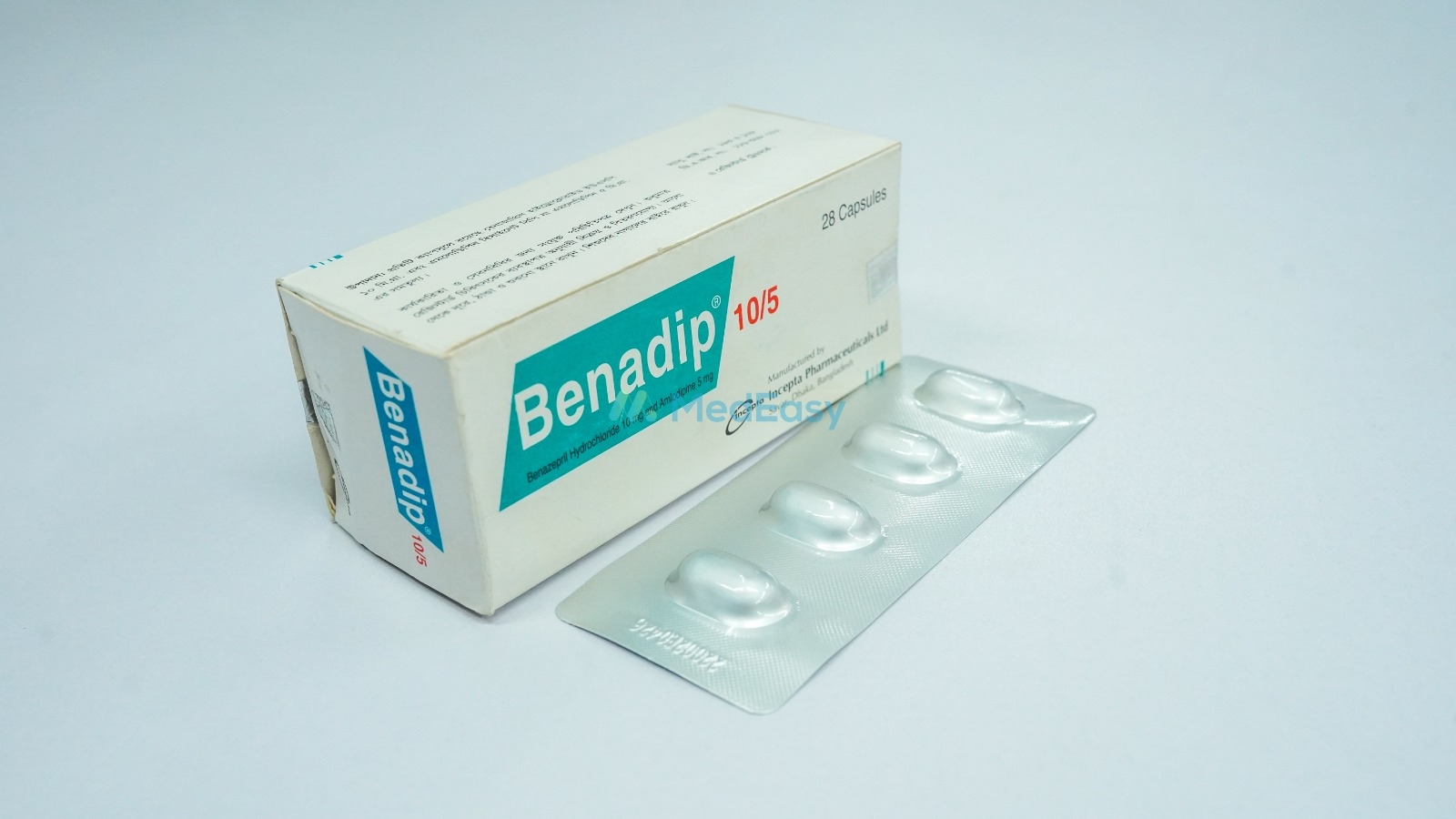
Amlodipine + Benazepril Hydrochloride is a fixed-dose combination indicated for the treatment of hypertension (high blood pressure).

Forms:Capsule

About Amlodipine + Benazepril Hydrochloride

Indications of Amlodipine + Benazepril Hydrochloride

Amlodipine + Benazepril Hydrochloride is a fixed-dose combination indicated for the treatment of hypertension (high blood pressure).

  • Established/FDA-approved use: Treatment of hypertension in patients whose blood pressure is not adequately controlled with either amlodipine or benazepril monotherapy alone, or as a substitution therapy in patients already controlled on the individual components given concurrently in similar proportions.
  • Not recommended as initial therapy for hypertension; it is intended for patients who require combination treatment after monotherapy has proven insufficient.

Amlodipine + Benazepril Hydrochloride is not indicated for initial treatment of hypertension and is not indicated in patients whose blood pressure can be controlled with a single agent.

Dosage & Administration of Amlodipine + Benazepril Hydrochloride

Population/IndicationDosing
Adults - Hypertension (not controlled on monotherapy)Usual starting dose is amlodipine 2.5 mg/benazepril 10 mg once daily, titrated after 1-2 weeks according to blood pressure response, up to a maximum of amlodipine 10 mg/benazepril 40 mg once daily.
Elderly or hepatically impaired patientsStart at the lowest dose (2.5 mg amlodipine component) due to slower clearance of amlodipine.
Severe renal impairmentUse of this fixed-dose combination is generally not recommended; individual titration of components is preferred (see Use in Special Populations).
Pediatric patientsSafety and efficacy have not been established (see Pediatric Uses).

Amlodipine + Benazepril Hydrochloride should be swallowed whole with water, with or without food, at approximately the same time each day. Do not initiate this fixed combination as first-line therapy; it is intended for patients already needing both components.

Side Effects of Amlodipine + Benazepril Hydrochloride

Common side effects of Amlodipine + Benazepril Hydrochloride include:

  • Dry, persistent cough (a known ACE inhibitor class effect)
  • Headache
  • Dizziness
  • Peripheral (ankle/leg) edema, a dose-dependent amlodipine class effect
  • Fatigue/asthenia
  • Flushing

Serious but less common effects include angioedema (swelling of the face, lips, tongue, or throat, which can be life-threatening if it involves the airway and requires immediate discontinuation and emergency evaluation), symptomatic hypotension (especially after the first dose or in volume-depleted patients), hyperkalemia, and rarely, hepatic dysfunction or hepatitis. Rare postmarketing reports include Stevens-Johnson syndrome, pancreatitis, and blood dyscrasias (e.g., thrombocytopenia, hemolytic anemia).

Contraindications of Amlodipine + Benazepril Hydrochloride

Amlodipine + Benazepril Hydrochloride is contraindicated in:

  • Patients with known hypersensitivity to amlodipine, benazepril, any other ACE inhibitor, or any other component of the formulation.
  • Patients with a history of angioedema related to previous treatment with an ACE inhibitor.
  • Patients with hereditary or idiopathic angioedema.
  • Pregnancy (see boxed warning under Pregnancy and Lactation) - ACE inhibitors can cause fetal injury and death when used during the second and third trimesters.
  • Concomitant use with aliskiren in patients with diabetes mellitus.
  • Concomitant use with or within 36 hours of switching to or from a neprilysin inhibitor (e.g., sacubitril/valsartan), due to the risk of angioedema.

Frequently Asked Questions about Amlodipine + Benazepril Hydrochloride

What is Amlodipine + Benazepril Hydrochloride used for?

Amlodipine + Benazepril Hydrochloride is used to treat high blood pressure (hypertension) in patients whose blood pressure is not adequately controlled by either amlodipine or benazepril alone. It is not meant to be the first medicine tried for hypertension.

Can I take Amlodipine + Benazepril Hydrochloride during pregnancy?

No. Amlodipine + Benazepril Hydrochloride can cause serious harm or death to an unborn baby, especially if used during the second or third trimester of pregnancy. If you become pregnant while taking Amlodipine + Benazepril Hydrochloride, stop the medicine and contact your doctor immediately.

What are the most common side effects?

The most common side effects of Amlodipine + Benazepril Hydrochloride are dry cough, headache, dizziness, and swelling of the ankles or legs (peripheral edema). Most of these are mild, but a persistent cough or swelling should be reported to your doctor.

What should I do if I notice swelling of my face, lips, or throat?

This could be a sign of angioedema, a rare but potentially life-threatening reaction to Amlodipine + Benazepril Hydrochloride. Stop the medicine and seek emergency medical care immediately, especially if you have trouble breathing or swallowing.

Can I take potassium supplements with Amlodipine + Benazepril Hydrochloride?

Potassium supplements, salt substitutes containing potassium, or potassium-sparing diuretics should generally be avoided with Amlodipine + Benazepril Hydrochloride because they can raise blood potassium to dangerous levels. Talk to your doctor before taking any potassium-containing products.

What happens if I take too much Amlodipine + Benazepril Hydrochloride?

An overdose of Amlodipine + Benazepril Hydrochloride can cause a severe and prolonged drop in blood pressure and a fast heart rate. Seek immediate medical attention or contact emergency services or a poison control center right away if an overdose is suspected.

Disclaimer

The information provided is accurate to the best of our knowledge, but it does not replace professional medical advice. We cannot guarantee its completeness or accuracy, and the absence of specific information about a drug should not be taken as an endorsement. We are not responsible for any consequences arising from this information, so please consult a healthcare professional for any concerns or questions.
DoctorBlogArticles