
10% Off
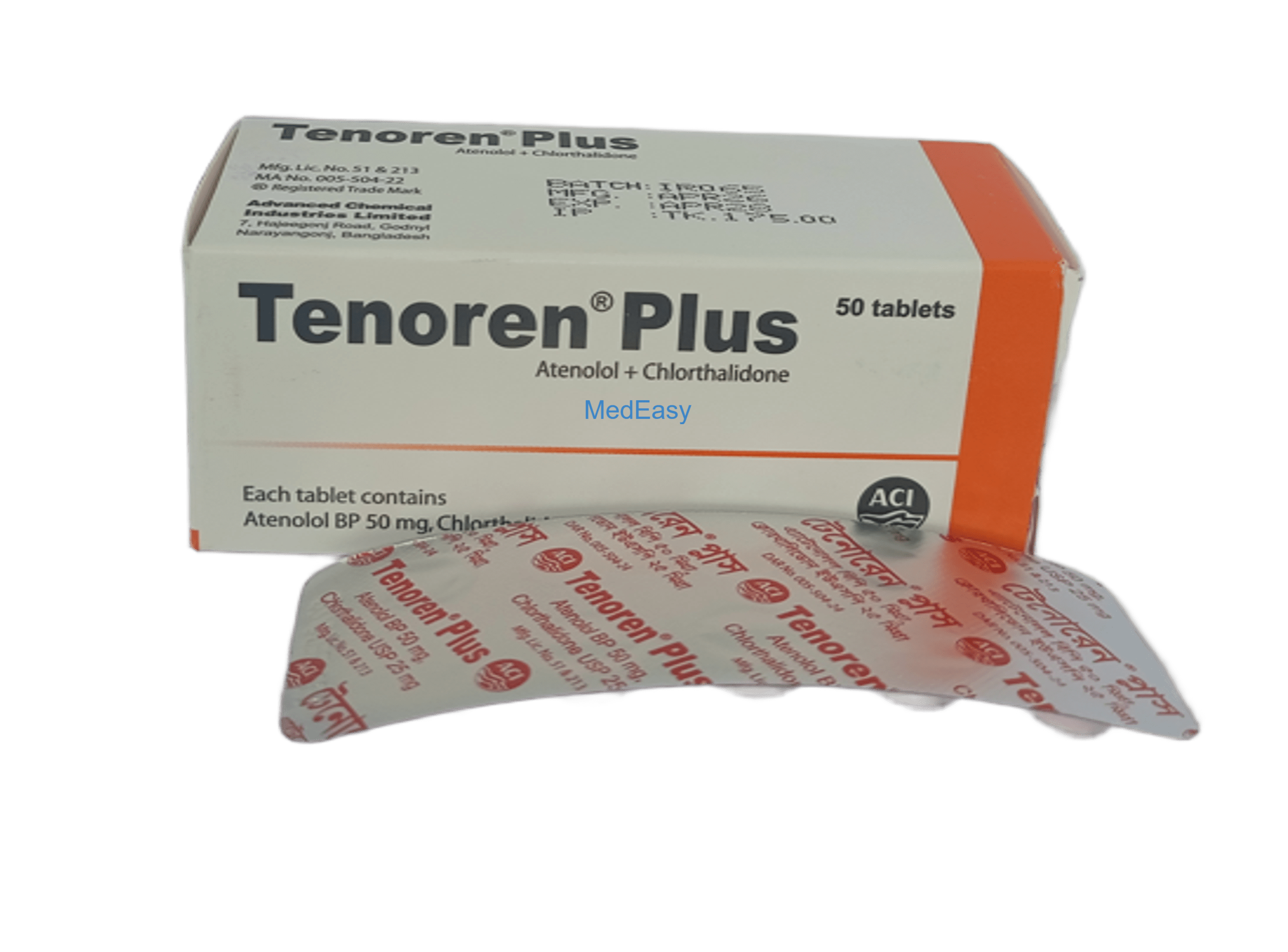
Tenoren Plus50 mg+25 m
ACI Limited
৳31.50
Add to cart
Atenolol + Chlorthalidone is a fixed-dose combination of a beta-1 selective adrenergic blocking agent (atenolol) and a thiazide-like diuretic (chlorthalidone) and more.
Atenolol + Chlorthalidone is a fixed-dose combination of a beta-1 selective adrenergic blocking agent (atenolol) and a thiazide-like diuretic (chlorthalidone), indicated for the following:
Atenolol + Chlorthalidone is not intended as initial therapy for hypertension in patients whose blood pressure can be controlled on a single agent; it is used specifically as combination therapy once monotherapy with either component has proven insufficient, or when a patient is already stable on the equivalent individual doses of atenolol and chlorthalidone.
Dosage of Atenolol + Chlorthalidone must be individualized according to the patient's blood pressure response and tolerability.
| Indication | Population | Recommended Dose |
|---|---|---|
| Hypertension | Adults | Initiate with one tablet of atenolol 50 mg/chlorthalidone 25 mg once daily. If the desired blood pressure reduction is not achieved, the dose may be increased to one tablet of atenolol 100 mg/chlorthalidone 25 mg once daily. Doses of chlorthalidone above 25 mg do not generally provide additional antihypertensive benefit and increase the risk of electrolyte disturbance. |
| Hypertension | Severe renal impairment (creatinine clearance < 35 mL/min/1.73m²) | Thiazide-type diuretics, including chlorthalidone, may be ineffective and are generally not recommended; if Atenolol + Chlorthalidone is used, dosing intervals for the atenolol component should be extended and the patient monitored closely. |
| Hypertension | Pediatric patients | Safety and effectiveness have not been established (see Use in Special Populations). |
Atenolol + Chlorthalidone should not be stopped abruptly, particularly in patients with underlying coronary artery disease; the dose should be tapered gradually over one to two weeks under medical supervision.
Side effects of Atenolol + Chlorthalidone arise from both the beta-blocker and diuretic components.
| Common | Less common / Serious |
|---|---|
| Fatigue, dizziness, cold extremities, bradycardia | Postural (orthostatic) hypotension |
| Nausea, diarrhea | Hypokalemia, hyponatremia, hypomagnesemia, hyperuricemia |
| Muscle cramps or weakness | Hyperglycemia, worsening of diabetic control |
| Rash | Bronchospasm (especially in patients with reactive airway disease) |
| Mild mood changes | Depression, hallucinations (rare) |
| Cold hands/feet, reduced peripheral circulation | Impotence/erectile dysfunction, alopecia (rare, postmarketing) |
Patients should seek prompt medical advice for symptoms such as very slow heartbeat, fainting, significant swelling, difficulty breathing, or signs of severe electrolyte disturbance (severe muscle weakness, confusion, irregular heartbeat).
Atenolol + Chlorthalidone is contraindicated in patients with:
Disclaimer
The information provided is accurate to the best of our knowledge, but it does not replace professional medical advice. We cannot guarantee its completeness or accuracy, and the absence of specific information about a drug should not be taken as an endorsement. We are not responsible for any consequences arising from this information, so please consult a healthcare professional for any concerns or questions.