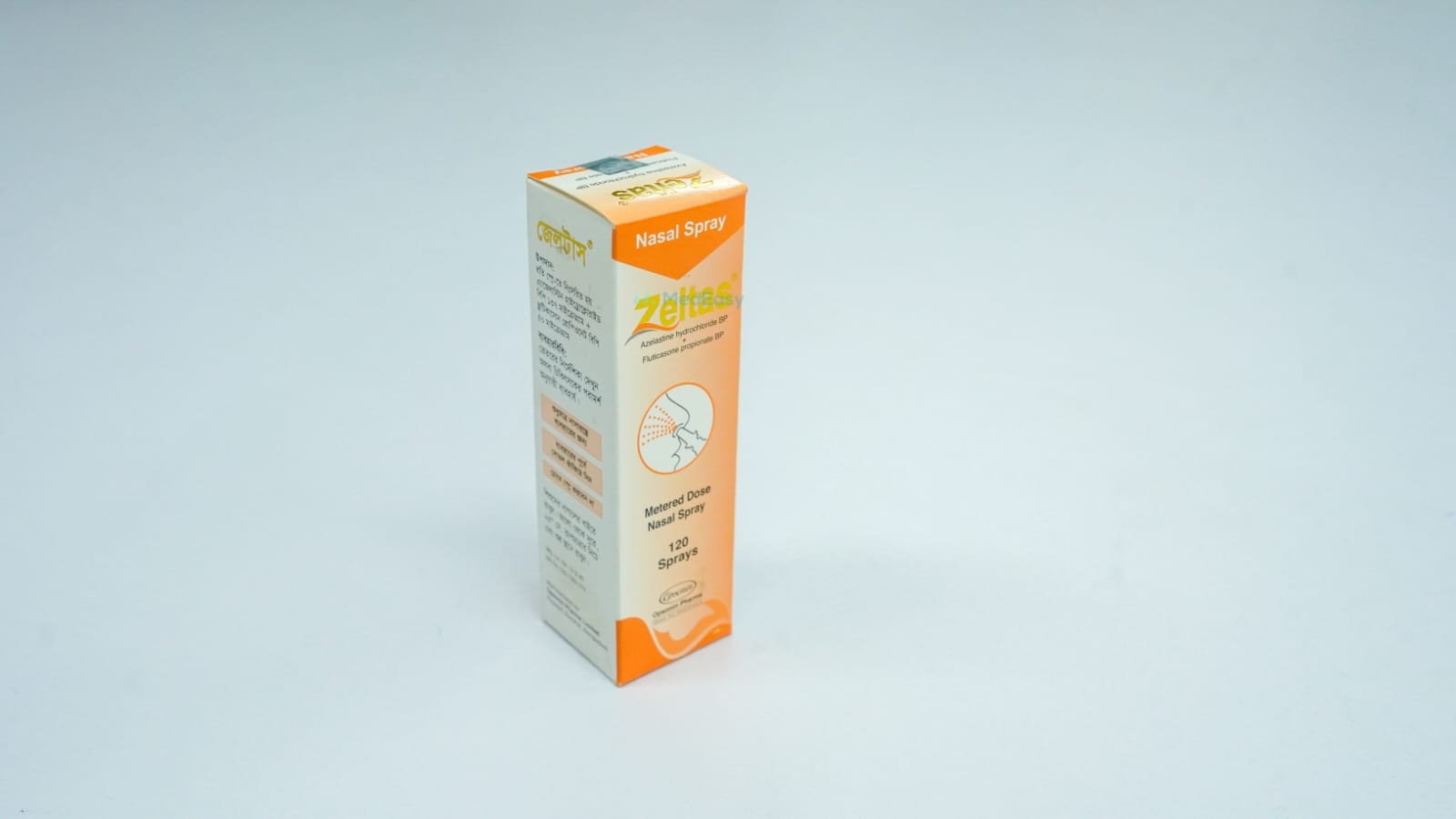
Generic medicine

Azelastine Hydrochloride + Fluticasone Propionate: Brands, Price & Uses in Bangladesh

Azelastine Hydrochloride + Fluticasone Propionate is a fixed-dose combination intranasal spray that pairs an intranasal antihistamine (azelastine) with an intranasal corticosteroid (fluticasone) in…

Forms:Nasal Spray

About Azelastine Hydrochloride + Fluticasone Propionate

Indications of Azelastine Hydrochloride + Fluticasone Propionate

Azelastine Hydrochloride + Fluticasone Propionate is a fixed-dose combination intranasal spray that pairs an intranasal antihistamine (azelastine) with an intranasal corticosteroid (fluticasone) in a single metered-dose device. It is used for the symptomatic relief of allergic rhinitis.

  • Seasonal allergic rhinitis (established/FDA-approved use): relief of nasal symptoms such as sneezing, rhinorrhea, nasal itching and nasal congestion in patients 6 years of age and older who require treatment with both an intranasal antihistamine and an intranasal corticosteroid for adequate control.
  • Perennial allergic rhinitis (established/FDA-approved use): relief of nasal symptoms in patients 12 years of age and older who require combination intranasal antihistamine-corticosteroid therapy.

Azelastine Hydrochloride + Fluticasone Propionate is intended for patients whose symptoms are not adequately controlled with either an intranasal antihistamine or an intranasal corticosteroid used alone; it is not recommended as a routine first-line monotherapy and should be used only when combination therapy is clinically indicated.

Dosage & Administration of Azelastine Hydrochloride + Fluticasone Propionate

Dosage by Indication

IndicationAge GroupRecommended Dose
Seasonal allergic rhinitisAdults and children 6 years and older1 spray per nostril twice daily (morning and evening)
Perennial allergic rhinitisAdults and children 12 years and older1 spray per nostril twice daily (morning and evening)
Perennial allergic rhinitisChildren 6–11 yearsSafety and efficacy not established; not recommended (see Pediatric Use)

Total dose is 4 sprays per day (2 sprays per nostril per day). Re-evaluate the need for continued treatment periodically; if symptoms are not improved after 14 days of consistent use, the patient should be reassessed by a physician.

Administration Technique

  1. Gently blow the nose to clear the nostrils before use.
  2. Shake the bottle gently and, before first use or after a period of non-use, prime the pump as directed in the product leaflet until a fine mist is produced.
  3. Tilt the head slightly forward, insert the nozzle into one nostril, close the other nostril, and spray while breathing in gently through the nose.
  4. Avoid spraying directly onto the nasal septum and avoid contact with the eyes.
  5. Repeat in the other nostril. Wipe the nozzle clean after use and replace the cap.

No renal or hepatic dose adjustment has been well established for Azelastine Hydrochloride + Fluticasone Propionate; use with caution in hepatic impairment because systemic corticosteroid exposure may be increased.

Side Effects of Azelastine Hydrochloride + Fluticasone Propionate

Adverse effects of Azelastine Hydrochloride + Fluticasone Propionate are generally local to the nose and mouth. The most commonly reported effects include:

FrequencyEffects
CommonBitter/unpleasant taste (dysgeusia, due to post-nasal drainage of azelastine), nasal discomfort or irritation, epistaxis (nosebleed), headache, somnolence
Uncommon/rareNasal dryness, nasal septal perforation, glaucoma and cataracts (reported rarely with long-term intranasal corticosteroid use), reduced growth velocity in children on long-term therapy, hypersensitivity reactions

Because of the sedating potential of the azelastine component, patients should use caution when driving or operating machinery until they know how Azelastine Hydrochloride + Fluticasone Propionate affects them, and should avoid combining it with alcohol.

Contraindications of Azelastine Hydrochloride + Fluticasone Propionate

Azelastine Hydrochloride + Fluticasone Propionate is contraindicated in patients with known hypersensitivity to azelastine hydrochloride, fluticasone propionate, or any excipient of the formulation.

Frequently Asked Questions about Azelastine Hydrochloride + Fluticasone Propionate

What is Azelastine Hydrochloride + Fluticasone Propionate used for?

Azelastine Hydrochloride + Fluticasone Propionate is an intranasal spray used for the symptomatic relief of seasonal and perennial allergic rhinitis (nasal itching, sneezing, runny nose and congestion) in patients who need the combined effect of an antihistamine and a corticosteroid.

How should I use Azelastine Hydrochloride + Fluticasone Propionate?

The usual dose is one spray per nostril twice daily. Shake the bottle, prime it if needed, tilt your head slightly forward, and spray gently into each nostril while sniffing, avoiding your eyes.

Why does Azelastine Hydrochloride + Fluticasone Propionate leave a bitter taste in my mouth?

A bitter taste is a common effect of the azelastine component of Azelastine Hydrochloride + Fluticasone Propionate, caused by a small amount of the spray draining into the throat. It is usually harmless; keeping the head upright and breathing gently during use can reduce it.

Can Azelastine Hydrochloride + Fluticasone Propionate make me feel sleepy?

Yes, the azelastine component of Azelastine Hydrochloride + Fluticasone Propionate can cause somnolence in some patients. Avoid driving or operating machinery and avoid alcohol until you know how Azelastine Hydrochloride + Fluticasone Propionate affects you.

Is Azelastine Hydrochloride + Fluticasone Propionate safe to use during pregnancy or breastfeeding?

Adequate safety data in pregnancy and breastfeeding are limited, so Azelastine Hydrochloride + Fluticasone Propionate should be used only if clearly needed, when the potential benefit justifies the potential risk, and always under medical supervision.

Can children use Azelastine Hydrochloride + Fluticasone Propionate?

Azelastine Hydrochloride + Fluticasone Propionate is approved for seasonal allergic rhinitis in children 6 years and older and for perennial allergic rhinitis from 12 years and older; safety and efficacy below these ages have not been established, and long-term use requires growth monitoring in children.

Disclaimer

The information provided is accurate to the best of our knowledge, but it does not replace professional medical advice. We cannot guarantee its completeness or accuracy, and the absence of specific information about a drug should not be taken as an endorsement. We are not responsible for any consequences arising from this information, so please consult a healthcare professional for any concerns or questions.

DoctorBlogArticles