8% Off
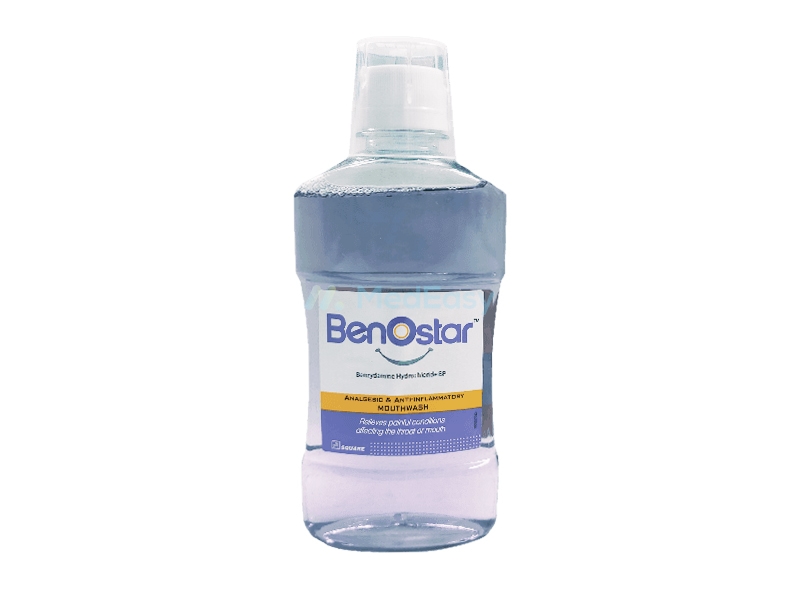
Benostar0.15%
Square Pharmaceuticals PLC.
৳184.00
Add to cart
Benzydamine Hydrochloride is indicated for the symptomatic relief of pain and inflammation associated with conditions of the mouth and throat.
Benzydamine Hydrochloride is indicated for the symptomatic relief of pain and inflammation associated with conditions of the mouth and throat. Its use is generally supported by clinical experience and inclusion in national/international formularies for topical oromucosal use, rather than by large modern randomized trial programs, and it is intended for short-term symptomatic relief rather than for treating the underlying cause.
Benzydamine Hydrochloride is for short-term, symptomatic, topical use only. It should not be swallowed (mouthwash/gargle) except for the small residual amount inherent to spray or lozenge use. Dosing varies by formulation:
| Formulation | Adult & Adolescent Dose | Pediatric Dose |
|---|---|---|
| Mouthwash/gargle (0.15%) | Rinse or gargle with 15 mL undiluted (or diluted 1:1 with water if stinging occurs) for 20–30 seconds, every 1.5–3 hours as needed; then spit out, do not swallow. | Generally not recommended under 12 years of age (risk of accidental swallowing); use only under medical/dental advice in this age group. |
| Oromucosal spray (0.15%) | 4–8 sprays onto the affected area every 1.5–3 hours as needed, up to a maximum frequency as directed by a physician or on the product label. | Age 6–12 years: weight-based dosing as per product labeling (typically a reduced number of sprays); not recommended under 6 years. Use only under medical supervision. |
| Lozenges (where available) | 1 lozenge dissolved slowly in the mouth every 1.5–3 hours as needed. | Not recommended in young children due to choking risk; follow product-specific age labeling. |
Duration: Use for the shortest period needed to control symptoms, typically not exceeding 7 days continuously; if sore throat, mouth pain, or inflammation persists beyond 3–7 days, worsens, or is accompanied by fever or difficulty swallowing/breathing, stop use and seek medical advice.
No renal or hepatic dose adjustment has been established for topical Benzydamine Hydrochloride, reflecting its minimal systemic absorption; however, caution is still advised in patients with significant hepatic or renal impairment (see Use in Special Populations).
Benzydamine Hydrochloride is generally well tolerated when used topically as directed. Reported adverse effects include:
Benzydamine Hydrochloride is contraindicated in patients with known hypersensitivity to benzydamine hydrochloride or to any other component of the specific formulation. Because benzydamine is chemically related to other NSAIDs, patients with a history of severe hypersensitivity (including bronchospasm, angioedema, or anaphylaxis) to aspirin or other NSAIDs should avoid Benzydamine Hydrochloride due to theoretical cross-reactivity.
Disclaimer
The information provided is accurate to the best of our knowledge, but it does not replace professional medical advice. We cannot guarantee its completeness or accuracy, and the absence of specific information about a drug should not be taken as an endorsement. We are not responsible for any consequences arising from this information, so please consult a healthcare professional for any concerns or questions.