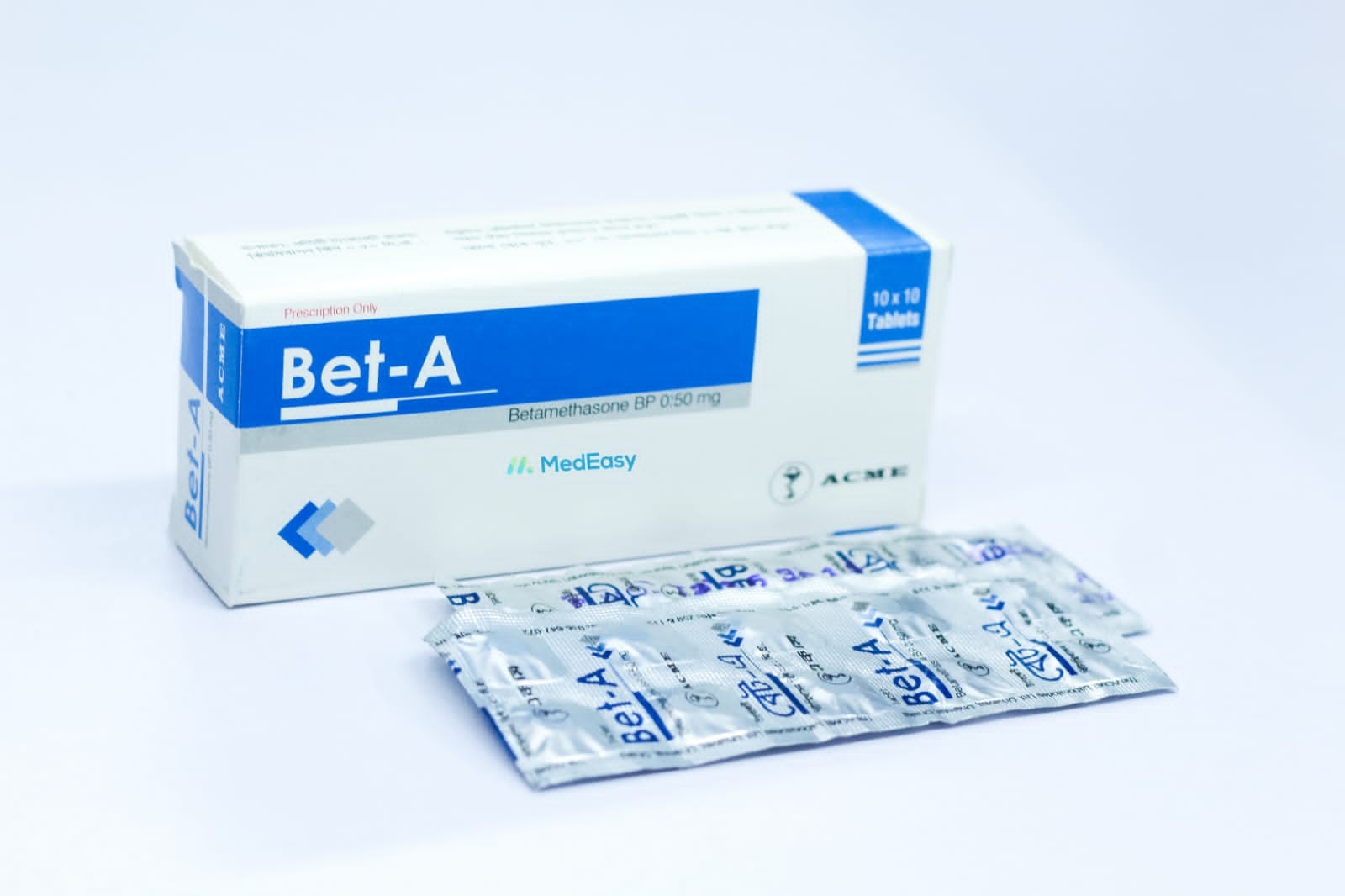
Generic medicine

Betamethasone: Brands, Price & Uses in Bangladesh

Betamethasone is a potent synthetic corticosteroid used across three very different clinical contexts - topical, systemic, and obstetric.

Forms:Tablet

About Betamethasone

Indications of Betamethasone

Betamethasone is a potent synthetic corticosteroid used across three very different clinical contexts - topical, systemic, and obstetric. Indications are classified below by strength of evidence.

Established/Approved Uses - Topical

  • Inflammatory and pruritic skin conditions responsive to topical corticosteroids, including eczema/atopic dermatitis, psoriasis (non-widespread), contact dermatitis, seborrheic dermatitis, and other corticosteroid-responsive dermatoses.

Established/Approved Uses - Systemic (Oral/Injectable)

  • Severe allergic reactions and allergic disorders (e.g., severe allergic rhinitis, drug hypersensitivity reactions, angioedema, serum sickness) as adjunct therapy.
  • Rheumatic and connective tissue disorders, including rheumatoid arthritis, systemic lupus erythematosus, dermatomyositis, and acute gouty arthritis (as adjunct/short-term therapy).
  • Severe dermatologic conditions such as pemphigus, severe erythema multiforme (Stevens-Johnson syndrome), exfoliative dermatitis, and severe psoriasis.
  • Respiratory conditions, including acute exacerbations of asthma and chronic obstructive pulmonary disease, as adjunct therapy.
  • Hematologic disorders, such as autoimmune hemolytic anemia and idiopathic thrombocytopenic purpura in adults (adjunct therapy).
  • Gastrointestinal disease, such as flares of ulcerative colitis (adjunct therapy).
  • Local intra-articular/intralesional/soft-tissue injection for conditions such as osteoarthritis, bursitis, tenosynovitis, and keloids (as the injectable acetate/phosphate combination).
  • Cerebral edema associated with brain tumors (adjunct, short-term).

Established/Guideline-Supported Use - Obstetric (Antenatal)

  • Acceleration of fetal lung maturation in pregnant women between approximately 24 and 34 weeks of gestation who are at risk of preterm delivery within the next 7 days. A single course of antenatal Betamethasone reduces the risk of respiratory distress syndrome, intraventricular hemorrhage, and neonatal death in the preterm infant. This is a distinct, guideline-supported indication with dosing very different from topical or general systemic use (see Dosage and Administration).

Indications and formulation (topical vs. oral vs. injectable) must always be matched carefully, as dosing and risk profile differ substantially between routes.

Dosage & Administration of Betamethasone

Topical Use (Skin Conditions)

Apply a thin layer of Betamethasone cream/ointment/lotion to the affected area, usually once or twice daily. Rub in gently. Avoid application to the face, groin, or axillae for prolonged periods, and avoid occlusive dressings unless specifically directed by a physician, as these increase systemic absorption and local skin atrophy. Use the lowest potency and shortest duration effective for the condition.

Systemic Use - Oral (Adults)

Condition SeverityTypical Starting DoseNotes
Mild-moderate inflammatory/allergic conditionsApproximately 0.6-1.2 mg/dayAdjusted to individual response
Severe inflammatory/autoimmune conditionsUp to approximately 4.8-7.2 mg/day (occasionally higher short-term)Higher doses for acute, severe disease; taper as condition improves

Once a therapeutic response is achieved, the dose should be reduced gradually to the lowest level that maintains an adequate clinical response. Treatment should not be stopped abruptly after more than a few days of use (see Precautions and Warnings).

Systemic Use - Intramuscular/Intra-articular/Intralesional Injection

Betamethasone sodium phosphate/acetate suspension is given by intramuscular injection (typical adult dose approximately 0.5-9 mg, depending on condition and severity) or by intra-articular/intralesional/soft-tissue injection at doses individualized to the joint or lesion size, under direct medical supervision.

Obstetric Use - Antenatal Corticosteroid Therapy

IndicationRegimen
Acceleration of fetal lung maturation (women at 24-34 weeks' gestation at risk of preterm delivery within 7 days)Betamethasone (as the acetate/phosphate combination) 12 mg by intramuscular injection, repeated once 24 hours later (total of two doses)

A single course is generally recommended; repeat "rescue" courses are only considered in specific circumstances under specialist obstetric guidance.

Pediatric Dose

Topical Betamethasone should be used with particular caution in children - lowest effective potency, shortest duration, and limited body surface area (see Use in Special Populations). Systemic pediatric dosing must be individualized by a physician based on weight and condition; safety and efficacy of some formulations/routes are not separately established in young children.

Renal/Hepatic Adjustment

No formally established fixed dose-adjustment schedule exists for renal or hepatic impairment; Betamethasone should be used cautiously in these populations with close clinical monitoring, as metabolism and fluid balance may be affected.

Side Effects of Betamethasone

The nature and frequency of side effects with Betamethasone depend heavily on the route, dose, and duration of use.

Topical Use

  • Local burning, itching, irritation, or dryness at the application site
  • Skin thinning, stretch marks (striae), or visible blood vessels with prolonged use (see Precautions and Warnings)
  • Acneiform eruptions or folliculitis

Systemic Use (Oral/Injectable)

  • Insomnia, mood changes, restlessness
  • Increased appetite and weight gain
  • Indigestion, nausea, or abdominal discomfort
  • Elevated blood glucose
  • Fluid retention, facial puffiness

Less Common but Serious Effects

Adrenal suppression, increased susceptibility to infection, osteoporosis, growth suppression in children, and psychiatric disturbances can occur with prolonged or high-dose systemic use - see Precautions and Warnings for full detail and monitoring guidance.

Contraindications of Betamethasone

  • Known hypersensitivity to Betamethasone or to other corticosteroids/formulation components.
  • Systemic fungal infections - systemic Betamethasone is contraindicated in patients with active systemic fungal infections.

Other conditions sometimes listed with topical or systemic corticosteroid use (e.g., untreated local skin infection at the application site, active infection generally) represent important precautions rather than true absolute contraindications and are addressed under Precautions and Warnings.

Frequently Asked Questions about Betamethasone

What is Betamethasone used for?

Betamethasone is a potent corticosteroid used topically for skin conditions like eczema and psoriasis, systemically (oral or injectable) for a range of inflammatory, allergic, and autoimmune conditions, and by injection in pregnant women at risk of preterm delivery to help mature the baby's lungs before birth.

How should I apply topical Betamethasone?

Apply a thin layer to the affected skin area, usually once or twice daily as directed by your physician. Avoid using it on the face, groin, or skin folds for prolonged periods, and do not cover the area with an airtight dressing unless your physician specifically instructs you to, since this increases absorption and the risk of skin thinning.

Can I stop taking Betamethasone suddenly?

No. If you have been taking systemic (oral or injectable) Betamethasone for more than a few days, stopping suddenly can cause adrenal insufficiency because your body's own cortisol production may be suppressed. Your physician will guide you on gradually tapering the dose.

Is Betamethasone safe during pregnancy?

For general medical conditions, Betamethasone should be used in pregnancy only if clearly needed, as your physician believes the benefit outweighs potential risk to the fetus. However, in a specific situation - when preterm delivery is expected between about 24 and 34 weeks of pregnancy - doctors commonly give a short course of Betamethasone injections specifically to help the baby's lungs mature faster, which is a well-established and recommended practice in that circumstance.

What side effects should I watch for with Betamethasone?

With topical use, watch for skin thinning, stretch marks, or irritation at the application site. With systemic use, watch for increased appetite/weight gain, mood changes, trouble sleeping, high blood sugar, and signs of infection (since Betamethasone can mask infection symptoms). Contact your physician if you notice any of these.

Can Betamethasone interact with other medicines?

Yes. Betamethasone can interact with certain antibiotics/antifungals, seizure medicines (like phenytoin or carbamazepine), NSAIDs/aspirin, blood thinners like warfarin, diuretics, diabetes medicines, and live vaccines. Always tell your physician and pharmacist about all medicines, supplements, and vaccines before starting Betamethasone.

Disclaimer

The information provided is accurate to the best of our knowledge, but it does not replace professional medical advice. We cannot guarantee its completeness or accuracy, and the absence of specific information about a drug should not be taken as an endorsement. We are not responsible for any consequences arising from this information, so please consult a healthcare professional for any concerns or questions.

DoctorBlogArticles