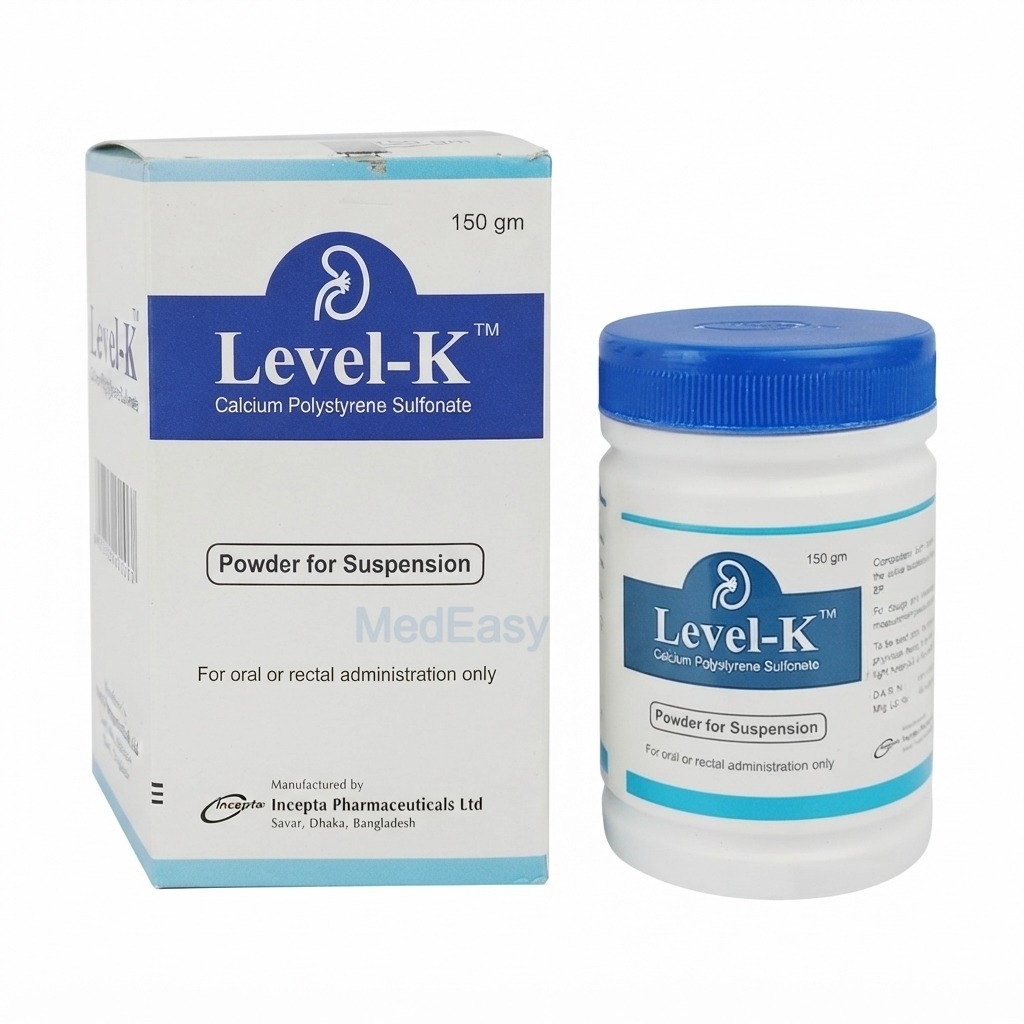
Generic medicine

Calcium Polystyrene Sulfonate: Brands, Price & Uses in Bangladesh

Calcium Polystyrene Sulfonate is a cation-exchange resin indicated for the treatment of hyperkalemia (elevated blood potassium levels), most commonly in patients with chronic kidney disease and more.

Forms:Powder for Suspension

About Calcium Polystyrene Sulfonate

Indications of Calcium Polystyrene Sulfonate

Calcium Polystyrene Sulfonate is a cation-exchange resin indicated for the treatment of hyperkalemia (elevated blood potassium levels), most commonly in patients with chronic kidney disease, including those on dialysis, and in other conditions associated with potassium retention (e.g., certain drug-induced hyperkalemia).

  • Established use: Management of hyperkalemia, particularly in patients where sodium restriction is important (e.g., fluid overload, hypertension, heart failure), since Calcium Polystyrene Sulfonate exchanges calcium rather than sodium for potassium.
  • Important limitation: Calcium Polystyrene Sulfonate has a delayed onset of action and is not suitable as sole therapy for severe or life-threatening hyperkalemia requiring emergency correction (e.g., with ECG changes); it is used as an adjunct once acute measures (insulin/glucose, calcium gluconate, dialysis) have been considered.
  • Chronic/maintenance use: May be used for longer-term outpatient control of mild-to-moderate hyperkalemia under physician supervision.

Dosage & Administration of Calcium Polystyrene Sulfonate

Route/PopulationTypical Dosing
Adults - OralUsual dose is 15 g, 1 to 4 times daily, mixed with a small amount of water or other suitable vehicle (not fruit juice, which may impair binding). Dose and frequency are adjusted according to serum potassium response.
Adults - Rectal (enema)Approximately 30 g given as a retention enema, retained for as long as feasible (ideally several hours), and may be repeated as directed by a physician based on potassium response.
Renal impairmentCommonly used in patients with renal impairment/dialysis as first-line indication; no specific dose reduction is established, but electrolyte monitoring is essential.

Calcium Polystyrene Sulfonate should not be administered together with sorbitol-containing preparations due to a risk of intestinal necrosis. It should not be mixed with magnesium- or aluminum-containing antacids/laxatives, which can reduce its potassium-binding capacity. Adequate bowel function should be confirmed before use, and it should not be used sole therapy for a severe or emergency hyperkalemic crisis.

Side Effects of Calcium Polystyrene Sulfonate

Common and serious adverse effects associated with Calcium Polystyrene Sulfonate include:

  • Gastrointestinal: Constipation (common), nausea, vomiting, anorexia, and gastric irritation.
  • Serious (rare but important): Intestinal necrosis and gastrointestinal bleeding/perforation, particularly when used with sorbitol or in patients with reduced bowel motility (see Contraindications and Precautions).
  • Electrolyte disturbances: Hypercalcemia (due to the calcium-exchange mechanism), hypokalemia (with overcorrection), and hypomagnesemia may occur; regular monitoring is required.
  • Other: Fecal impaction, particularly in patients with reduced gastrointestinal motility or dehydration.

Contraindications of Calcium Polystyrene Sulfonate

Calcium Polystyrene Sulfonate is contraindicated in:

  • Known hypersensitivity to Calcium Polystyrene Sulfonate or any component of the formulation.
  • Neonates, particularly premature infants, due to an increased risk of intestinal necrosis (risk is further increased with concurrent sorbitol-containing formulations).
  • Patients with abnormal bowel function, including obstruction, ileus (including postoperative ileus), or conditions predisposing to intestinal necrosis or perforation.
  • Pre-existing hypercalcemia.

Frequently Asked Questions about Calcium Polystyrene Sulfonate

What is Calcium Polystyrene Sulfonate used for?

Calcium Polystyrene Sulfonate is used to treat hyperkalemia (high blood potassium levels), most often in patients with chronic kidney disease, by binding potassium in the gut and removing it from the body.

How is Calcium Polystyrene Sulfonate different from sodium-based potassium binders?

Calcium Polystyrene Sulfonate exchanges calcium instead of sodium for potassium, which avoids adding extra sodium to the body - an advantage for patients who need to restrict their sodium intake, such as those with heart failure or fluid overload.

Can Calcium Polystyrene Sulfonate be used for a hyperkalemia emergency?

No. Calcium Polystyrene Sulfonate works gradually and is not fast enough to be relied upon as the sole treatment for severe or life-threatening hyperkalemia; it is used alongside other emergency measures when needed.

What precautions should I take while using Calcium Polystyrene Sulfonate?

Do not take Calcium Polystyrene Sulfonate with sorbitol-containing products, as this combination has been linked to serious, sometimes fatal, intestinal necrosis. Also avoid taking it with magnesium- or aluminum-containing antacids or laxatives, since these reduce its effectiveness. Report severe constipation, abdominal pain, or bloating to your doctor immediately.

Is Calcium Polystyrene Sulfonate safe during pregnancy?

Calcium Polystyrene Sulfonate should be used during pregnancy only if clearly needed and if the potential benefit justifies the potential risk, as data are limited; consult your physician before use.

Can children use Calcium Polystyrene Sulfonate?

Calcium Polystyrene Sulfonate is contraindicated in neonates, especially premature infants, due to a risk of intestinal necrosis. Safety and efficacy in older children are not well established, so it should only be used in children under close specialist medical supervision.

Disclaimer

The information provided is accurate to the best of our knowledge, but it does not replace professional medical advice. We cannot guarantee its completeness or accuracy, and the absence of specific information about a drug should not be taken as an endorsement. We are not responsible for any consequences arising from this information, so please consult a healthcare professional for any concerns or questions.

DoctorBlogArticles