10% Off
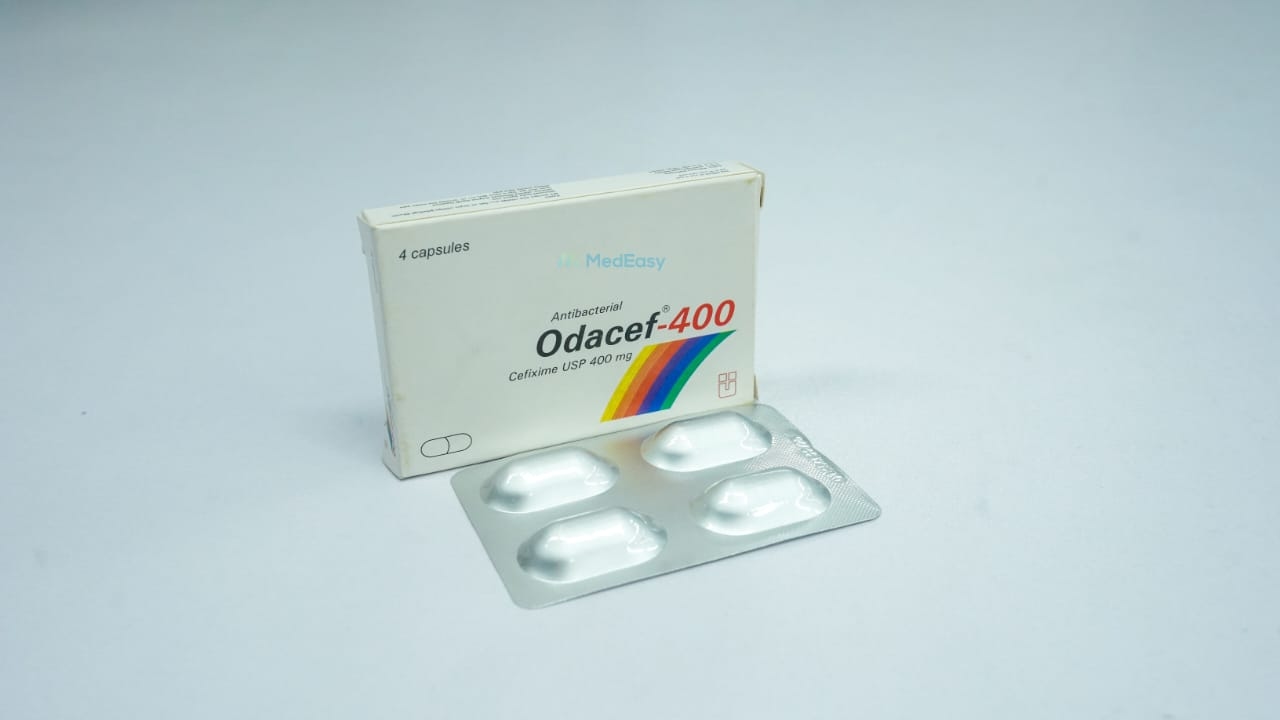
Odacef200 mg
Unimed Unihealth MFG. Ltd.
৳216.00
Add to cart
Cefixime Trihydrate is a third-generation cephalosporin antibiotic used to treat infections caused by susceptible bacteria.
Cefixime Trihydrate is a third-generation cephalosporin antibiotic used to treat infections caused by susceptible bacteria. Indications are classified below by strength of evidence:
Use of Cefixime Trihydrate should be guided by culture and susceptibility information where possible, and by local antimicrobial resistance patterns, to ensure appropriate use of this antibiotic.
| Indication | Dose |
|---|---|
| Uncomplicated UTI, pharyngitis/tonsillitis, bronchitis, otitis media (general use) | Cefixime Trihydrate 200 mg twice daily or 400 mg once daily, for 7–14 days depending on severity and site of infection (streptococcal pharyngitis requires at least 10 days) |
| Uncomplicated gonorrhea | Cefixime Trihydrate 400 mg as a single oral dose |
| Typhoid fever | Cefixime Trihydrate 200 mg twice daily for 10–14 days (higher weight-based doses used in children, see below) |
| Indication | Dose |
|---|---|
| General susceptible infections (UTI, otitis media, pharyngitis/tonsillitis, bronchitis) | Cefixime Trihydrate 8 mg/kg/day, given once daily or as 4 mg/kg every 12 hours |
| Typhoid fever | Cefixime Trihydrate 10–15 mg/kg/day in two divided doses for 10–14 days, as commonly used in guideline-supported regimens for multidrug-resistant typhoid |
Safety and efficacy of Cefixime Trihydrate in infants below 6 months of age have not been established.
| Creatinine clearance | Dose adjustment |
|---|---|
| ≥ 60 mL/min (or on hemodialysis) | No adjustment necessary |
| 20–59 mL/min | Reduce dose by approximately 25% |
| < 20 mL/min | Reduce dose by approximately 50% (e.g. maximum 200 mg once daily) |
Administration: Cefixime Trihydrate may be taken with or without food. The oral suspension should be shaken well before each use and measured with an accurate dosing device. Cefixime Trihydrate should be taken exactly as prescribed by your physician; do not stop, extend, skip doses, or share this medicine with others without medical advice, and complete the full prescribed course even if symptoms improve early.
The most commonly reported side effects of Cefixime Trihydrate are gastrointestinal:
Less common effects include headache, dizziness, and skin reactions such as rash, pruritus, and urticaria. Reversible hematologic changes (eosinophilia, thrombocytopenia, leukopenia) have been reported. Rare but serious effects include hypersensitivity reactions (including anaphylaxis and serious skin reactions), Clostridioides difficile-associated diarrhea/pseudomembranous colitis (see Precautions and Warnings), and reversible elevations in liver enzymes.
Cefixime Trihydrate is contraindicated in patients with a known history of hypersensitivity (e.g. anaphylaxis, serious skin reactions) to Cefixime Trihydrate, other cephalosporin antibiotics, or any component of the formulation. Because of the possibility of cross-reactivity, Cefixime Trihydrate should also not be given to patients with a history of a severe (e.g. anaphylactic) reaction to penicillins.
Disclaimer
The information provided is accurate to the best of our knowledge, but it does not replace professional medical advice. We cannot guarantee its completeness or accuracy, and the absence of specific information about a drug should not be taken as an endorsement. We are not responsible for any consequences arising from this information, so please consult a healthcare professional for any concerns or questions.