8% Off
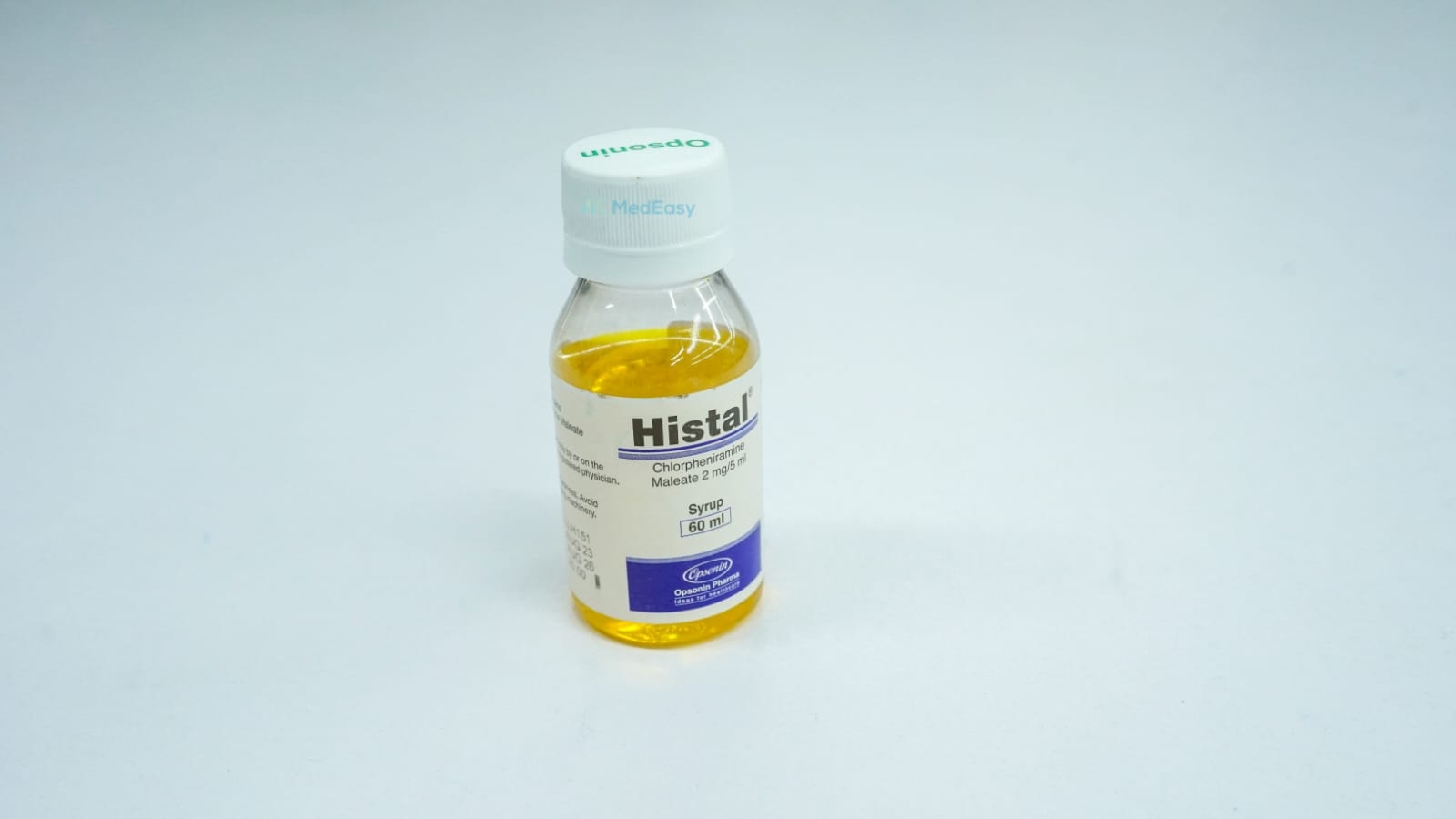
Histal60 ml
Opsonin Pharma Ltd.
৳18.40
Add to cart
Chlorpheniramine Maleate is a first-generation (sedating) H1-receptor antagonist antihistamine used for the symptomatic relief of a range of allergic and allergic-type conditions.
Chlorpheniramine Maleate is a first-generation (sedating) H1-receptor antagonist antihistamine used for the symptomatic relief of a range of allergic and allergic-type conditions. Its indications can be classified by strength of evidence as follows:
Chlorpheniramine Maleate does not cure the underlying cause of allergies and provides temporary symptomatic relief only.
The dosing of Chlorpheniramine Maleate depends on the indication, patient age, and formulation used (immediate-release vs. sustained-release, tablet vs. syrup vs. injection). The following is a general guide; always follow the product label or a physician's/pharmacist's instructions.
| Age group | Usual dose | Maximum daily dose |
|---|---|---|
| Adults and children 12 years and older | 4 mg every 4-6 hours | 24 mg/24 hours |
| Children 6 to under 12 years | 2 mg every 4-6 hours | 12 mg/24 hours |
| Children 2 to under 6 years | Only under medical advice; if directed, typically 1 mg every 4-6 hours | 6 mg/24 hours (only if physician-directed) |
| Children under 2 years | Not recommended without physician guidance | - |
| Newborn/premature infants | Contraindicated (see Contraindications) | - |
Where an extended-release formulation of Chlorpheniramine Maleate (e.g., 8 mg or 12 mg) is used, it is generally taken once or twice daily as directed on the product label; tablets should be swallowed whole and not crushed or chewed, as this can cause too much drug to be released at once.
Chlorpheniramine Maleate injection is administered by a healthcare professional (intramuscular, subcutaneous, or slow intravenous injection), typically as an adjunct in the management of acute allergic reactions or anaphylaxis, at a dose and frequency determined by the treating clinician.
There is no well-established formal dose-adjustment schedule for renal or hepatic impairment; however, because Chlorpheniramine Maleate is hepatically metabolized and renally excreted, a lower dose or longer dosing interval, and closer monitoring for excess sedation or anticholinergic effects, is advisable in patients with significant hepatic or renal impairment, on physician advice.
Side effects of Chlorpheniramine Maleate are generally related to its sedating and anticholinergic properties.
Patients should seek prompt medical attention for signs of a serious allergic reaction, severe confusion, difficulty breathing, or inability to urinate.
Chlorpheniramine Maleate is contraindicated in the following situations:
Chlorpheniramine Maleate should be used only with caution, not withheld absolutely, in situations such as mild-to-moderate hepatic impairment, elderly patients, or mild prostatic symptoms; these are discussed under Precautions and Warnings, not as absolute contraindications.
Disclaimer
The information provided is accurate to the best of our knowledge, but it does not replace professional medical advice. We cannot guarantee its completeness or accuracy, and the absence of specific information about a drug should not be taken as an endorsement. We are not responsible for any consequences arising from this information, so please consult a healthcare professional for any concerns or questions.