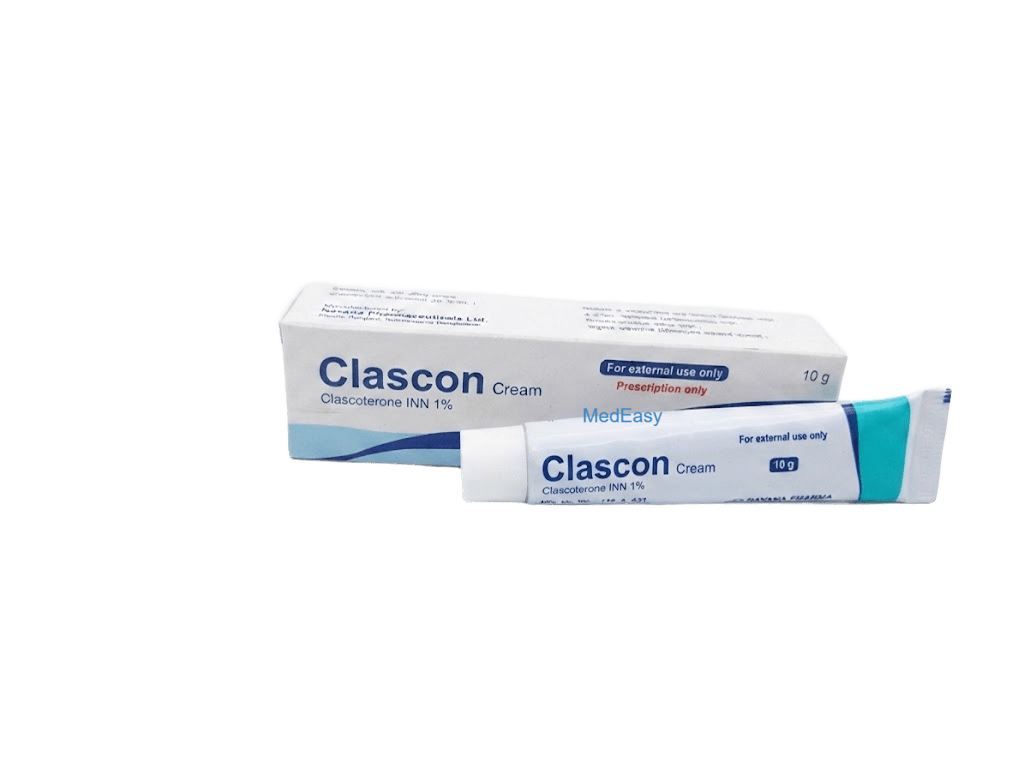
Generic medicine

Clascoterone: Brands, Price & Uses in Bangladesh

Clascoterone is a topical androgen receptor inhibitor indicated for the treatment of acne vulgaris.

Forms:Cream

About Clascoterone

Indications of Clascoterone

Clascoterone is a topical androgen receptor inhibitor indicated for the treatment of acne vulgaris.

  • FDA-approved use: Topical treatment of acne vulgaris in patients 12 years of age and older.
  • Notable feature: Unlike systemic antiandrogen therapies (e.g., spironolactone) that are generally limited to female patients due to hormonal side effects, Clascoterone acts locally within the skin and blocks androgen receptors in the sebaceous gland and hair follicle without significant systemic hormonal activity when used as directed, making it suitable for use in both males and females.
  • Evidence base: Efficacy was established in randomized, double-blind, vehicle-controlled clinical trials in patients with facial acne vulgaris.
  • Not indicated for acne outside the labeled age group, and not established for other androgen-mediated skin conditions.

Dosage & Administration of Clascoterone

IndicationPopulationRecommended Regimen
Acne vulgarisAdults and adolescents 12 years and olderApply a thin layer of Clascoterone cream (approximately 1 gram) to the affected area(s) twice daily, once in the morning and once in the evening.
Acne vulgarisChildren under 12 yearsSafety and efficacy not established; not recommended.

For external/topical use on the skin only. Wash and dry the affected area gently before application. Avoid contact with eyes, lips, mouth, and other mucous membranes; if accidental contact occurs, rinse thoroughly with water. Wash hands after application unless the hands are a treated area. If irritation occurs, application frequency may be reduced; consult a physician if irritation persists or worsens.

Side Effects of Clascoterone

The most commonly reported side effects of Clascoterone in clinical trials (occurring in approximately 7-12% of patients) include:

  • Redness of the skin (erythema)
  • Itching (pruritus)
  • Scaling or dryness of the skin

Less common effects (reported in more than 3% of patients, at rates similar to the vehicle/placebo cream) include localized swelling (edema), stinging, and burning sensation at the application site. These reactions are usually mild to moderate and may improve with continued use or reduced application frequency. Patients should notify their physician if side effects are severe, persistent, or worsening.

Contraindications of Clascoterone

Clascoterone is contraindicated in patients with known hypersensitivity to Clascoterone or to any component of the formulation.

Frequently Asked Questions about Clascoterone

What is Clascoterone used for?

Clascoterone is a topical cream used to treat acne vulgaris in patients 12 years of age and older. It works by blocking androgen receptors in the skin, which helps reduce the excess oil production and inflammation that lead to acne.

Can both men and women use Clascoterone?

Yes. Unlike some oral antiandrogen medications for acne that are typically used only in female patients due to hormonal side effects, Clascoterone acts locally on the skin with limited systemic hormonal activity, so it can be used by both male and female patients as prescribed.

How should I apply Clascoterone cream?

Apply a thin layer of Clascoterone cream to clean, dry, affected skin twice daily, in the morning and evening. Avoid contact with the eyes, lips, mouth, and mucous membranes, and wash your hands after application. Use it exactly as directed by your physician.

What side effects can Clascoterone cause?

The most common side effects of Clascoterone are redness, itching, and dryness or scaling of the skin at the application site. Less commonly, swelling, stinging, or burning may occur. These effects are usually mild and may lessen with continued use; tell your doctor if they are severe or persistent.

Is Clascoterone safe during pregnancy or breastfeeding?

Safety data on Clascoterone during pregnancy and breastfeeding are limited. Animal studies showed harm at high exposures, and there is no adequate human data. Clascoterone should be used during pregnancy or lactation only if clearly needed and if your physician determines the potential benefit outweighs the potential risk; always consult your doctor first.

How long does it take for Clascoterone to work?

Improvement in acne with Clascoterone typically requires several weeks of consistent, twice-daily use, with clinical studies generally evaluating results over about 12 weeks. Do not stop treatment early or use it longer than prescribed without checking with your physician.

Disclaimer

The information provided is accurate to the best of our knowledge, but it does not replace professional medical advice. We cannot guarantee its completeness or accuracy, and the absence of specific information about a drug should not be taken as an endorsement. We are not responsible for any consequences arising from this information, so please consult a healthcare professional for any concerns or questions.

DoctorBlogArticles