10% Off
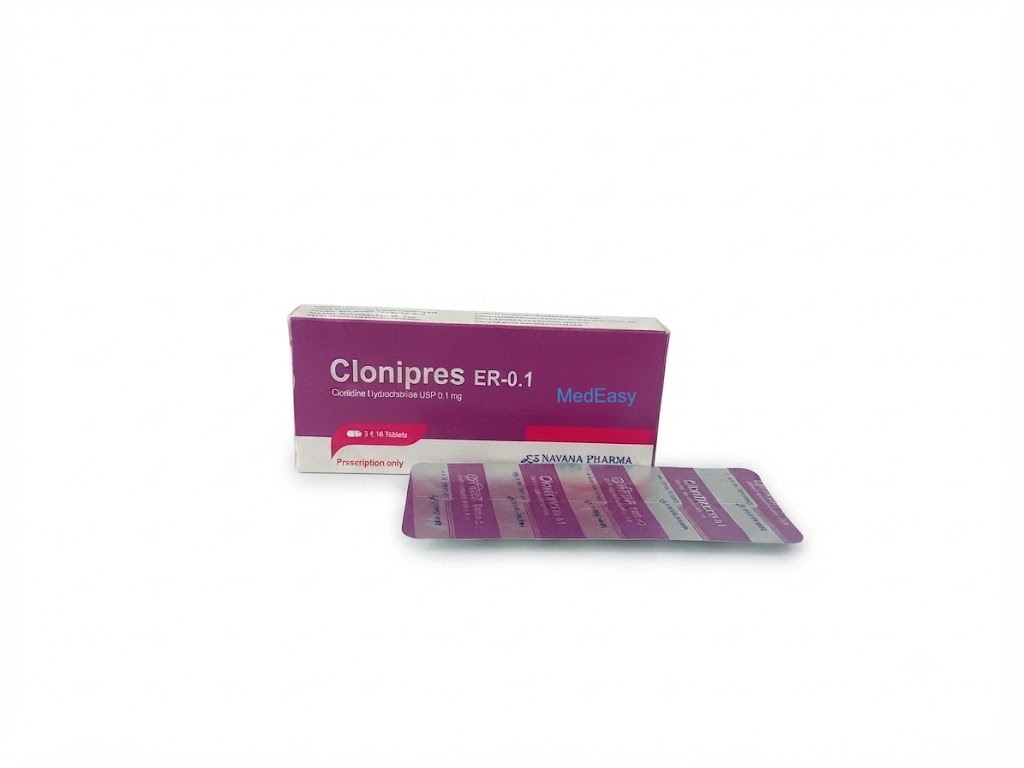
Clonipres0.1 mg
Navana Pharmaceuticals Ltd.
৳90.00
Add to cart
Clonidine Hydrochloride is indicated for the following uses, listed by strength of evidence: Established / approved uses Hypertension — oral immediate-release and transdermal patch formulations of…
Clonidine Hydrochloride is indicated for the following uses, listed by strength of evidence:
Use for off-label indications should only occur under a physician's guidance.
Dosing of Clonidine Hydrochloride is individualized by indication, formulation, and patient response. Doses should always be titrated gradually and never stopped abruptly (see Precautions and Warnings).
| Indication | Population | Typical Dosing |
|---|---|---|
| Hypertension (oral, immediate-release) | Adults | Initial 0.1 mg twice daily; increase by 0.1 mg/day at weekly intervals as needed. Usual maintenance range 0.2–0.6 mg/day in divided doses; maximum 2.4 mg/day. |
| Hypertension (transdermal patch) | Adults | Apply one patch (delivering 0.1 mg/24 hr) to a hairless area once every 7 days; titrate to higher-strength patch after 1–2 weeks if needed. |
| ADHD (extended-release oral) | Children/adolescents 6–17 years | Initial 0.1 mg at bedtime; increase by 0.1 mg/day at weekly intervals, given in divided doses (morning and evening). Maximum 0.4 mg/day. Extended-release tablets must be swallowed whole. |
| Severe cancer pain (epidural infusion) | Adults, in combination with epidural opioids, under specialist supervision | Initial continuous epidural infusion of approximately 30 mcg/hour, titrated according to pain relief and tolerability. |
| Opioid/alcohol/nicotine withdrawal (off-label) | Adults | Low doses (e.g., 0.1–0.2 mg every 6–8 hours as needed) under medical supervision, guided by symptom severity and blood pressure. |
Renal impairment: Because Clonidine Hydrochloride is partly eliminated renally, patients with significant renal impairment may require lower doses and longer dosing intervals; titrate cautiously (see Use in Special Populations).
Hepatic impairment: No formal dose adjustment is established; use with caution and clinical monitoring.
Common side effects of Clonidine Hydrochloride are dose-related and include:
Less common but clinically important effects include bradycardia, AV conduction abnormalities, mood changes/depression, sexual dysfunction, and skin reactions at transdermal patch sites. Most side effects diminish with continued use or dose adjustment; a healthcare provider should be informed of persistent or bothersome symptoms.
Clonidine Hydrochloride is contraindicated in patients with known hypersensitivity to Clonidine Hydrochloride or any component of the formulation. Epidural Clonidine Hydrochloride is additionally contraindicated in patients with a bleeding diathesis or those receiving anticoagulant therapy, in the presence of infection at the injection site, and for obstetrical, postpartum, or perioperative pain due to the risk of hemodynamic instability.
Disclaimer
The information provided is accurate to the best of our knowledge, but it does not replace professional medical advice. We cannot guarantee its completeness or accuracy, and the absence of specific information about a drug should not be taken as an endorsement. We are not responsible for any consequences arising from this information, so please consult a healthcare professional for any concerns or questions.