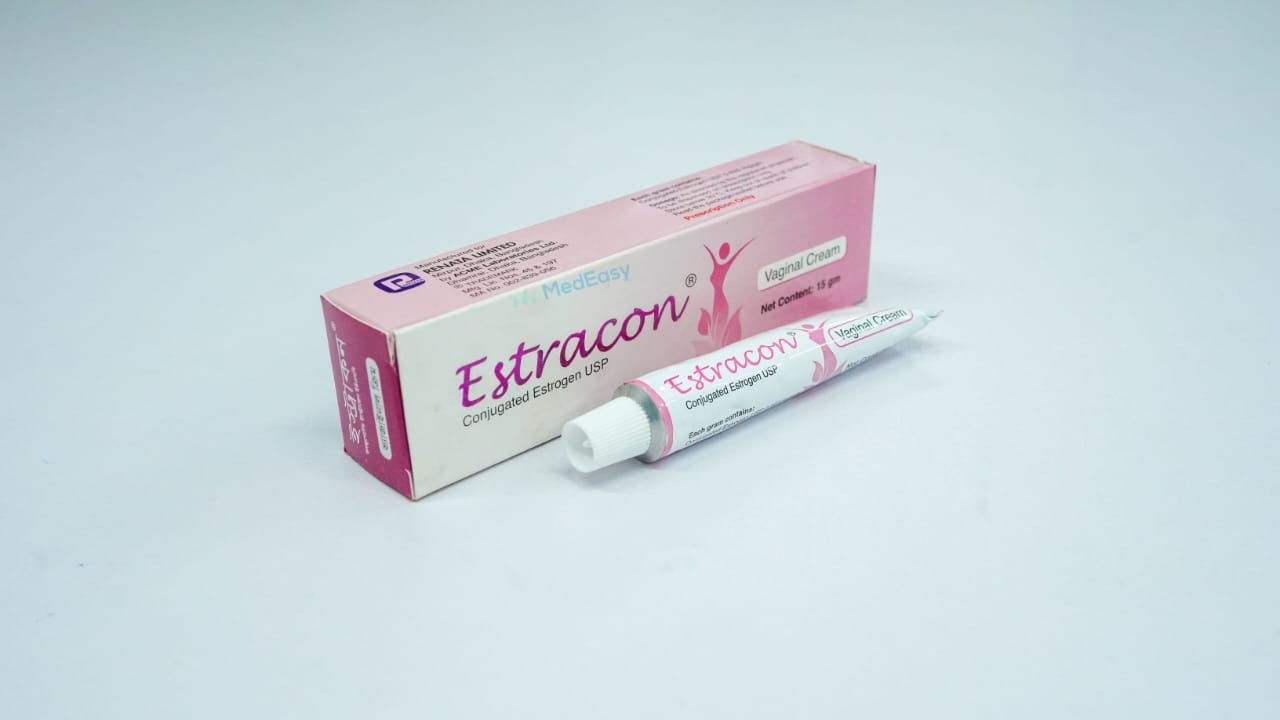
Generic medicine

Conjugated Estrogen: Brands, Price & Uses in Bangladesh

Conjugated Estrogen is a mixture of estrogen hormones used in women for the following indications: Established/FDA-approved uses Moderate to severe vasomotor symptoms (hot flashes and night sweats)…

Forms:Vaginal Cream

About Conjugated Estrogen

Indications of Conjugated Estrogen

Conjugated Estrogen is a mixture of estrogen hormones used in women for the following indications:

Established/FDA-approved uses

  • Moderate to severe vasomotor symptoms (hot flashes and night sweats) associated with menopause.
  • Moderate to severe symptoms of vulvar and vaginal atrophy associated with menopause (oral or, where available, vaginal formulations).
  • Treatment of hypoestrogenism due to hypogonadism, castration, or primary ovarian failure.
  • Prevention of postmenopausal osteoporosis, when other non-estrogen therapies are not appropriate, in women at significant risk.

Adjunct/combination use

  • Palliative treatment of certain hormone-sensitive advanced breast cancer (in select men and postmenopausal women), and advanced androgen-dependent prostate cancer, as an adjunct under oncology supervision.

In women with an intact uterus, Conjugated Estrogen is typically prescribed together with a progestin to reduce the risk of endometrial cancer associated with unopposed estrogen use.

Dosage & Administration of Conjugated Estrogen

Dosage by indication

IndicationTypical adult dose
Vasomotor symptoms of menopauseLowest effective dose, commonly starting around 0.3 mg orally once daily, adjusted based on response; use for the shortest duration consistent with treatment goals.
Vulvovaginal atrophyLowest effective dose orally, or a locally acting vaginal formulation where available, per product labeling.
Hypoestrogenism (hypogonadism, castration, primary ovarian failure)Individualized dosing, generally in a cyclic regimen; consult product labeling.
Prevention of postmenopausal osteoporosisLowest effective dose, individualized; typically combined with adequate calcium and vitamin D intake.

Administration

Conjugated Estrogen tablets are usually taken orally once daily, with or without food, at the same time each day. A progestin is usually co-administered in women with a uterus. The lowest effective dose should be used for the shortest duration consistent with treatment goals, with periodic reassessment by the prescribing physician.

Do not start, stop, or change the dose of Conjugated Estrogen without consulting a physician.

Side Effects of Conjugated Estrogen

Common side effects

  • Headache
  • Breast tenderness or enlargement
  • Nausea, bloating, abdominal cramps
  • Irregular vaginal bleeding or spotting
  • Fluid retention/edema
  • Mood changes

Serious side effects

See Precautions and Warnings for boxed-warning-level risks including endometrial cancer, breast cancer, cardiovascular disorders (myocardial infarction, stroke, deep vein thrombosis, pulmonary embolism), and probable dementia in women over 65. Gallbladder disease and, rarely, severe hypertriglyceridemia with pancreatitis risk have also been reported. Seek prompt medical attention for chest pain, sudden shortness of breath, leg swelling/pain, sudden severe headache, vision changes, or signs of stroke.

Contraindications of Conjugated Estrogen

Conjugated Estrogen is contraindicated in patients with any of the following:

  • Known hypersensitivity to Conjugated Estrogen or any component of the formulation.
  • Known or suspected pregnancy.
  • Undiagnosed abnormal vaginal bleeding.
  • Known, suspected, or history of breast cancer.
  • Known or suspected estrogen-dependent neoplasia.
  • Active deep vein thrombosis, pulmonary embolism, or history of these conditions.
  • Active arterial thromboembolic disease (e.g., stroke, myocardial infarction) or history of these conditions.
  • Known liver dysfunction or disease.
  • Known protein C, protein S, antithrombin deficiency, or other known thrombophilic disorders.

Frequently Asked Questions about Conjugated Estrogen

What is Conjugated Estrogen used for?

Conjugated Estrogen is used to relieve moderate to severe menopausal hot flashes and vaginal dryness, treat hypoestrogenism due to ovarian failure or hypogonadism, and help prevent postmenopausal osteoporosis in women at risk.

Can Conjugated Estrogen be used during pregnancy?

No. Conjugated Estrogen is contraindicated in known or suspected pregnancy. If pregnancy occurs while taking Conjugated Estrogen, stop the medicine and contact a physician immediately.

Is Conjugated Estrogen safe while breastfeeding?

Conjugated Estrogen is not generally recommended during breastfeeding because estrogens can reduce milk supply and quality. It should be used only if clearly needed, after a physician weighs the potential benefit against risk to the infant.

Does Conjugated Estrogen increase cancer risk?

Conjugated Estrogen used alone (without a progestin) in women with a uterus increases the risk of endometrial cancer, so a progestin is usually added unless the uterus has been removed. Combined estrogen-progestin therapy has also been associated with an increased risk of breast cancer, and estrogen-alone therapy may carry some increased risk depending on duration of use. Discuss your personal risk factors with your physician.

What are the serious risks of Conjugated Estrogen?

Conjugated Estrogen carries a boxed warning for increased risk of endometrial cancer (with unopposed use), cardiovascular events (heart attack, stroke, blood clots), and probable dementia in women over 65, as well as breast cancer risk. Report chest pain, sudden shortness of breath, leg swelling, severe headache, or vision changes to a doctor immediately.

What should I do if I miss a dose of Conjugated Estrogen?

Take the missed dose as soon as remembered, unless it is close to the next scheduled dose, in which case skip the missed dose. Do not double the dose. Consult your physician if you are unsure.

Disclaimer

The information provided is accurate to the best of our knowledge, but it does not replace professional medical advice. We cannot guarantee its completeness or accuracy, and the absence of specific information about a drug should not be taken as an endorsement. We are not responsible for any consequences arising from this information, so please consult a healthcare professional for any concerns or questions.

DoctorBlogArticles