
10% Off
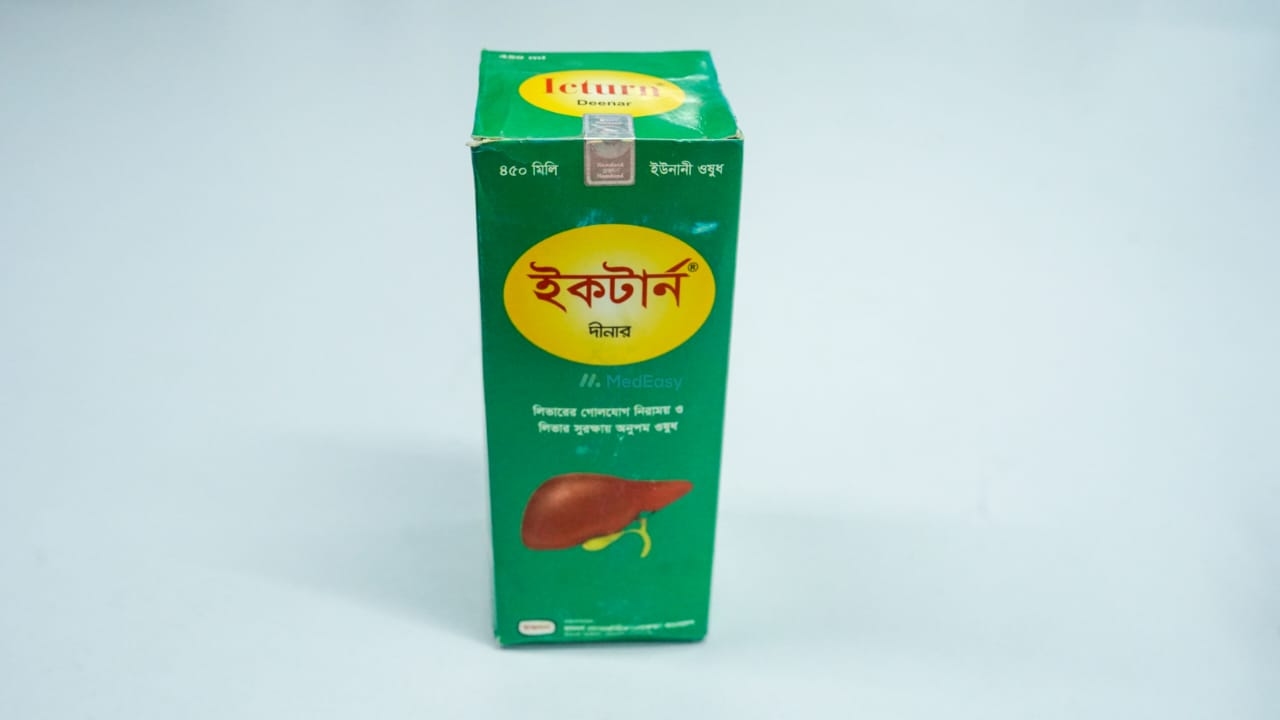
Icturn450 ml
Hamdard Laboratories
৳180.00
Add to cart
Deenar is a traditional Unani polyherbal syrup marketed in Bangladesh (available under brands such as Icturn and Livro) that is used traditionally to support liver and digestive health.
Deenar is a traditional Unani polyherbal syrup marketed in Bangladesh (available under brands such as Icturn and Livro) that is used traditionally to support liver and digestive health. It is not an FDA-approved pharmaceutical product, and rigorous modern clinical trial evidence for its use is generally limited. Indications below are presented as traditional/labeled uses rather than established evidence-based indications.
| Use | Evidence basis |
|---|---|
| Jaundice and hepatitis-related symptom support | Traditional Unani indication; primary marketed use of Deenar |
| General liver and biliary (gallbladder) health support, as a choleretic (bile-flow promoting) tonic | Traditional indication, based on formulation rationale |
| Mild constipation / digestive support | Traditional indication, attributed to rhubarb content and mild laxative/prebiotic effect |
| Ascites, pleurisy, alveolitis, and uterine inflammation (as listed on some local product labeling) | Traditional/labeled use only; not supported by rigorous modern clinical evidence and should not replace standard medical care for these conditions |
Deenar should be used as a supportive/adjunct traditional remedy only, and should not delay or replace evidence-based medical evaluation and treatment of jaundice, hepatitis, or other significant liver disease.
Dosing of Deenar should follow the specific product label of the brand dispensed, or the advice of a physician or qualified traditional medicine practitioner, as concentrations can vary by manufacturer.
| Population | Typical dose |
|---|---|
| Adults | 2–3 teaspoonfuls (approx. 10–15 mL), twice daily, or as directed by a physician |
| Children | 1/2–1 teaspoonful (approx. 2.5–5 mL), twice daily, only as directed by a physician |
Deenar is generally taken orally, after shaking the bottle well, using a proper measuring spoon or cup rather than a household spoon. It is commonly taken after meals, though the specific brand label should be followed. Take exactly as advised; do not exceed the recommended dose or use for longer than advised without medical guidance.
Because Deenar has not been studied in large, well-controlled clinical trials, a complete and verified side-effect profile is not available. Based on its ingredients (particularly rhubarb) and general reports of traditional herbal syrups, possible effects may include:
Patients should stop Deenar and seek medical advice if they experience persistent diarrhea, signs of an allergic reaction, or any severe or unexpected symptom.
Deenar is contraindicated in:
Disclaimer
The information provided is accurate to the best of our knowledge, but it does not replace professional medical advice. We cannot guarantee its completeness or accuracy, and the absence of specific information about a drug should not be taken as an endorsement. We are not responsible for any consequences arising from this information, so please consult a healthcare professional for any concerns or questions.