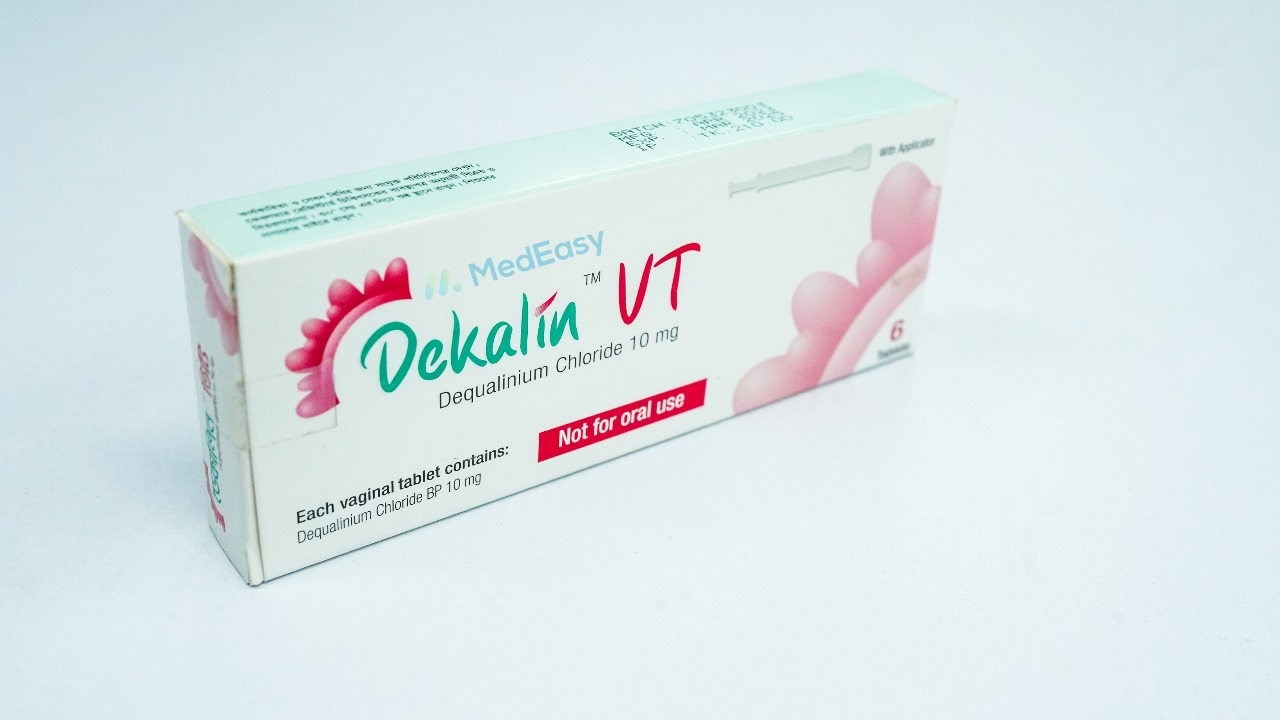
Generic medicine

Dequalinium Chloride: Brands, Price & Uses in Bangladesh

Bacterial Vaginosis (Vaginal Tablets) Dequalinium Chloride 10 mg vaginal tablets are an established, guideline-recognized treatment for bacterial vaginosis in adult women and more.

Forms:Tablet

About Dequalinium Chloride

Indications of Dequalinium Chloride

Bacterial Vaginosis (Vaginal Tablets)

Dequalinium Chloride 10 mg vaginal tablets are an established, guideline-recognized treatment for bacterial vaginosis in adult women, supported by clinical trial evidence of activity against Gardnerella vaginalis, Atopobium vaginae, and other anaerobic organisms associated with bacterial vaginosis.

Minor Infections of the Mouth and Throat (Lozenges)

Dequalinium Chloride lozenges are an established local antiseptic treatment for minor infections and inflammation of the mouth and throat, such as gingivitis, minor oral ulceration, and pharyngitis, based on the local antibacterial and antifungal action of Dequalinium Chloride.

General Antiseptic Use

Dequalinium Chloride is also used as a topical antiseptic in solutions, creams, and other formulations for disinfection of skin and mucous membranes, as an adjunct to standard skin and wound care rather than as a primary treatment for deep or systemic infection.

Not Indicated For

Dequalinium Chloride is not a treatment for sexually transmitted infections other than the bacterial vaginosis-associated organisms it targets; Dequalinium Chloride does not treat trichomoniasis, chlamydia, gonorrhea, or other STIs, and appropriate testing and treatment for those infections should be pursued separately when clinically indicated.

Dosage & Administration of Dequalinium Chloride

The dose, formulation, and duration of treatment with Dequalinium Chloride depend on the indication being treated and the specific product used, and should be confirmed against the individual product labeling or a qualified healthcare professional's instructions. Representative regimens are summarized below.

IndicationTypical RegimenNotes
Bacterial vaginosis (vaginal tablet)One 10 mg vaginal tablet of Dequalinium Chloride inserted deep into the vagina once daily, preferably at bedtime, for 6 consecutive daysComplete the full 6-day course of Dequalinium Chloride even if symptoms improve earlier; do not use during active menstruation, resume after bleeding stops
Minor mouth/throat infections (lozenge)One lozenge of Dequalinium Chloride allowed to dissolve slowly in the mouth every 2 to 3 hours as needed, up to the maximum stated on the product label, generally for no more than 4 to 5 daysDo not chew or swallow the lozenge whole; seek medical advice if symptoms do not improve or worsen

Side Effects of Dequalinium Chloride

Common Side Effects (Vaginal Tablets)

  • Vaginal discharge
  • Vulvovaginal itching (pruritus)
  • Vulvovaginal burning sensation
  • Vaginal candidiasis (fungal overgrowth)

Uncommon Side Effects

  • Vaginal bleeding or spotting
  • Vaginal pain
  • Headache
  • Nausea
  • Bacterial vaginitis or vulvitis

Rare / Not Known Frequency

  • Ulceration or maceration of the vaginal epithelium, usually associated with exceeding the recommended dose or duration of Dequalinium Chloride
  • Uterine bleeding, vaginal dryness
  • Allergic reactions (rash, localized swelling) and fever

Lozenge Formulations

Mild oral or throat irritation, altered taste, or a local burning sensation can occasionally occur with lozenges containing Dequalinium Chloride; discontinue and seek medical advice if symptoms worsen or a hypersensitivity reaction develops.

Contraindications of Dequalinium Chloride

Dequalinium Chloride is contraindicated in the following situations:

  • Known hypersensitivity to Dequalinium Chloride or to any excipient in the specific product.
  • Ulceration of the vaginal epithelium or the vaginal portion of the cervix, for the vaginal tablet formulation of Dequalinium Chloride.
  • Premenarchal (sexually immature) girls, for the vaginal tablet formulation of Dequalinium Chloride.
  • Children below the minimum age stated on the product labeling (commonly under 4 to 6 years, varying by product), for lozenge formulations of Dequalinium Chloride, due to choking risk and unestablished safety in this age group.

Frequently Asked Questions about Dequalinium Chloride

What is Dequalinium Chloride used for?

Dequalinium Chloride is a quaternary ammonium antiseptic most commonly used as vaginal tablets to treat bacterial vaginosis, and also formulated as lozenges for minor infections of the mouth and throat. Dequalinium Chloride works locally against a broad range of bacteria and fungi and does not treat sexually transmitted infections other than the specific organisms associated with bacterial vaginosis.

How should I use Dequalinium Chloride vaginal tablets?

One vaginal tablet of Dequalinium Chloride (typically 10 mg) is inserted deep into the vagina once daily, preferably at bedtime, for 6 consecutive days. Complete the full course of Dequalinium Chloride even if symptoms improve after a day or two, avoid use during active menstruation, and avoid sexual intercourse or other vaginal products during treatment, as advised on the product labeling.

Is Dequalinium Chloride safe during pregnancy?

Clinical studies of vaginal Dequalinium Chloride tablets in pregnant women have not shown an increased risk of adverse fetal outcomes, and systemic absorption is negligible. Even so, Dequalinium Chloride should be used in pregnancy only if clearly needed and under the guidance of a healthcare professional; as a precaution, it should not be used in the 12 hours before expected delivery.

What are the common side effects of Dequalinium Chloride?

Common side effects of vaginal Dequalinium Chloride tablets include vaginal discharge, itching, a burning sensation, and vaginal candidiasis (fungal overgrowth). Less commonly, vaginal bleeding, pain, headache, or nausea can occur. Lozenge formulations of Dequalinium Chloride may occasionally cause mild oral or throat irritation. See the Side Effects section for full details.

Can children use Dequalinium Chloride?

Dequalinium Chloride vaginal tablets are not intended for premenarchal girls. Lozenges containing Dequalinium Chloride are not recommended for children below the minimum age stated on the product label (commonly 4 to 6 years) because of choking risk and unestablished safety, and should only be given to a child on the advice of a healthcare professional.

What should I do if symptoms don't improve while using Dequalinium Chloride?

If symptoms do not improve, or if they worsen, after completing the full labeled course of Dequalinium Chloride, stop use and seek medical evaluation. Persistent symptoms may indicate a different infection (such as trichomoniasis, chlamydia, or another cause) that Dequalinium Chloride is not intended to treat, and appropriate testing may be needed.

Disclaimer

The information provided is accurate to the best of our knowledge, but it does not replace professional medical advice. We cannot guarantee its completeness or accuracy, and the absence of specific information about a drug should not be taken as an endorsement. We are not responsible for any consequences arising from this information, so please consult a healthcare professional for any concerns or questions.

DoctorBlogArticles