10% Off
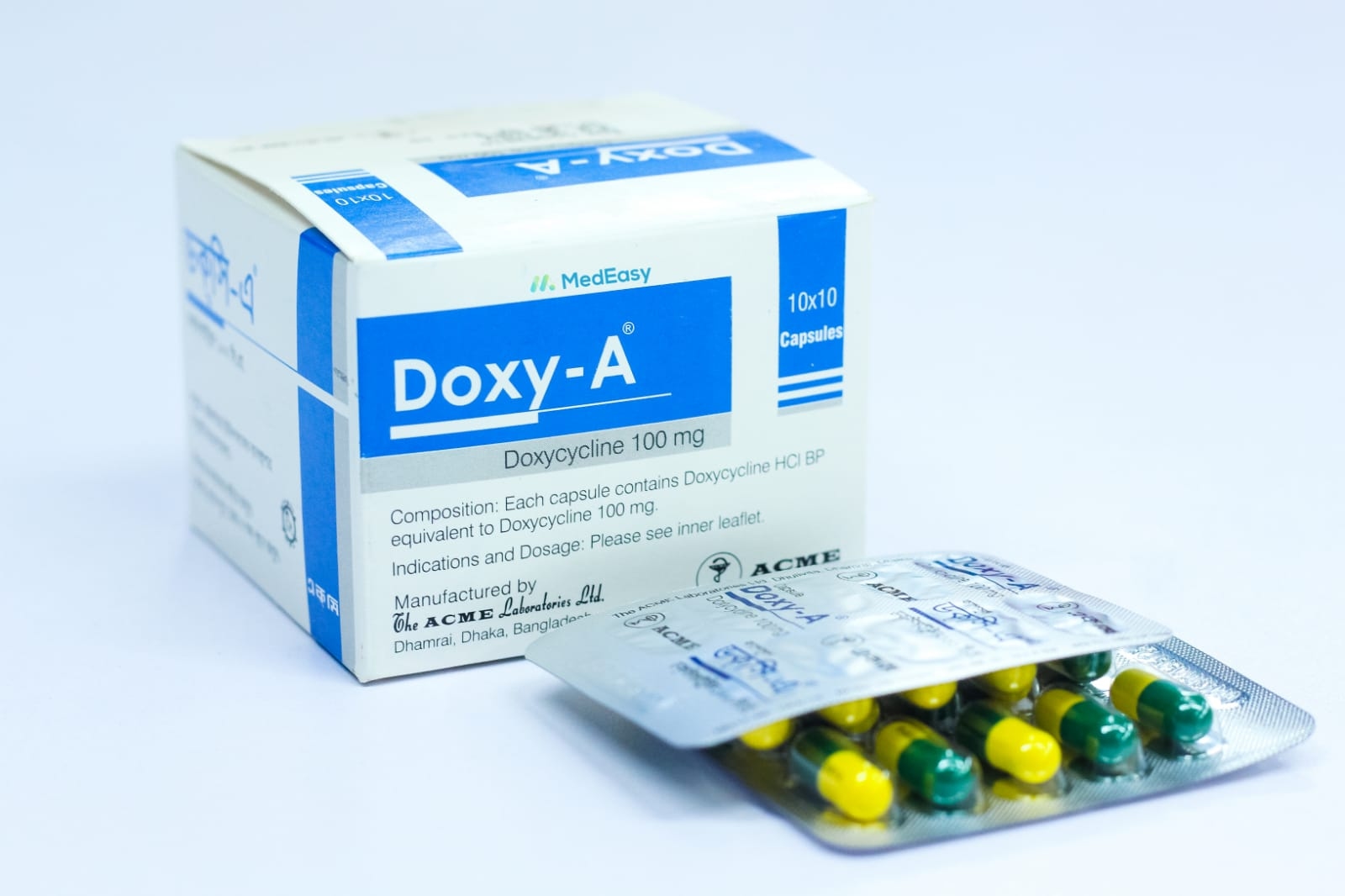
Doxicap100 mg
Renata Limited
৳19.80
Add to cart
Respiratory Tract Infections Doxycycline Hydrochloride is an established treatment option for community-acquired bacterial respiratory infections caused by susceptible organisms and more.
Doxycycline Hydrochloride is an established treatment option for community-acquired bacterial respiratory infections caused by susceptible organisms, including infections due to Mycoplasma pneumoniae, Chlamydophila psittaci, and susceptible strains of Streptococcus pneumoniae and Haemophilus influenzae, such as bronchitis, sinusitis, and community-acquired pneumonia in appropriate patients.
Doxycycline Hydrochloride is guideline-supported first-line therapy for uncomplicated genital, rectal, and pharyngeal chlamydial infections caused by Chlamydia trachomatis. It is also an alternative treatment for early and late-stage syphilis in patients who cannot take penicillin. For gonorrhea, current treatment guidance relies on ceftriaxone as monotherapy; Doxycycline Hydrochloride is added only when chlamydial coinfection has not been ruled out, and Doxycycline Hydrochloride is not considered adequate monotherapy for gonococcal infection on its own.
Doxycycline Hydrochloride is also used, per CDC 2024 clinical guidance, as post-exposure prophylaxis ("doxy-PEP") to reduce the risk of chlamydia and syphilis (and, in some studies, gonorrhea) in specific adult populations, such as gay and bisexual men and transgender women with a bacterial sexually transmitted infection in the preceding 12 months, taken within 72 hours after condomless sex. This use of Doxycycline Hydrochloride is a public-health prevention strategy rather than treatment of an existing infection, and Doxycycline Hydrochloride is not indicated for this purpose in adolescents or in the general population.
Doxycycline Hydrochloride is the established drug of choice for Rocky Mountain spotted fever and other tickborne rickettsial diseases (including ehrlichiosis, anaplasmosis, typhus, Q fever, and rickettsialpox), and Doxycycline Hydrochloride is recommended by the CDC and the American Academy of Pediatrics for patients of all ages, including children under 8 years and pregnant women, because delayed treatment carries a substantially higher risk of severe illness or death than the medicine itself.
Doxycycline Hydrochloride is established therapy for plague (Yersinia pestis), tularemia (Francisella tularensis), brucellosis (usually in combination with an aminoglycoside or rifampin — combination therapy is required for optimal cure in brucellosis, not Doxycycline Hydrochloride alone), cholera (Vibrio cholerae), and relapsing fever (Borrelia recurrentis). Doxycycline Hydrochloride is also used, as an alternative to penicillin, for infections such as anthrax, including post-exposure prophylaxis following suspected inhalational anthrax exposure, and as an adjunct in the treatment of acute intestinal amebiasis (used together with an amebicidal agent, not as monotherapy).
Doxycycline Hydrochloride is used as an adjunctive treatment for moderate to severe inflammatory acne vulgaris and for rosacea, generally as part of a broader skin-care regimen and typically for a limited, defined course rather than indefinite use, in line with current antibiotic stewardship practice.
Doxycycline Hydrochloride is a guideline-supported option for short-term malaria chemoprophylaxis (generally less than 4 months of travel) in travelers to areas with chloroquine- or pyrimethamine-resistant malaria, in patients aged 8 years and older.
The dose, frequency, and duration of Doxycycline Hydrochloride vary considerably by indication, patient age and weight, and clinical severity, and must be determined by a qualified healthcare professional; the regimen used for one infection is not necessarily appropriate for another. The general regimens below reflect commonly cited dosing ranges and are not a substitute for individualized medical advice.
Doxycycline Hydrochloride is contraindicated in patients with known hypersensitivity to Doxycycline Hydrochloride or to any other tetracycline-class antibiotic.
Disclaimer
The information provided is accurate to the best of our knowledge, but it does not replace professional medical advice. We cannot guarantee its completeness or accuracy, and the absence of specific information about a drug should not be taken as an endorsement. We are not responsible for any consequences arising from this information, so please consult a healthcare professional for any concerns or questions.