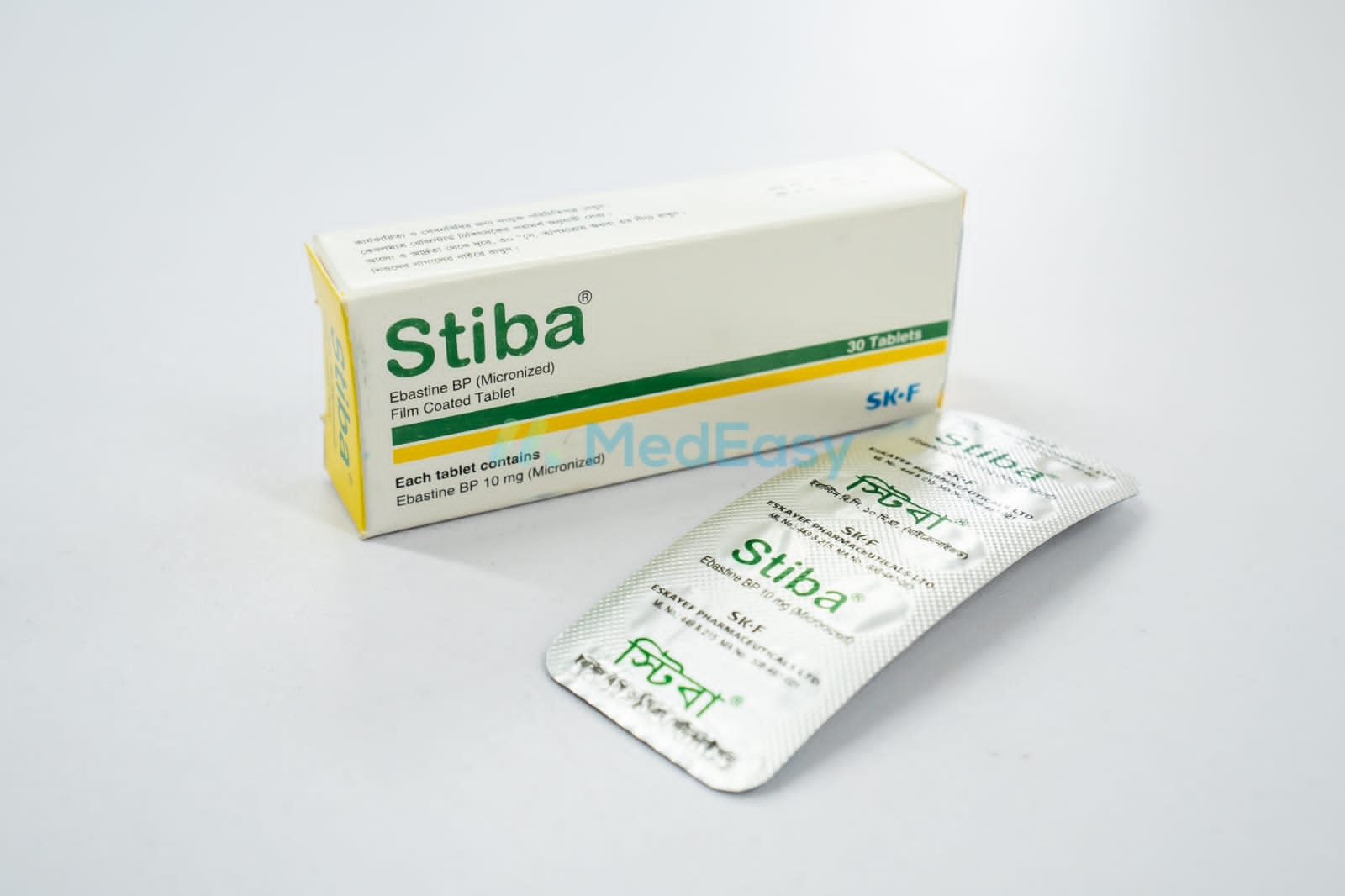
Generic medicine

Ebastine: Brands, Price & Uses in Bangladesh

Ebastine is a second-generation (non-sedating) H1-antihistamine indicated for the following, in order of evidence strength: Established/approved uses: Symptomatic relief of seasonal allergic…

Forms:Tablet

About Ebastine

Indications of Ebastine

Ebastine is a second-generation (non-sedating) H1-antihistamine indicated for the following, in order of evidence strength:

  • Established/approved uses:
    • Symptomatic relief of seasonal allergic rhinitis (hay fever) — sneezing, rhinorrhea, nasal itching/congestion, and itchy/watery eyes.
    • Symptomatic relief of perennial allergic rhinitis.
    • Chronic idiopathic urticaria (hives) — reduction of pruritus and number/size of wheals.
  • Guideline-supported use: As part of a stepwise allergic rhinitis/urticaria treatment plan per allergy society guidelines, generally as monotherapy; combination with intranasal corticosteroids may be used for inadequate response to Ebastine alone in allergic rhinitis.

Ebastine only relieves symptoms; it does not cure the underlying allergic condition.

Dosage & Administration of Ebastine

Allergic Rhinitis (Seasonal and Perennial)

Age groupRecommended dose
Adults and children ≥12 years10 mg once daily; may be increased to 20 mg once daily for more severe symptoms, under physician guidance
Children 6–11 years5 mg once daily (tablet), or age/weight-appropriate syrup dose
Children 2–5 years2.5 mL syrup (2.5 mg) once daily, up to 5 mL in more severe symptoms, under physician guidance

Chronic Idiopathic Urticaria

Age groupRecommended dose
Adults (typically ≥18 years)10 mg once daily

Administration

Ebastine tablets can be taken with or without food, swallowed with water. Orodispersible tablets should be placed on the tongue and allowed to disperse before swallowing, with or without water. The syrup formulation should be measured using the marked measuring device provided. Take at approximately the same time each day.

Renal/Hepatic Adjustment

No dose adjustment is generally required for mild-to-moderate renal or hepatic impairment. In severe hepatic impairment, the dose of Ebastine should not exceed 10 mg once daily (see Use in Special Populations).

Side Effects of Ebastine

Most patients tolerate Ebastine well. Reported adverse effects include:

  • Very common/common: Dry mouth, headache, somnolence (drowsiness).
  • Uncommon: Dizziness, altered taste (dysgeusia), abdominal pain, dyspepsia, nausea, insomnia.
  • Rare: Hypersensitivity reactions (including angioedema, rash), palpitations, and, rarely, abnormalities in liver enzymes/hepatitis.

Patients should seek prompt medical attention for signs of a severe allergic reaction (facial/throat swelling, difficulty breathing) or palpitations/irregular heartbeat while taking Ebastine.

Contraindications of Ebastine

Ebastine is contraindicated in patients with known hypersensitivity to Ebastine or to any of its formulation excipients.

Frequently Asked Questions about Ebastine

What is Ebastine used for?

Ebastine is used to relieve symptoms of seasonal and perennial allergic rhinitis (such as sneezing, runny/blocked nose, and itchy, watery eyes) and to treat chronic idiopathic urticaria (hives).

Does Ebastine cause drowsiness?

Ebastine is a non-sedating, second-generation antihistamine and has a low risk of drowsiness compared with older antihistamines, though a small number of people may still experience mild somnolence, especially at higher doses.

Can I take Ebastine with other medicines?

Combining Ebastine with strong CYP3A4 inhibitors such as ketoconazole or erythromycin can raise its blood levels and increase the risk of QT-interval prolongation (an irregular heart rhythm risk); this combination should generally be avoided or used only under medical supervision. Always tell your doctor or pharmacist about all medicines you take before starting Ebastine.

Is Ebastine safe during pregnancy or breastfeeding?

Data on Ebastine in pregnancy and lactation are limited, so it should be used only if clearly needed and if the expected benefit outweighs the possible risk to the baby; consult your physician before use.

What should I do if I miss a dose or take too much Ebastine?

If you miss a dose of Ebastine, take it as soon as you remember unless it is near the time for your next dose; do not double the dose. If you suspect an overdose of Ebastine, seek immediate medical attention or contact a poison control center, as monitoring (including of heart rhythm) may be needed.

Can children take Ebastine?

Yes, Ebastine can be used in children from 2 years of age for allergic rhinitis, using the appropriate syrup or tablet strength for their age; higher doses and use for urticaria in young children should be guided by a physician.

Disclaimer

The information provided is accurate to the best of our knowledge, but it does not replace professional medical advice. We cannot guarantee its completeness or accuracy, and the absence of specific information about a drug should not be taken as an endorsement. We are not responsible for any consequences arising from this information, so please consult a healthcare professional for any concerns or questions.

DoctorBlogArticles