10% Off
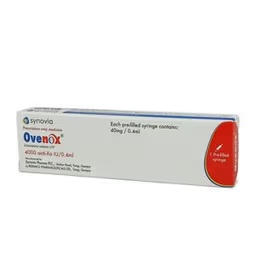
Intravas8000 Anti-
Aristopharma Ltd.
৳495.00
Add to cart
Established / FDA-Approved Uses Prophylaxis of deep vein thrombosis (DVT): in patients undergoing abdominal surgery, hip replacement surgery, or knee replacement surgery and more.
Enoxaparin Sodium must always be prescribed and monitored by a qualified physician; the specific dose and duration depend on the indication being treated.
Enoxaparin Sodium dosing is expressed in milligrams (mg) or anti-Xa International Units (IU) depending on the product and region, and must be individualized to the indication. Doses below are typical adult regimens; always follow the prescribing physician's instructions.
| Indication | Typical Adult Dosage |
|---|---|
| DVT prophylaxis - abdominal surgery | 40 mg (or equivalent IU) subcutaneously once daily, usually for 7-10 days, starting 2 hours before surgery |
| DVT prophylaxis - hip/knee replacement | 30 mg every 12 hours, or 40 mg once daily, subcutaneously, for up to 10-35 days depending on the regimen |
| DVT prophylaxis - acutely ill medical patients | 40 mg subcutaneously once daily for 6-14 days |
| Acute DVT/PE treatment | 1 mg/kg subcutaneously every 12 hours, or 1.5 mg/kg once daily (inpatient use only), usually with or followed by an oral anticoagulant |
| Unstable angina / non-Q-wave MI | 1 mg/kg subcutaneously every 12 hours, in combination with oral aspirin, for a minimum of 2 days and continued until clinical stabilization |
| Acute STEMI | 30 mg intravenous bolus plus 1 mg/kg subcutaneously, followed by 1 mg/kg subcutaneously every 12 hours (with dose adjustment in patients ≥75 years), with aspirin |
| Hemodialysis | Approximately 1 mg/kg (or per institutional protocol) introduced into the arterial line of the dialysis circuit at the start of the session |
In patients with severe renal impairment (creatinine clearance <30 mL/min), the dose of Enoxaparin Sodium must be reduced (e.g. to once-daily dosing) because of reduced clearance and increased bleeding risk; consult a physician for individualized adjustment.
Do not use Enoxaparin Sodium interchangeably (unit-for-unit) with unfractionated heparin or with other low molecular weight heparin products, as they differ in manufacturing, dosing, and clinical activity.
The most common adverse effects of Enoxaparin Sodium relate to its anticoagulant action and the injection procedure itself:
Patients should seek urgent medical attention for signs of unusual bleeding (blood in urine or stool, unusual bruising, prolonged bleeding from cuts), sudden back pain, numbness, or weakness in the legs (which may indicate spinal/epidural hematoma), or signs of an allergic reaction.
Enoxaparin Sodium is contraindicated in patients with:
Enoxaparin Sodium should also not be used in patients undergoing neuraxial (spinal/epidural) anesthesia or spinal puncture procedures where the specific dose and timing precautions described under "Precautions and Warnings" cannot be observed, given the risk of spinal/epidural hematoma.
Disclaimer
The information provided is accurate to the best of our knowledge, but it does not replace professional medical advice. We cannot guarantee its completeness or accuracy, and the absence of specific information about a drug should not be taken as an endorsement. We are not responsible for any consequences arising from this information, so please consult a healthcare professional for any concerns or questions.