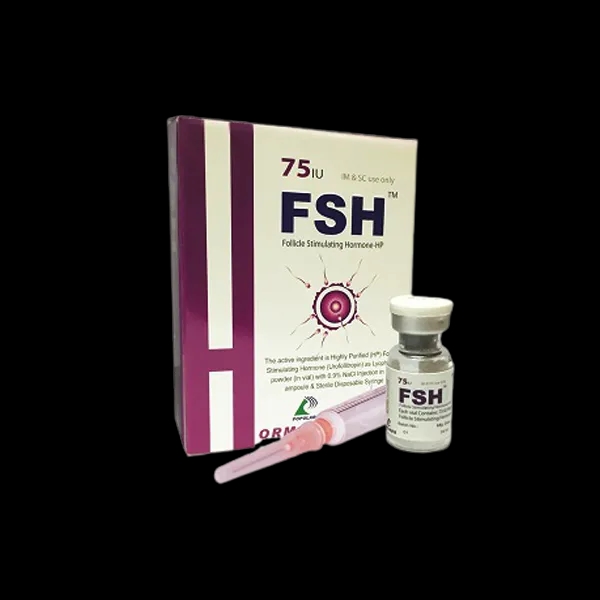
Generic medicine

Follicle Stimulating Hormone [Urofollitropin]: Brands, Price & Uses in Bangladesh

Follicle Stimulating Hormone [Urofollitropin] is a purified urinary gonadotropin preparation used in fertility management.

Forms:InjectionIM/SC Injection

About Follicle Stimulating Hormone [Urofollitropin]

Indications of Follicle Stimulating Hormone [Urofollitropin]

Follicle Stimulating Hormone [Urofollitropin] is a purified urinary gonadotropin preparation used in fertility management. Its approved and guideline-supported uses are:

  • Ovulation induction in women with anovulatory infertility who have not responded to clomiphene citrate, after primary ovarian failure has been excluded (established use).
  • Controlled ovarian stimulation (superovulation) for assisted reproductive technology (ART) cycles such as IVF, typically combined with human chorionic gonadotropin (hCG) for final oocyte maturation (established use, requires specialist reproductive endocrinology supervision).
  • Induction of spermatogenesis in men with hypogonadotropic hypogonadism, used in combination with hCG (established use; adjunct/combination therapy required, as Follicle Stimulating Hormone [Urofollitropin] alone does not restore spermatogenesis without adequate intratesticular testosterone from hCG).

Follicle Stimulating Hormone [Urofollitropin] is not indicated for use in patients with primary ovarian or testicular failure, as it cannot substitute for functioning gonadal tissue.

Dosage & Administration of Follicle Stimulating Hormone [Urofollitropin]

IndicationTypical Adult Dosing
Ovulation induction (anovulatory infertility)Individualized starting dose (commonly 75 IU/day) subcutaneously or intramuscularly; increased in small increments no more frequently than every 7-14 days based on ovarian response monitored by ultrasound and serum estradiol, until adequate follicular development is achieved, followed by hCG to trigger ovulation.
Controlled ovarian stimulation for ART (e.g., IVF)Individualized dose, often higher than for ovulation induction, given daily for approximately 7-12 days with close monitoring; hCG given once lead follicles reach target size.
Spermatogenesis induction in men (hypogonadotropic hypogonadism)Typically 150 IU three times weekly, given in combination with hCG, continued for several months (commonly 3-12 months or longer) as spermatogenesis is a slow process.

All treatment with Follicle Stimulating Hormone [Urofollitropin] must be individualized and supervised by a physician experienced in fertility management, with monitoring by ultrasound and hormone assays to reduce the risk of ovarian hyperstimulation syndrome (OHSS) and multiple pregnancy; see Precautions and Warnings.

Side Effects of Follicle Stimulating Hormone [Urofollitropin]

Common and serious adverse effects reported with Follicle Stimulating Hormone [Urofollitropin] include:

  • Injection site pain, redness, bruising or swelling.
  • Headache, mood swings, fatigue.
  • Abdominal pain, bloating, nausea, and ovarian enlargement.
  • Ovarian hyperstimulation syndrome (OHSS) - a potentially life-threatening condition marked by ovarian enlargement, abdominal pain/distension, fluid shifts, and in severe cases ascites, pleural effusion, thromboembolism, and renal impairment; see Precautions and Warnings.
  • Multiple pregnancy (twins or higher-order multiples).
  • Ectopic pregnancy.
  • Rarely, hypersensitivity/allergic reactions.

Contraindications of Follicle Stimulating Hormone [Urofollitropin]

Follicle Stimulating Hormone [Urofollitropin] is contraindicated in:

  • Known hypersensitivity to urofollitropin or any component of the formulation.
  • Primary ovarian failure (as indicated by elevated FSH levels), since the ovaries cannot respond.
  • Tumors of the ovary, breast, uterus, testis, pituitary, or hypothalamus.
  • Undiagnosed abnormal (vaginal) bleeding.
  • Ovarian cysts or enlargement not due to polycystic ovary syndrome (PCOS).
  • Pregnancy.

Frequently Asked Questions about Follicle Stimulating Hormone [Urofollitropin]

What is Follicle Stimulating Hormone [Urofollitropin] used for?

Follicle Stimulating Hormone [Urofollitropin] is used to stimulate egg (follicle) development in women undergoing ovulation induction or assisted reproductive technology (such as IVF), and to stimulate sperm production in men with hypogonadotropic hypogonadism when combined with hCG.

How is Follicle Stimulating Hormone [Urofollitropin] given?

It is given as a subcutaneous or intramuscular injection, usually daily, under the close supervision of a fertility specialist who monitors response with ultrasound and blood hormone tests and adjusts the dose accordingly.

What is the most serious risk with Follicle Stimulating Hormone [Urofollitropin]?

The most serious risk is ovarian hyperstimulation syndrome (OHSS), a potentially life-threatening condition causing ovarian enlargement, fluid shifts, abdominal pain/distension, and in severe cases breathing difficulty, blood clots, or kidney problems. Severe abdominal pain, rapid weight gain, or reduced urination during treatment require immediate medical attention.

Can Follicle Stimulating Hormone [Urofollitropin] cause multiple pregnancy?

Yes. Because it stimulates multiple ovarian follicles, treatment with Follicle Stimulating Hormone [Urofollitropin] significantly increases the chance of twins or higher-order multiple pregnancy compared with natural conception.

Can Follicle Stimulating Hormone [Urofollitropin] be used during pregnancy?

No. Follicle Stimulating Hormone [Urofollitropin] is contraindicated in pregnancy and must be stopped immediately if pregnancy occurs during treatment; consult a physician right away if pregnancy is suspected.

Who should not use Follicle Stimulating Hormone [Urofollitropin]?

It should not be used by anyone with known hypersensitivity to the drug, primary ovarian failure, tumors of the ovary/breast/uterus/testis/pituitary/hypothalamus, undiagnosed vaginal bleeding, ovarian cysts or enlargement unrelated to PCOS, or pregnancy.

Disclaimer

The information provided is accurate to the best of our knowledge, but it does not replace professional medical advice. We cannot guarantee its completeness or accuracy, and the absence of specific information about a drug should not be taken as an endorsement. We are not responsible for any consequences arising from this information, so please consult a healthcare professional for any concerns or questions.

DoctorBlogArticles