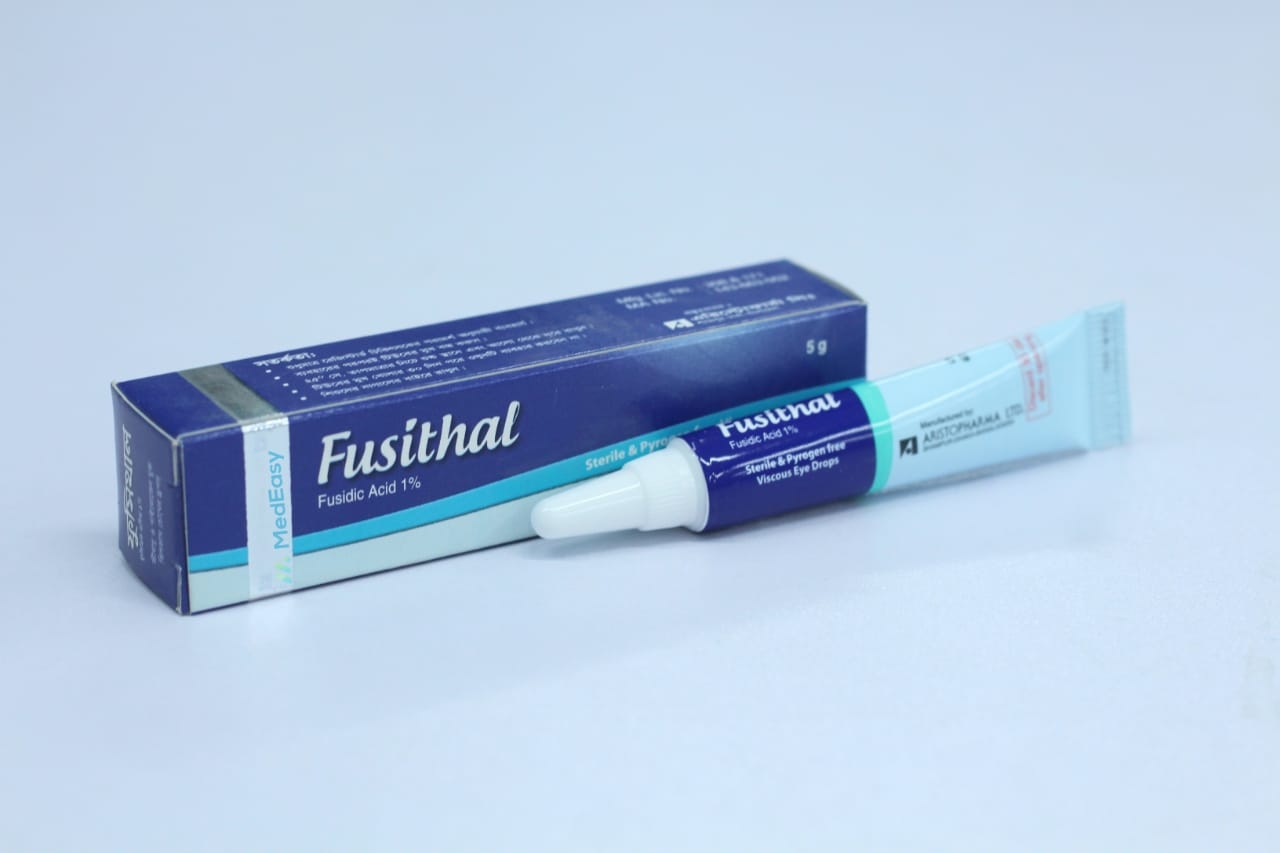
Generic medicine

Fusidic acid: Brands, Price & Uses in Bangladesh

Fusidic Acid is a bacteriostatic (and, at higher concentrations, bactericidal) antibacterial used mainly for skin and soft-tissue infections caused by susceptible Staphylococcus aureus and other…

Forms:Eye Drop

About Fusidic acid

Indications of Fusidic acid

Fusidic Acid is a bacteriostatic (and, at higher concentrations, bactericidal) antibacterial used mainly for skin and soft-tissue infections caused by susceptible Staphylococcus aureus and other Gram-positive organisms.

Established / Widely Approved Uses (Topical)

  • Impetigo
  • Infected eczema and infected dermatitis
  • Infected minor wounds, cuts, and abrasions
  • Folliculitis and furunculosis (boils)
  • Secondary bacterial infection of other skin conditions

Established Use (Ophthalmic Formulation)

  • Bacterial conjunctivitis (using Fusidic Acid viscous eye drops)

Specialist / Hospital Use (Systemic Oral or Intravenous Formulations)

Oral and intravenous Fusidic Acid (as sodium fusidate) are reserved, under specialist supervision, for more serious staphylococcal infections such as:

  • Osteomyelitis and septic arthritis
  • Endocarditis
  • Deep-seated or severe skin and soft-tissue infections not responding to first-line therapy

Systemic Fusidic Acid is always used in combination with another anti-staphylococcal antibiotic, because resistance develops rapidly when Fusidic Acid is used alone for systemic infections.

Note: In many countries, including the United States, Fusidic Acid topical/oral/IV products are not approved by the national regulator; availability and approved uses vary by country. Always follow the locally approved product label and your physician's advice.

Dosage & Administration of Fusidic acid

Fusidic Acid dosing depends on the formulation and the infection being treated. Always follow the specific product label and your physician's or pharmacist's instructions.

Formulation / IndicationTypical Adult DoseTypical Pediatric Dose
Fusidic Acid 2% cream/ointment - skin infectionsApply a thin layer to the affected area 2-3 times daily, usually for 7-10 daysSame application method; duration and frequency as directed by physician, generally used with caution in young infants
Fusidic Acid 1% eye drops - bacterial conjunctivitis1 drop into the affected eye(s) twice daily for 7 daysSame regimen as adults unless otherwise directed
Fusidic Acid 250 mg tablets - systemic staphylococcal infection (with a second anti-staphylococcal agent)500 mg (as sodium fusidate) three times dailyWeight-based dosing determined by specialist; not for routine unsupervised use

For topical use, do not exceed the recommended duration of treatment, as prolonged or repeated courses increase the risk of bacterial resistance. Take/use Fusidic Acid exactly as prescribed by your physician; do not stop, extend, skip doses, or share this medicine with others without medical advice.

Side Effects of Fusidic acid

Topical Use (Cream, Ointment, Eye Drops)

  • Local burning, stinging, or itching at the application site
  • Redness or mild skin irritation
  • Contact dermatitis or allergic skin reaction (uncommon)
  • Eye drops: transient stinging, blurred vision immediately after application

Oral / Intravenous Use

  • Nausea, vomiting, abdominal discomfort, diarrhea
  • Elevated liver enzymes and, uncommonly, jaundice (see Precautions and Warnings)
  • Rash or hypersensitivity reactions
  • Local irritation or thrombophlebitis at the intravenous infusion site

Seek medical attention if you notice severe rash, yellowing of the skin/eyes, or signs of a serious allergic reaction (swelling of the face/throat, difficulty breathing) while using Fusidic Acid.

Contraindications of Fusidic acid

Fusidic Acid is contraindicated in patients with known hypersensitivity to Fusidic Acid, sodium fusidate, or any component of the specific formulation being used.

Frequently Asked Questions about Fusidic acid

What is Fusidic Acid used for?

Fusidic Acid is an antibiotic mainly used topically to treat bacterial skin infections such as impetigo, infected eczema, and infected minor wounds caused by Staphylococcus aureus. Eye drop and, in more serious cases, oral or intravenous forms are also available under medical supervision.

How long should I use Fusidic Acid cream?

Topical Fusidic Acid is generally used for 7-10 days. Do not use it for longer than prescribed, as prolonged use increases the risk of bacterial resistance. If your infection has not improved within a few days, or worsens, stop and consult your physician.

Can I use Fusidic Acid during pregnancy or while breastfeeding?

Fusidic Acid should be used in pregnancy or breastfeeding only if clearly needed and if your physician judges that the benefit outweighs any potential risk. Topical use has limited absorption into the body, but you should still consult your physician before use, especially for systemic (oral/intravenous) forms.

Can Fusidic Acid be used together with statins?

Combining systemic (oral or intravenous) Fusidic Acid with statin medicines (such as simvastatin or atorvastatin) can increase the risk of a serious muscle condition called rhabdomyolysis. This combination is generally avoided; your physician may pause your statin during systemic Fusidic Acid treatment. This concern does not apply in the same way to topical Fusidic Acid.

What should I do if I miss a dose of Fusidic Acid?

Apply or take the missed dose of Fusidic Acid as soon as you remember, unless it is almost time for the next dose, in which case skip the missed dose and continue your regular schedule. Do not double the dose. Always take/use Fusidic Acid exactly as prescribed by your physician.

What are the common side effects of Fusidic Acid?

Topical Fusidic Acid may cause mild burning, stinging, itching, or redness at the application site. Oral or intravenous Fusidic Acid can cause nausea, stomach upset, and, uncommonly, liver enzyme changes or jaundice. Seek medical attention for severe rash, yellowing of the skin/eyes, or signs of a serious allergic reaction.

Disclaimer

The information provided is accurate to the best of our knowledge, but it does not replace professional medical advice. We cannot guarantee its completeness or accuracy, and the absence of specific information about a drug should not be taken as an endorsement. We are not responsible for any consequences arising from this information, so please consult a healthcare professional for any concerns or questions.

DoctorBlogArticles