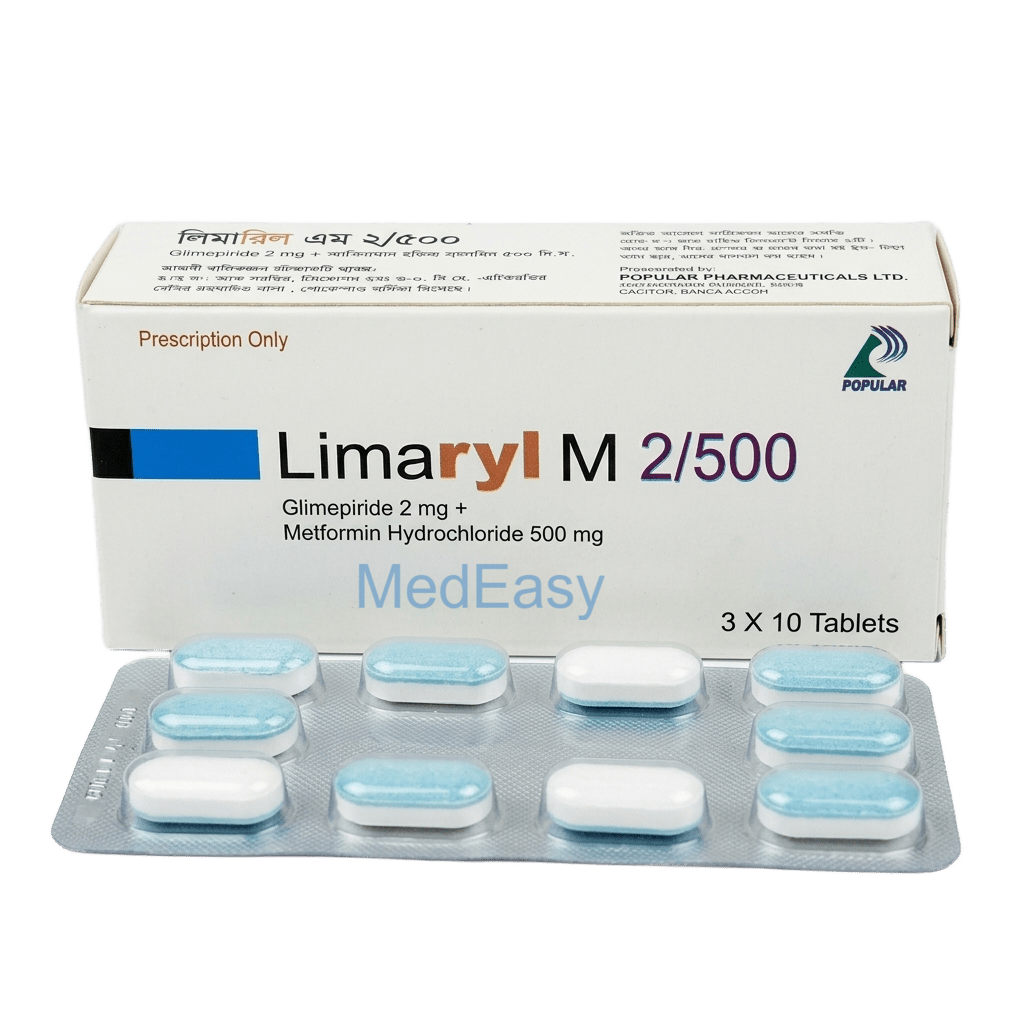
Generic medicine

Glimepiride + Metformin: Brands, Price & Uses in Bangladesh

Glimepiride + Metformin is a fixed-dose combination oral antidiabetic medicine indicated as an adjunct to diet and exercise to improve glycemic control in adults with type 2 diabetes mellitus .

Forms:Tablet (Extended Release)

About Glimepiride + Metformin

Indications of Glimepiride + Metformin

Glimepiride + Metformin is a fixed-dose combination oral antidiabetic medicine indicated as an adjunct to diet and exercise to improve glycemic control in adults with type 2 diabetes mellitus.

  • Established/guideline-supported use: Patients with type 2 diabetes mellitus who are already being treated with a sulfonylurea and metformin separately, as a substitute for separate tablets to simplify the regimen.
  • Established/guideline-supported use: Patients whose blood glucose is not adequately controlled on metformin alone (or a sulfonylurea alone) at the maximum tolerated dose, as a step-up combination therapy.
  • Not indicated for type 1 diabetes mellitus or diabetic ketoacidosis.

Glimepiride + Metformin is not a substitute for diet and exercise; it should be used together with an appropriate diabetes meal plan and physical activity as advised by a physician.

Dosage & Administration of Glimepiride + Metformin

The dose of Glimepiride + Metformin must be individualized based on the patient's current antidiabetic regimen, glycemic response, and tolerability. It is usually started at a low dose and titrated gradually.

Clinical situationTypical adult dosing
Inadequate control on metformin monotherapyStart with a low glimepiride-equivalent dose combined with the current metformin dose; increase gradually based on blood glucose response, generally not more often than every 1-2 weeks.
Inadequate control on sulfonylurea monotherapyStart with a low metformin-equivalent dose combined with the current or a comparable sulfonylurea dose; titrate gradually.
Replacing separate glimepiride and metformin tabletsShould not exceed the daily doses of glimepiride and metformin already being taken separately.
Maximum recommended doseTotal daily dose generally should not exceed glimepiride 8 mg and metformin 2000 mg, as guided by the physician.

Glimepiride + Metformin should be taken with meals to reduce the gastrointestinal side effects of metformin and the hypoglycemia risk of glimepiride, typically once or twice daily depending on the total dose and physician's instructions. Doses should never be adjusted or stopped without medical advice.

Side Effects of Glimepiride + Metformin

Common and serious side effects of Glimepiride + Metformin include:

  • Hypoglycemia (low blood sugar) – due to the glimepiride component; symptoms include sweating, shakiness, hunger, confusion, and in severe cases, loss of consciousness. Risk is higher in the elderly, those with renal or hepatic impairment, or those who skip meals.
  • Gastrointestinal upset – nausea, vomiting, diarrhea, abdominal discomfort, and a metallic taste, especially when starting metformin or increasing the dose; usually improves over time when taken with food.
  • Vitamin B12 deficiency – with long-term metformin use, periodic monitoring may be advised, especially in patients with anemia or peripheral neuropathy.
  • Weight gain – associated with the glimepiride component.
  • Rare but serious: lactic acidosis – a rare but potentially life-threatening metabolic complication associated with metformin, more likely in patients with renal impairment, dehydration, sepsis, excessive alcohol intake, or hepatic impairment. Symptoms include unusual muscle pain, difficulty breathing, unusual tiredness, and abdominal discomfort; requires immediate medical attention.
  • Other less common effects: headache, dizziness, skin rash, and mild elevations in liver enzymes.

Contraindications of Glimepiride + Metformin

Glimepiride + Metformin is contraindicated in patients with:

  • Known hypersensitivity to glimepiride, metformin, sulfonamide-derived drugs, or any component of the formulation.
  • Type 1 diabetes mellitus or diabetic ketoacidosis (with or without coma).
  • Severe renal impairment (eGFR below the threshold considered safe for metformin use, per current labeling).
  • Acute or chronic metabolic acidosis, including diabetic ketoacidosis.
  • Severe hepatic impairment.

Frequently Asked Questions about Glimepiride + Metformin

What is Glimepiride + Metformin used for?

Glimepiride + Metformin is used to help control blood glucose levels in adults with type 2 diabetes mellitus, as an adjunct to diet and exercise, when treatment with a single antidiabetic medicine alone is not enough to achieve adequate glycemic control.

How should I take Glimepiride + Metformin?

Glimepiride + Metformin should be taken orally with meals, exactly as prescribed by your physician, usually once or twice daily. Taking it with food helps reduce stomach upset and the risk of low blood sugar. Do not change the dose or stop taking it without consulting your doctor.

Can Glimepiride + Metformin cause low blood sugar (hypoglycemia)?

Yes. The glimepiride component of Glimepiride + Metformin can cause hypoglycemia, especially if you skip meals, exercise more than usual, drink alcohol, or are elderly or have kidney or liver problems. Symptoms include sweating, shakiness, confusion, and hunger. Always carry a fast-acting source of sugar and seek medical help if symptoms are severe.

What is lactic acidosis and why is it a concern with Glimepiride + Metformin?

Lactic acidosis is a rare but serious and potentially life-threatening side effect associated with the metformin component of Glimepiride + Metformin, more likely in people with kidney problems, dehydration, severe infection, heavy alcohol use, or liver disease. Warning signs include unusual muscle pain, difficulty breathing, and severe tiredness. If these occur, seek immediate medical attention.

Is Glimepiride + Metformin safe during pregnancy or breastfeeding?

Glimepiride + Metformin should be used in pregnancy only if clearly needed, as insulin is generally preferred for blood sugar control during pregnancy. It is also generally not recommended while breastfeeding due to the risk of low blood sugar in the infant. Always consult your physician if you are pregnant, planning pregnancy, or breastfeeding.

What should I do if I miss a dose or take too much Glimepiride + Metformin?

If you miss a dose, take it with your next meal unless it is close to the next scheduled dose; do not double the dose. If you suspect you have taken too much Glimepiride + Metformin, seek immediate medical attention or contact a poison control center, as overdose can cause severe hypoglycemia or lactic acidosis.

Disclaimer

The information provided is accurate to the best of our knowledge, but it does not replace professional medical advice. We cannot guarantee its completeness or accuracy, and the absence of specific information about a drug should not be taken as an endorsement. We are not responsible for any consequences arising from this information, so please consult a healthcare professional for any concerns or questions.

DoctorBlogArticles