
5% Off
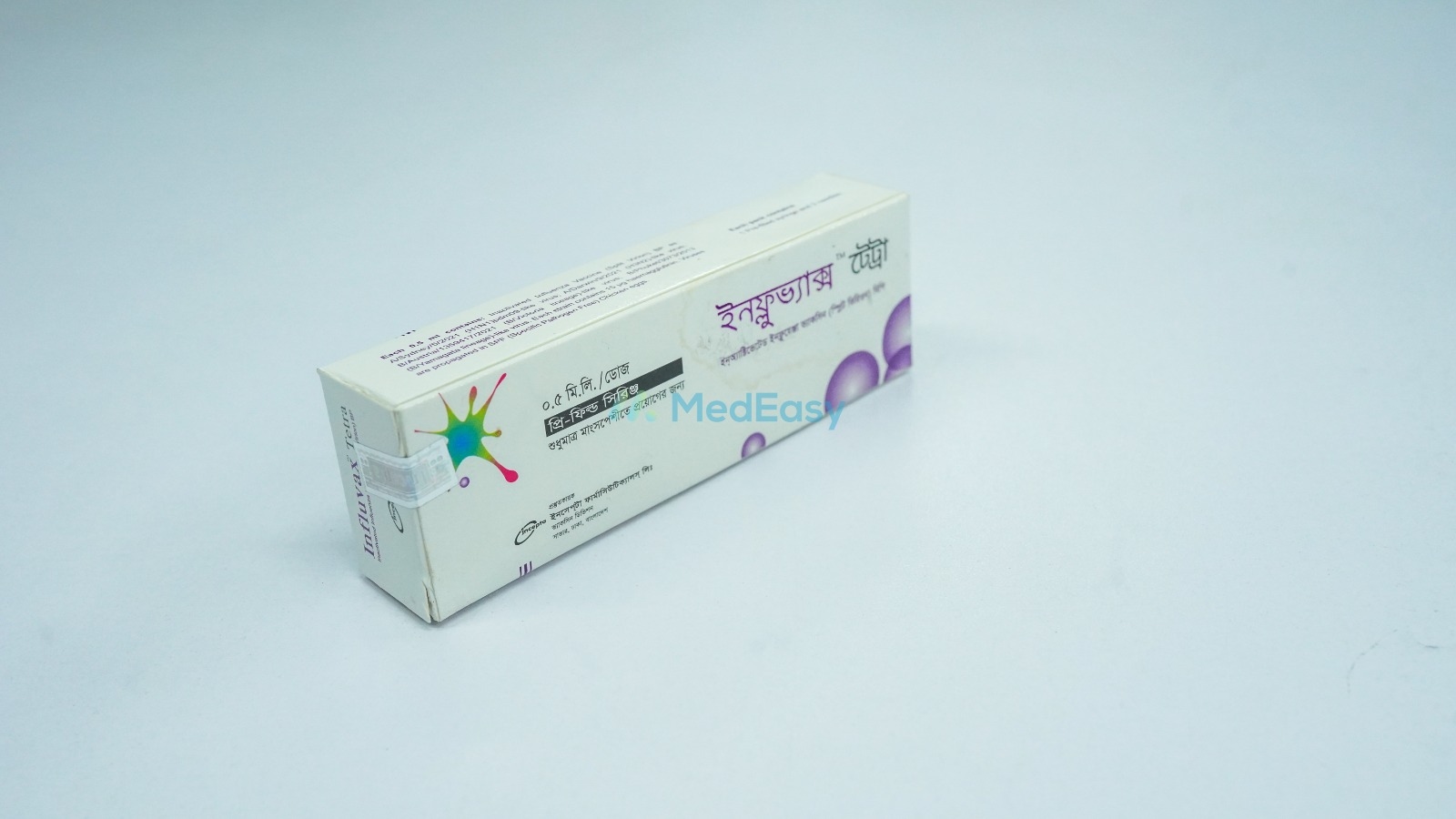
Influvax Tetra0.5 ml pre
Incepta Pharmaceuticals Ltd.
৳902.50
Add to cart
Approved Indication Inactivated Influenza Vaccine is indicated for the active immunization of individuals against influenza disease caused by the influenza virus subtypes A and B strains contained…
Inactivated Influenza Vaccine is indicated for the active immunization of individuals against influenza disease caused by the influenza virus subtypes A and B strains contained in the vaccine. It is approved for annual seasonal use in eligible age groups (typically from 6 months of age and older, depending on the specific licensed product).
Inactivated Influenza Vaccine protects only against the specific influenza strains included in that season's formulation; it does not protect against other respiratory viruses (e.g., common cold viruses, COVID-19) and does not treat an influenza infection that has already started.
Inactivated Influenza Vaccine is given as an intramuscular (IM) injection, preferably into the deltoid muscle in older children and adults, or the anterolateral thigh in infants and younger children. It should never be given intravenously.
| Age Group | Dose | Number of Doses |
|---|---|---|
| 6–35 months | 0.25 mL or 0.5 mL (per specific product labeling) | 1 or 2 doses (see below) |
| 3–8 years | 0.5 mL | 1 or 2 doses (see below) |
| 9 years and older (including adults) | 0.5 mL | 1 dose annually |
| Adults 65 years and older | 0.5 mL (standard-dose or a high-dose/adjuvanted product where available) | 1 dose annually |
Children aged 6 months through 8 years who are receiving an influenza vaccine for the very first time in their life require two doses, given at least 4 weeks apart, for adequate priming of the immune response. Children in this age range who have previously received two or more total doses of any seasonal influenza vaccine in prior seasons need only one dose per season thereafter.
Because circulating strains change and immunity wanes, Inactivated Influenza Vaccine should be repeated every year, ideally before the start of the local influenza season, using that season's updated formulation.
These reactions are generally mild and self-limited, resolving within 1–2 days without treatment. Because Inactivated Influenza Vaccine contains no live virus, it cannot cause influenza illness; any concurrent respiratory infection around the time of vaccination is coincidental.
Inactivated Influenza Vaccine is contraindicated in individuals with:
These are the only true absolute contraindications. Conditions such as egg allergy, a prior history of Guillain-Barré syndrome, or current mild illness are precautions requiring individualized risk-benefit assessment rather than absolute contraindications — see Precautions and Warnings.
Disclaimer
The information provided is accurate to the best of our knowledge, but it does not replace professional medical advice. We cannot guarantee its completeness or accuracy, and the absence of specific information about a drug should not be taken as an endorsement. We are not responsible for any consequences arising from this information, so please consult a healthcare professional for any concerns or questions.
