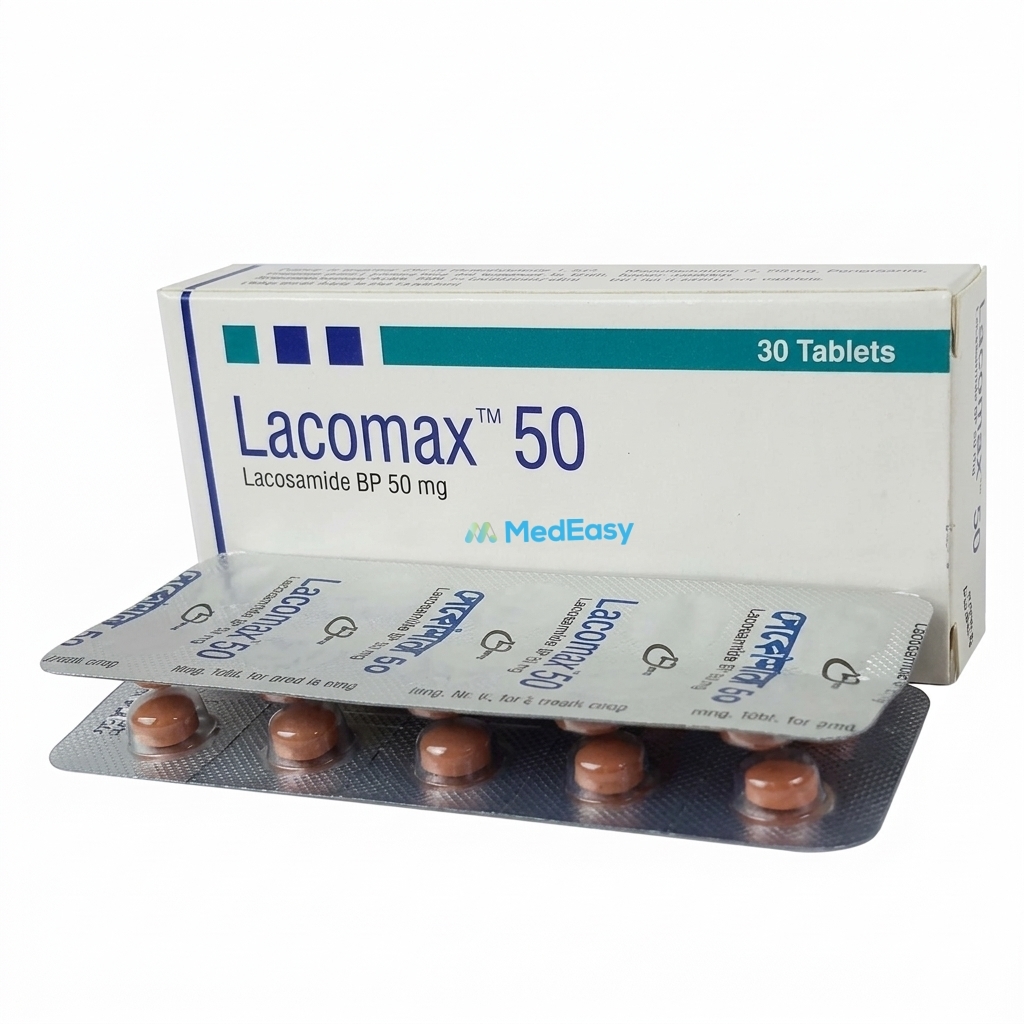
Generic medicine

Lacosamide: Brands, Price & Uses in Bangladesh

Lacosamide is an antiepileptic drug (AED) with the following evidence-based indications: Established / FDA-approved uses Monotherapy treatment of partial-onset (focal) seizures in patients aged 4…

Forms:Tablet

About Lacosamide

Indications of Lacosamide

Lacosamide is an antiepileptic drug (AED) with the following evidence-based indications:

Established / FDA-approved uses

  • Monotherapy treatment of partial-onset (focal) seizures in patients aged 4 years and older.
  • Adjunctive (add-on) therapy for partial-onset seizures in patients aged 1 month and older, used together with other antiepileptic drugs.
  • Adjunctive therapy for primary generalized tonic-clonic seizures in patients aged 4 years and older with idiopathic generalized epilepsy.

Off-label / adjunct clinical use (not formally approved but supported by clinical practice)

  • Status epilepticus refractory to first-line agents, used as an intravenous adjunct under specialist supervision.
  • Neuropathic pain management (e.g., diabetic peripheral neuropathy), though evidence is limited and this is not an approved indication in most markets.

Use of Lacosamide for any indication should be guided and monitored by a physician, generally a neurologist.

Dosage & Administration of Lacosamide

Adults (17 years and older) - Monotherapy or Adjunctive Therapy for Partial-Onset Seizures

StepDose
Starting dose50 mg twice daily (100 mg/day)
TitrationIncrease by 100 mg/day at weekly intervals based on response and tolerability
Usual maintenance dose150-200 mg twice daily (300-400 mg/day)
Maximum doseUp to 400 mg/day (adjunctive); monotherapy studies support up to 400 mg/day

Pediatric Patients

Dosing is weight-based for children; a physician or pediatric neurologist should individualize the regimen. In general, lower starting doses and slower titration are used in children weighing less than 50 kg, with maximum recommended doses that are weight-tiered. See Use in Special Populations and Pediatric Uses.

Intravenous Administration

Used as a temporary alternative when oral administration is not feasible, at the same total daily dose and frequency, infused over 15-60 minutes.

Renal Impairment

Dose adjustment (maximum 300 mg/day) is recommended for patients with severe renal impairment (creatinine clearance ≤30 mL/min) and end-stage renal disease; a supplemental dose after hemodialysis may be considered.

Hepatic Impairment

Dose adjustment (maximum 300 mg/day) is recommended for mild to moderate hepatic impairment; use in severe hepatic impairment is generally not recommended.

Discontinuation

Lacosamide should not be stopped abruptly; when discontinuation is needed, the dose should be tapered gradually under medical supervision to reduce the risk of increased seizure frequency or status epilepticus.

Take Lacosamide exactly as prescribed by your physician; do not stop, extend, skip doses, or share this medicine with others without medical advice.

Side Effects of Lacosamide

Common Side Effects

  • Dizziness
  • Headache
  • Nausea and vomiting
  • Diplopia (double vision) and blurred vision
  • Somnolence (drowsiness)
  • Ataxia (unsteady gait, incoordination)
  • Fatigue
  • Tremor

Serious but Less Common Side Effects

  • Cardiac conduction abnormalities: PR interval prolongation, atrioventricular block, bradycardia, and rarely atrial fibrillation/flutter (see Precautions and Warnings).
  • Suicidal thoughts or behavior (class effect of antiepileptic drugs; see Precautions and Warnings).
  • Multi-organ hypersensitivity reactions (DRESS syndrome) presenting with fever, rash, and organ involvement - requires immediate medical attention.
  • Severe dizziness/ataxia leading to falls and injury, particularly in elderly patients.

Contraindications of Lacosamide

Lacosamide is contraindicated in patients with:

  • Known hypersensitivity to Lacosamide or any component of the formulation.
  • Known second-degree or third-degree atrioventricular (AV) block, unless the patient has a functioning pacemaker.

Frequently Asked Questions about Lacosamide

What is Lacosamide used for?

Lacosamide is an antiepileptic medicine used to treat partial-onset (focal) seizures, either alone or together with other antiepileptic drugs, and as add-on therapy for certain generalized seizures in appropriate patients.

How should I take Lacosamide?

Lacosamide is usually taken twice daily, with or without food, at a dose determined by your physician, starting low and increasing gradually. Take it exactly as prescribed; do not stop, extend, skip doses, or share this medicine with others without medical advice.

Can I stop taking Lacosamide suddenly if I feel better?

No. Lacosamide must not be stopped abruptly, as this can trigger increased seizures or status epilepticus. Always consult your physician, who will taper the dose gradually if discontinuation is needed.

Is Lacosamide safe during pregnancy?

Antiepileptic drugs, including Lacosamide, carry potential risk to the fetus, and safety data in human pregnancy are limited. Lacosamide should be used in pregnancy only if clearly needed and the potential benefit justifies the potential risk; do not stop the medicine without consulting your physician, since uncontrolled seizures are also risky during pregnancy.

What side effects should I watch for with Lacosamide?

Common side effects of Lacosamide include dizziness, headache, nausea, double vision, and drowsiness. Seek immediate medical attention for irregular heartbeat, fainting, severe dizziness with falls, unusual mood changes or thoughts of self-harm, or signs of a serious allergic reaction such as fever, rash, or swelling.

Does Lacosamide interact with other medicines?

Yes. Lacosamide can interact with other drugs that affect heart rhythm (increasing risk of conduction problems), certain enzyme inhibitors/inducers that change its blood levels, and other sedating medicines or alcohol. Always tell your physician about all medicines and supplements you are taking before starting Lacosamide.

Disclaimer

The information provided is accurate to the best of our knowledge, but it does not replace professional medical advice. We cannot guarantee its completeness or accuracy, and the absence of specific information about a drug should not be taken as an endorsement. We are not responsible for any consequences arising from this information, so please consult a healthcare professional for any concerns or questions.

DoctorBlogArticles