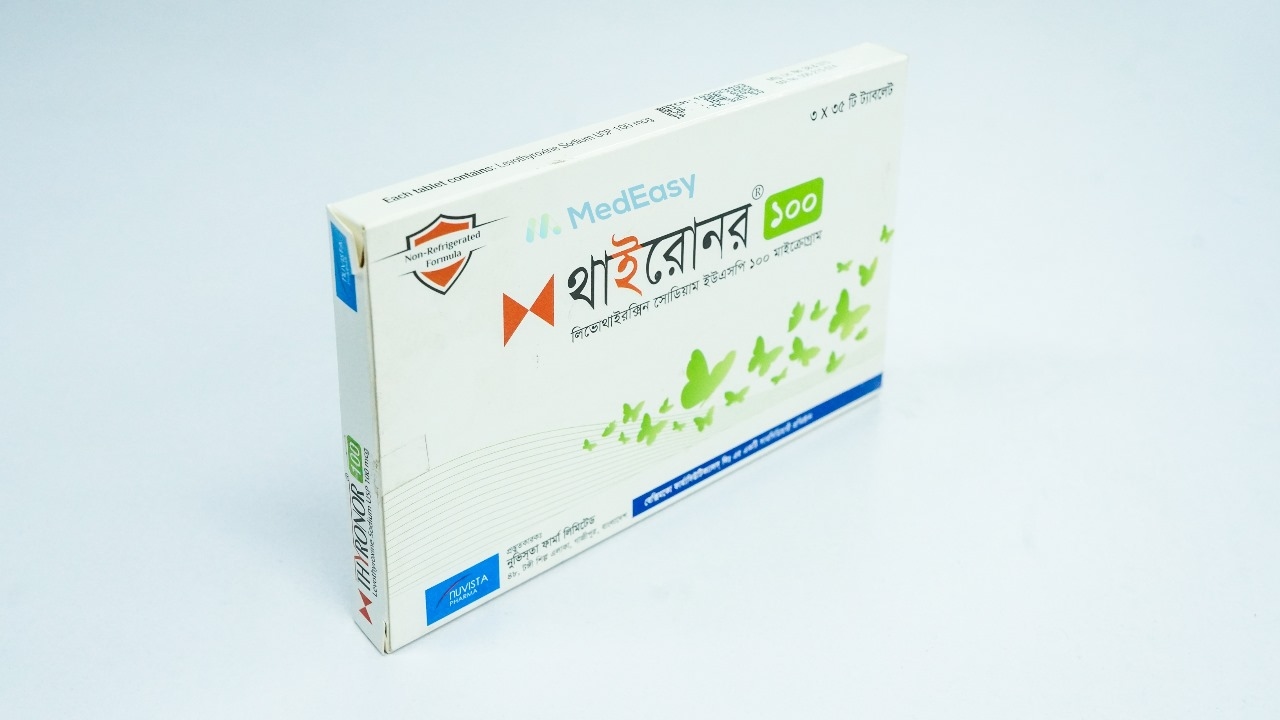
Generic medicine

Levothyroxine Sodium: Brands, Price & Uses in Bangladesh

Levothyroxine Sodium is a synthetic thyroid hormone (T4) used for the following indications: Established / FDA-approved uses Hypothyroidism (primary, secondary/pituitary and more.

Forms:TabletCapsule

About Levothyroxine Sodium

Indications of Levothyroxine Sodium

Levothyroxine Sodium is a synthetic thyroid hormone (T4) used for the following indications:

Established / FDA-approved uses

  • Hypothyroidism (primary, secondary/pituitary, and tertiary/hypothalamic): Levothyroxine Sodium is indicated as replacement or supplemental therapy in congenital or acquired hypothyroidism of any etiology, except transient hypothyroidism during the recovery phase of subacute thyroiditis.
  • Pituitary TSH suppression: Levothyroxine Sodium is indicated as an adjunct to surgery and radioiodine therapy in the management of well-differentiated thyroid cancer, to suppress TSH secretion.

Uses that are NOT appropriate

  • Levothyroxine Sodium is not indicated for treatment of euthyroid goiter or nodular thyroid disease in iodine-sufficient patients, and it is not indicated for suppression of benign thyroid nodules or non-toxic diffuse goiter.
  • Levothyroxine Sodium is not indicated for weight loss; in euthyroid patients, doses within the range of daily hormone requirement are ineffective for weight reduction and larger doses may produce serious or life-threatening toxicity, particularly with concurrent use of sympathomimetic amines.

Dosage & Administration of Levothyroxine Sodium

General administration instructions

  • Take Levothyroxine Sodium as a single dose, on an empty stomach, 30-60 minutes before breakfast, with a full glass of water.
  • Take it consistently at the same time each day to maintain stable blood levels.
  • Separate administration by at least 4 hours from calcium supplements, iron supplements, antacids (aluminum/magnesium-containing), bile acid sequestrants (e.g., cholestyramine, colesevelam), sucralfate, and proton pump inhibitors, as these reduce absorption of Levothyroxine Sodium.
  • Do not switch between brands or formulations of Levothyroxine Sodium without physician awareness, as bioavailability may differ and require dose re-titration with repeat TSH testing.

Dosing by indication

IndicationPopulationTypical dose
Hypothyroidism, full replacementHealthy adults <50-60 yearsApprox. 1.6 mcg/kg/day orally, once daily; started at full dose if otherwise healthy
HypothyroidismAdults >50 years or with known/suspected cardiac diseaseInitiate at 12.5-25 mcg/day; increase in increments of 12.5-25 mcg every 6-8 weeks, guided by TSH and clinical response
Hypothyroidism, severe/long-standingAdultsStart at 12.5-25 mcg/day with slower up-titration (every 2-4 weeks) to avoid rapid metabolic changes
Congenital hypothyroidismNeonates/infants 0-3 months10-15 mcg/kg/day
HypothyroidismChildren (weight-based, decreasing with age)Ranges from approximately 4-6 mcg/kg/day (older children) down to 1.7 mcg/kg/day (adolescents with growth/puberty complete); see pediatric section
TSH suppression in thyroid cancerAdultsIndividualized, generally higher than replacement dose, to suppress TSH per oncology treatment goals; guided by an endocrinologist/oncologist

Renal/hepatic impairment

No well-established specific dose adjustment is required for renal or hepatic impairment; however, dosing should still be individualized and guided by periodic TSH monitoring, as with all patients.

Monitoring

Serum TSH (and free T4 where relevant) should be checked approximately 6-8 weeks after initiation or any dose change, and periodically thereafter (typically every 6-12 months once stable), to guide dose titration.

Side Effects of Levothyroxine Sodium

Adverse effects of Levothyroxine Sodium are generally dose-related and reflect iatrogenic hyperthyroidism from excessive dosing rather than a direct drug toxicity at therapeutic doses:

  • Cardiovascular: Palpitations, tachycardia, arrhythmias (including atrial fibrillation, especially in the elderly), angina, increased blood pressure.
  • Nervous system: Headache, nervousness, anxiety, insomnia, tremor.
  • General/metabolic: Heat intolerance, fever, sweating, weight loss.
  • Gastrointestinal: Diarrhea, vomiting, abdominal cramps.
  • Musculoskeletal: Muscle weakness, muscle cramps; with long-term overtreatment, reduced bone mineral density.
  • Dermatologic: Hair loss (often transient, especially in children in the first months of therapy), flushing.
  • Reproductive: Menstrual irregularities.

Most of these effects resolve with dose reduction and represent overtreatment rather than a true idiosyncratic adverse reaction. Rare hypersensitivity reactions (rash, urticaria) can occur, generally related to inactive ingredients rather than the hormone itself.

Contraindications of Levothyroxine Sodium

Levothyroxine Sodium is contraindicated in:

  • Known hypersensitivity to levothyroxine or any component of the formulation.
  • Uncorrected adrenal insufficiency - initiating Levothyroxine Sodium in this setting can precipitate an acute adrenal crisis by accelerating cortisol metabolism; adrenal insufficiency must be treated with corticosteroid replacement before or concurrently with starting Levothyroxine Sodium.
  • Untreated thyrotoxicosis of any etiology.

Frequently Asked Questions about Levothyroxine Sodium

How should I take Levothyroxine Sodium for the best effect?

Take Levothyroxine Sodium once daily on an empty stomach, 30-60 minutes before breakfast, with a full glass of water, at the same time each day. Wait at least 4 hours before taking calcium, iron supplements, or antacids, since these reduce absorption of Levothyroxine Sodium.

Can I switch to a different brand of Levothyroxine Sodium?

Do not switch brands or formulations of Levothyroxine Sodium without your physician's knowledge. Because Levothyroxine Sodium has a narrow therapeutic index, different products can have different bioavailability, and your doctor may need to re-check your TSH and adjust your dose after any switch.

Is Levothyroxine Sodium safe during pregnancy?

Levothyroxine Sodium is necessary and safe to continue during pregnancy when clinically indicated, and dose requirements often increase (frequently by 25-50%). TSH should be monitored regularly during pregnancy with dose adjusted by your physician; do not stop or change your dose of Levothyroxine Sodium without medical advice.

What should I do if I miss a dose of Levothyroxine Sodium?

Take the missed dose of Levothyroxine Sodium as soon as you remember that day. If you do not remember until the next day, skip the missed dose and resume your normal schedule the next day - do not double the dose. If you miss doses frequently, discuss this with your physician.

Why does my doctor start me on a low dose of Levothyroxine Sodium even though I am significantly hypothyroid?

In older adults and people with heart disease, starting Levothyroxine Sodium at a high dose or increasing it too quickly can trigger chest pain, abnormal heart rhythms, or even a heart attack. Your doctor starts at a low dose and increases it gradually with monitoring to avoid these cardiac risks.

What are the signs that my dose of Levothyroxine Sodium is too high?

Symptoms of too much Levothyroxine Sodium include a fast or irregular heartbeat, palpitations, tremor, excessive sweating, heat intolerance, anxiety, insomnia, and unintended weight loss. If you notice these symptoms, contact your physician - do not adjust your dose on your own.

Disclaimer

The information provided is accurate to the best of our knowledge, but it does not replace professional medical advice. We cannot guarantee its completeness or accuracy, and the absence of specific information about a drug should not be taken as an endorsement. We are not responsible for any consequences arising from this information, so please consult a healthcare professional for any concerns or questions.
DoctorBlogArticles