
Generic medicine

Lifitegrast: Brands, Price & Uses in Bangladesh

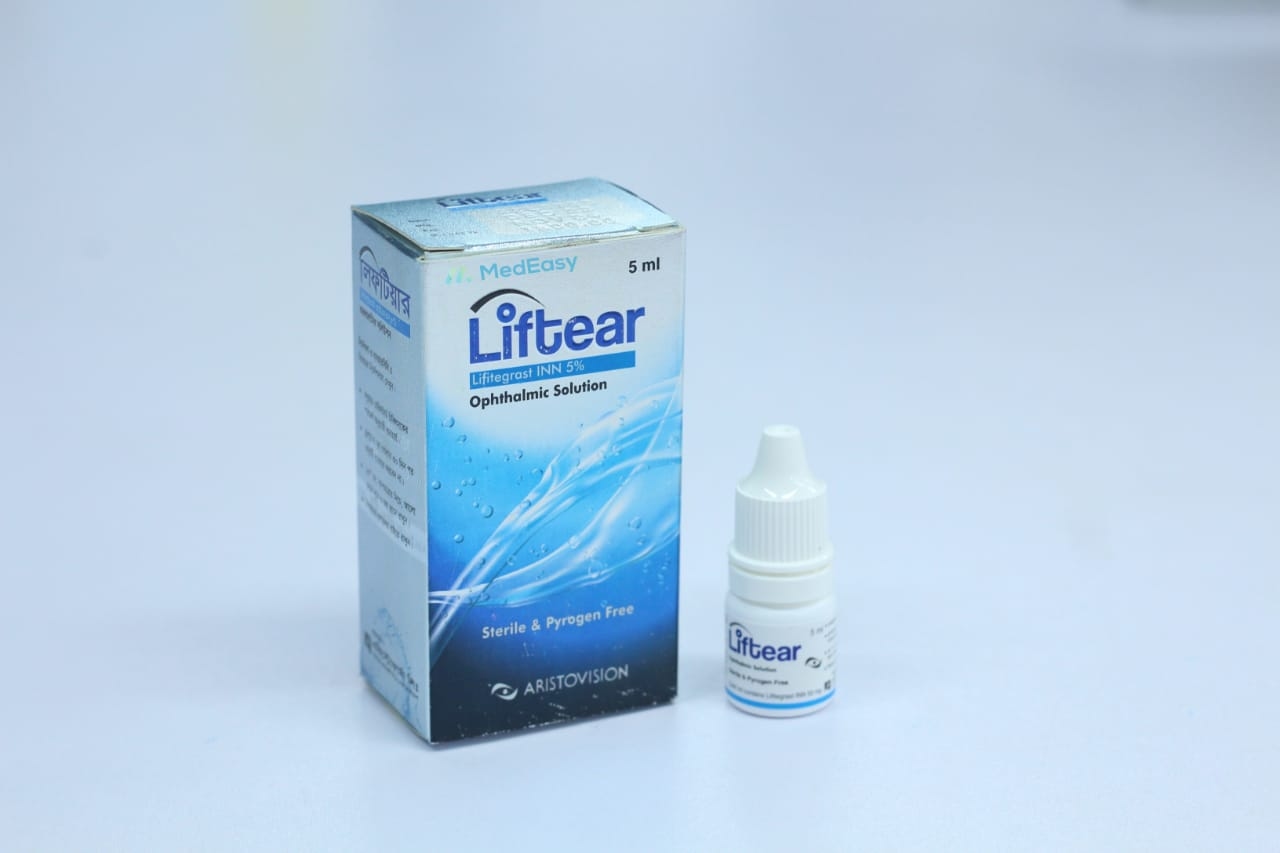
Lifitegrast ophthalmic solution is indicated for the treatment of the signs and symptoms ofdry eye disease (DED) in adults.

Forms:Ophthalmic Solution

About Lifitegrast

Indications of Lifitegrast

Lifitegrast ophthalmic solution is indicated for the treatment of the signs and symptoms ofdry eye disease (DED) in adults. This is the established, FDA-approved indication for Lifitegrast.

  • Established/FDA-approved use: Treatment of signs and symptoms (including ocular discomfort) of dry eye disease in adult patients.

Lifitegrast is a topical anti-inflammatory therapy and is not used as an immediate lubricant; it works byreducing the T-cell mediated inflammation that underlies chronic dry eye disease. It is not indicated forother ocular surface conditions, and no guideline-supported or off-label uses are well established at this time.

Dosage & Administration of Lifitegrast

Dry Eye Disease (Adults)

PopulationDoseFrequency
AdultsOne drop (approximately 5 microliters) instilled into each eyeTwice daily, approximately 12 hours apart

Administration Instructions

  • For topical ophthalmic use only. Not for injection or oral use.
  • Contact lenses should be removed prior to instillation of Lifitegrast and may be reinserted after the waiting period specified in the product instructions (generally about 15 minutes), as Lifitegrast contains a preservative that may be absorbed by soft contact lenses.
  • If more than one topical ophthalmic medicine is being used, administer each medicine at least 5 minutes apart.
  • Lifitegrast is not a substitute for artificial tears or lubricating eye drops when immediate lubricating relief is needed, since it works through an anti-inflammatory mechanism rather than lubrication; if lubricant drops are also used, allow an interval between products as advised by the physician.
  • Full therapeutic benefit of Lifitegrast may take several weeks of consistent, twice-daily use to become apparent; patients should not discontinue therapy early without consulting their physician.

No dosage adjustment for Lifitegrast is required based on renal or hepatic impairment, given its minimal systemic absorption after ocular administration.

Side Effects of Lifitegrast

The most commonly reported adverse reactions with Lifitegrast (reported in a meaningful proportion ofpatients in clinical trials) include:

  • Instillation-site irritation (a stinging or burning sensation upon application)
  • Dysgeusia (an unusual or unpleasant taste sensation, typically shortly after instillation)
  • Reduced visual acuity (transient blurring)
  • Other eye irritation, discomfort, or blurred vision

Most reactions are mild to moderate and localized to the eye or, in the case of dysgeusia, related todrainage through the nasolacrimal duct. Patients should contact their physician if any reaction issevere, persistent, or accompanied by signs of a hypersensitivity reaction (e.g., swelling, rash, difficulty breathing).

Contraindications of Lifitegrast

Lifitegrast is contraindicated in patients with known hypersensitivity to Lifitegrast or to any other ingredientin the formulation. No other well-established absolute contraindications to Lifitegrast are recognized.

Frequently Asked Questions about Lifitegrast

What is Lifitegrast used for?

Lifitegrast is an ophthalmic (eye) solution used to treat the signs and symptoms of dry eye disease in adults. It works by reducing the inflammation that contributes to chronic dry eye rather than simply lubricating the eye.

How often should I use Lifitegrast?

The typical dose is one drop of Lifitegrast in each eye, twice daily, approximately 12 hours apart, unless your physician directs otherwise.

Can I wear contact lenses while using Lifitegrast?

Contact lenses should be removed before instilling Lifitegrast and can be reinserted after the waiting period noted in the product instructions (generally around 15 minutes), because Lifitegrast contains a preservative that soft contact lenses may absorb.

Will Lifitegrast work immediately for dry eye discomfort?

No. Lifitegrast is not a substitute for artificial tears when immediate lubricating relief is needed, since it works through an anti-inflammatory mechanism rather than lubrication. Full therapeutic benefit of Lifitegrast may take several weeks of consistent, twice-daily use.

What are the common side effects of Lifitegrast?

The most commonly reported effects are instillation-site irritation (stinging/burning) and dysgeusia (an unusual taste sensation shortly after use), along with occasional temporary blurred vision or eye irritation.

Is Lifitegrast safe during pregnancy or breastfeeding?

Data in pregnant or breastfeeding women are limited. Lifitegrast should be used during pregnancy only if clearly needed and if the potential benefit justifies the potential risk to the fetus, and a physician should be consulted before use while breastfeeding.

Disclaimer

The information provided is accurate to the best of our knowledge, but it does not replace professional medical advice. We cannot guarantee its completeness or accuracy, and the absence of specific information about a drug should not be taken as an endorsement. We are not responsible for any consequences arising from this information, so please consult a healthcare professional for any concerns or questions.
DoctorBlogArticles