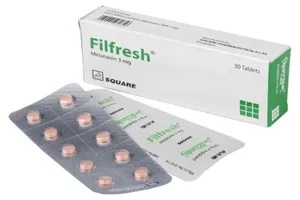
Generic medicine

Melatonin: Brands, Price & Uses in Bangladesh

Melatonin is a pineal-gland hormone analog used as a sleep aid and circadian-rhythm regulator.

Forms:TabletDispersible Tablet

About Melatonin

Indications of Melatonin

Melatonin is a pineal-gland hormone analog used as a sleep aid and circadian-rhythm regulator. Evidence supporting its use varies by indication:

Established / Well-Supported Uses

  • Jet lag: Good evidence for reducing jet-lag-related sleep disturbance when travelling across multiple time zones.
  • Circadian rhythm sleep-wake disorders: Including delayed sleep-wake phase disorder and non-24-hour sleep-wake disorder, particularly in blind individuals with no light perception.
  • Shift-work sleep disorder: Used to help realign sleep timing in shift workers.

Adjunct / Modest-Evidence Uses

  • Short-term insomnia (sleep-onset difficulty): Modest evidence for reducing time to fall asleep and improving mild insomnia; benefit is generally smaller than for circadian-rhythm indications.
  • Sleep disturbances in children with neurodevelopmental conditions (e.g. ADHD, autism spectrum disorder): Used as an adjunct under professional guidance when behavioral measures are insufficient.

Off-Label / Limited-Evidence Uses

Melatonin is also used off-label, with more limited evidence, for conditions such as sleep disturbance associated with menopause, and as an adjunct in certain other settings. These uses should only be considered under medical supervision, as evidence is weaker than for the indications above.

Dosage & Administration of Melatonin

IndicationPopulationTypical Dose
Short-term insomnia / sleep-onset difficultyAdults0.5-5 mg taken 30 minutes to 2 hours before bedtime; many guidelines suggest starting at the lowest effective dose (0.5-1 mg) and increasing only if needed, as doses above 5-10 mg rarely add benefit and may increase side effects
Jet lagAdults0.5-5 mg at the destination bedtime, started on the day of arrival and continued for 2-5 days as needed
Shift-work / circadian rhythm sleep-wake disordersAdults0.5-3 mg taken at the desired bedtime, timed to the individual's circadian schedule
Sleep disturbance in neurodevelopmental conditions (e.g. ADHD, autism spectrum disorder)Children, under medical supervisionLow doses (commonly in the range of 0.5-3 mg) individualized by a physician; safety and efficacy of routine use are not fully established (see Pediatric Uses)

Doses and duration should always be individualized by a physician. Melatonin is generally intended for short-term or as-needed use rather than indefinite daily use unless directed by a physician.

Side Effects of Melatonin

Common side effects of Melatonin include:

  • Headache
  • Daytime drowsiness / next-morning grogginess (more common at higher doses)
  • Dizziness
  • Nausea
  • Vivid dreams
  • Irritability or transient low mood
  • Stomach discomfort

Drowsiness typically develops within about 30 minutes of taking Melatonin and may impair alertness or driving ability for approximately one hour; avoid driving or operating machinery during this period.

Contraindications of Melatonin

Melatonin is contraindicated in patients with known hypersensitivity to Melatonin or any component of the formulation.

Frequently Asked Questions about Melatonin

What is Melatonin used for?

Melatonin is mainly used to help with sleep problems caused by a disrupted body clock, such as jet lag, shift-work sleep disorder, and circadian rhythm sleep-wake disorders. It also has modest benefit for short-term, general sleep-onset difficulty.

How and when should I take Melatonin?

Melatonin is usually taken by mouth, 30 minutes to 2 hours before the intended bedtime, starting at the lowest effective dose (often 0.5-1 mg) and increasing only if needed and advised by a physician.

Can I take Melatonin if I am pregnant or breastfeeding?

Safety data for Melatonin at supplement doses during pregnancy and breastfeeding are limited. It should be used only if clearly needed, and only after consulting a physician who can weigh the potential benefit against the potential risk to the fetus or infant.

Is Melatonin safe for children?

Melatonin may be used in children under professional medical guidance, particularly for sleep-onset difficulty linked to neurodevelopmental conditions, but the best dose, timing, and long-term safety in children are not firmly established, so it should not be given to children without medical advice, and products should be kept out of children's reach.

What side effects can Melatonin cause?

Common side effects of Melatonin include headache, next-morning grogginess or daytime drowsiness, dizziness, nausea, and vivid dreams. Drowsiness can affect driving ability for about an hour after taking it.

Can Melatonin be taken with other sleep medicines or alcohol?

Combining Melatonin with alcohol, sedatives, or other central-nervous-system depressants can cause additive drowsiness and is not recommended unless advised by a physician.

Disclaimer

The information provided is accurate to the best of our knowledge, but it does not replace professional medical advice. We cannot guarantee its completeness or accuracy, and the absence of specific information about a drug should not be taken as an endorsement. We are not responsible for any consequences arising from this information, so please consult a healthcare professional for any concerns or questions.
DoctorBlogArticles