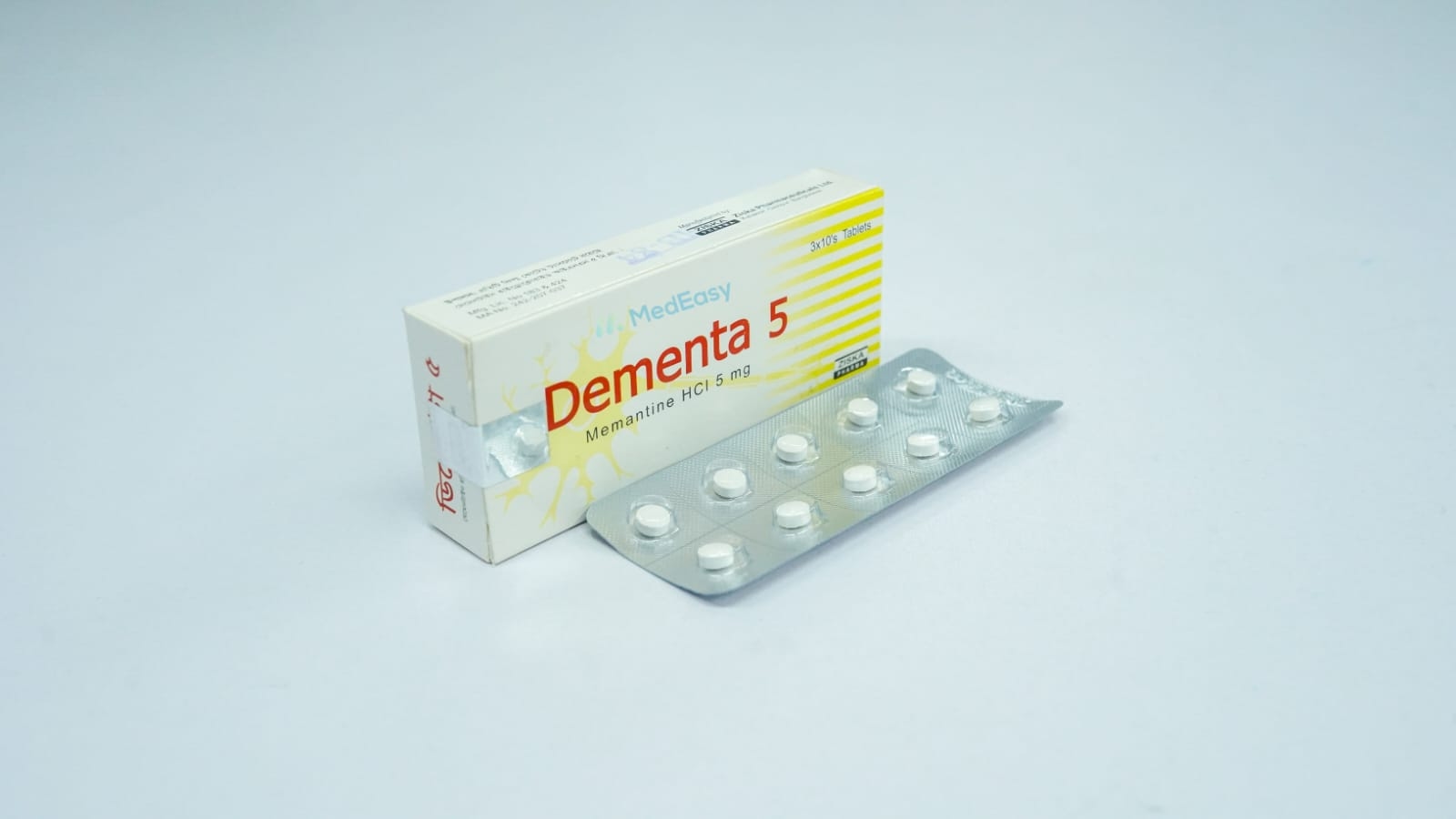
Generic medicine

Memantine Hydrochloride: Brands, Price & Uses in Bangladesh

Memantine Hydrochloride is an FDA-approved and guideline-supported treatment for the following: Established/FDA-approved use Treatment of moderate to severe dementia of the Alzheimer's type…

Forms:Tablet

About Memantine Hydrochloride

Indications of Memantine Hydrochloride

Memantine Hydrochloride is an FDA-approved and guideline-supported treatment for the following:

Established/FDA-approved use

  • Treatment of moderate to severe dementia of the Alzheimer's type (Alzheimer's disease).

Guideline-supported / combination use

  • Used as monotherapy or, commonly, as add-on (combination) therapy together with a cholinesterase inhibitor (e.g., donepezil) in patients with moderate to severe Alzheimer's disease, a combination supported by clinical guidelines and widely used in practice.

Off-label use

  • Memantine Hydrochloride has been used off-label in other dementia subtypes (e.g., vascular dementia) and in certain neuropsychiatric or neuropathic pain conditions; evidence for these uses is limited and they are not FDA-approved indications.

Memantine Hydrochloride provides symptomatic benefit only; it does not stop or reverse the underlying neurodegenerative disease process, and the overall magnitude of clinical benefit is generally modest.

Dosage & Administration of Memantine Hydrochloride

Adult dose (moderate to severe Alzheimer's disease)

WeekDose
Week 15 mg once daily
Week 25 mg twice daily (10 mg/day)
Week 35 mg in the morning and 10 mg in the evening (15 mg/day)
Week 4 onward10 mg twice daily (20 mg/day, target maintenance dose)

The minimum recommended interval between dose increases is one week, based on individual tolerability. Memantine Hydrochloride may be taken with or without food. If using the extended-release capsule formulation, the target maintenance dose is 28 mg once daily, titrated over several weeks in a similar stepwise manner; capsules may be swallowed whole or opened and sprinkled on applesauce.

Pediatric dose

Safety and efficacy of Memantine Hydrochloride have not been established in pediatric patients; it is not recommended for use in children.

Renal impairment

In patients with severe renal impairment, a reduced target dose of 5 mg twice daily (immediate-release) is recommended. See Use in Special Populations for further detail.

Hepatic impairment

No dosage adjustment is generally required in mild to moderate hepatic impairment; use with caution in severe hepatic impairment.

Side Effects of Memantine Hydrochloride

Adverse effects of Memantine Hydrochloride are generally mild.

Common (may affect more than 1 in 100 people)

  • Dizziness
  • Headache
  • Confusion
  • Constipation
  • Fatigue/somnolence

Less common

  • Hallucinations
  • Anxiety
  • Increased muscle tone/hypertonia
  • Vomiting
  • Elevated blood pressure
  • Urinary tract infection

Rare but serious

  • Seizures (see Precautions and Warnings)
  • Hypersensitivity reactions

Contraindications of Memantine Hydrochloride

Memantine Hydrochloride is contraindicated in patients with known hypersensitivity to memantine hydrochloride or to any excipient in the formulation.

Frequently Asked Questions about Memantine Hydrochloride

What is Memantine Hydrochloride used for?

Memantine Hydrochloride is used to treat moderate to severe Alzheimer's disease. It helps manage symptoms of the disease but does not cure it or stop it from progressing.

How long does it take for Memantine Hydrochloride to work?

Some patients and caregivers notice modest improvements in cognition or daily functioning within a few weeks to a few months of reaching the maintenance dose of Memantine Hydrochloride, though benefits vary between individuals and are generally modest in degree.

Can Memantine Hydrochloride be taken with donepezil or other Alzheimer's medicines?

Yes, Memantine Hydrochloride is commonly prescribed together with a cholinesterase inhibitor such as donepezil, as combination therapy is supported by clinical guidelines for moderate to severe Alzheimer's disease. Your physician will determine the appropriate combination for you.

What are the common side effects of Memantine Hydrochloride?

The most common side effects of Memantine Hydrochloride are dizziness, headache, confusion, and constipation. These are usually mild. Less common effects include hallucinations, anxiety, and increased muscle tension. Contact your physician if side effects are severe or persistent.

Is Memantine Hydrochloride safe for someone with kidney problems?

Patients with severe kidney (renal) impairment need a reduced dose of Memantine Hydrochloride, since it is cleared from the body mainly by the kidneys. Your physician will adjust the dose based on your kidney function; do not adjust the dose yourself.

What should I do if I miss a dose or take too much Memantine Hydrochloride?

If you miss a dose, take it as soon as you remember unless it is close to the next dose; do not double up. If you suspect an overdose of Memantine Hydrochloride, seek immediate medical attention or contact emergency services or a poison control center right away, as prompt medical evaluation is important.

Disclaimer

The information provided is accurate to the best of our knowledge, but it does not replace professional medical advice. We cannot guarantee its completeness or accuracy, and the absence of specific information about a drug should not be taken as an endorsement. We are not responsible for any consequences arising from this information, so please consult a healthcare professional for any concerns or questions.

DoctorBlogArticles