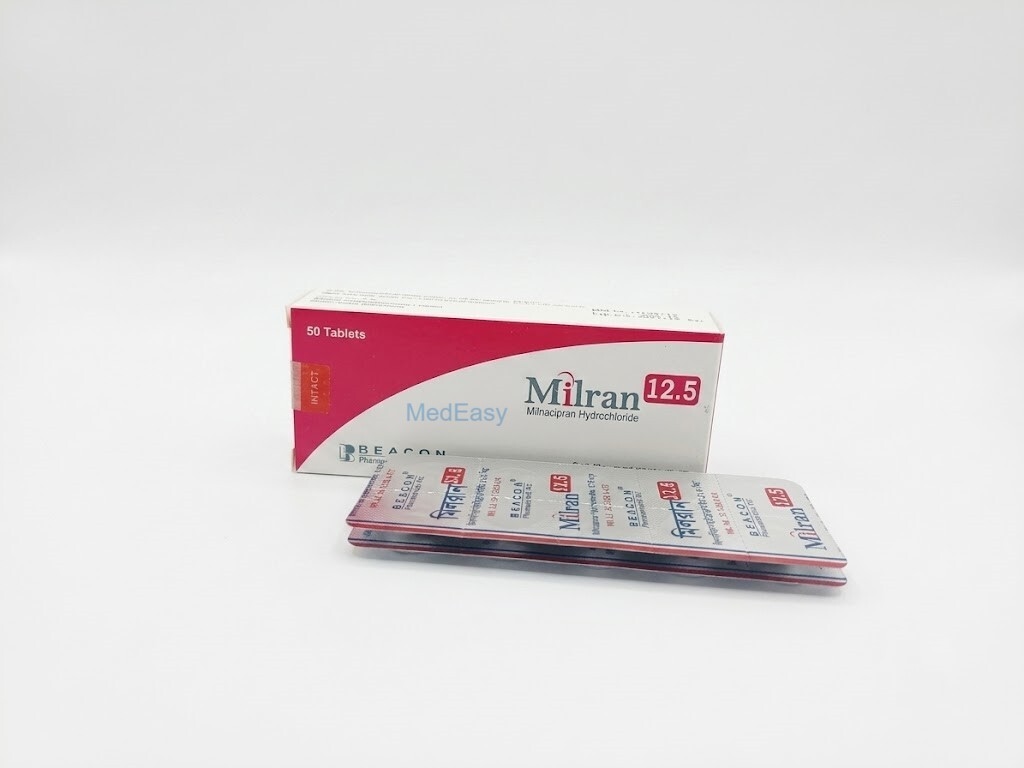
Generic medicine

Milnacipran Hydrochloride: Brands, Price & Uses in Bangladesh

Milnacipran Hydrochloride is a serotonin-norepinephrine reuptake inhibitor (SNRI) with the following evidence-based uses: Established / Approved Use Fibromyalgia (adults): Milnacipran Hydrochloride…

Forms:Tablet

About Milnacipran Hydrochloride

Indications of Milnacipran Hydrochloride

Milnacipran Hydrochloride is a serotonin-norepinephrine reuptake inhibitor (SNRI) with the following evidence-based uses:

Established / Approved Use

  • Fibromyalgia (adults): Milnacipran Hydrochloride is approved for the management of fibromyalgia, helping to reduce widespread musculoskeletal pain and improve function in adult patients.

Use in Other Markets

  • In some countries outside the United States, Milnacipran Hydrochloride is marketed as an antidepressant for major depressive disorder (MDD) in adults, based on local regulatory approvals.

Not Established

  • Milnacipran Hydrochloride is not approved for use in children or adolescents for any indication; safety and efficacy in pediatric fibromyalgia have not been established.

Dosage & Administration of Milnacipran Hydrochloride

Fibromyalgia (Adults)

Milnacipran Hydrochloride is initiated with a gradual titration schedule to improve tolerability:

DayDose
Day 112.5 mg once daily
Days 2-312.5 mg twice daily (25 mg/day)
Days 4-725 mg twice daily (50 mg/day)
After Day 7 (maintenance)50 mg twice daily (100 mg/day)

Based on individual response and tolerability, the dose of Milnacipran Hydrochloride may be further increased to a maximum of 100 mg twice daily (200 mg/day). Doses above 200 mg/day are not recommended.

Renal Impairment

Renal FunctionDose Adjustment
Moderate impairmentNo adjustment typically required; monitor closely
Severe impairment (CrCl 5-29 mL/min)Reduce maintenance dose of Milnacipran Hydrochloride by half (target ~50 mg/day)
End-stage renal diseaseUse of Milnacipran Hydrochloride is generally not recommended

Hepatic Impairment

Use Milnacipran Hydrochloride with caution in patients with severe hepatic impairment, as dosing has not been well established in this population; see Precautions for hepatotoxicity risk.

Side Effects of Milnacipran Hydrochloride

The most common side effects associated with Milnacipran Hydrochloride include:

Common (≥5%)Less Common
NauseaVomiting
HeadacheDry mouth
ConstipationAnxiety
DizzinessIncreased heart rate (tachycardia)
InsomniaHypertension
Hot flush / flushingUrinary hesitancy or retention
Hyperhidrosis (excessive sweating)Palpitations

Most side effects of Milnacipran Hydrochloride are mild to moderate and tend to occur during initial titration; persistent or severe symptoms should be reported to a physician.

Contraindications of Milnacipran Hydrochloride

Milnacipran Hydrochloride is contraindicated in patients with:

  • Known hypersensitivity to milnacipran or any component of the formulation.
  • Concurrent use of, or use within 14 days of discontinuing, a monoamine oxidase inhibitor (MAOI), due to the risk of serotonin syndrome.
  • Uncontrolled narrow-angle glaucoma, as Milnacipran Hydrochloride can cause mydriasis and precipitate an acute angle-closure attack.

Frequently Asked Questions about Milnacipran Hydrochloride

What is Milnacipran Hydrochloride used for?

Milnacipran Hydrochloride is primarily used for the management of fibromyalgia in adults, a chronic condition causing widespread muscle pain and tenderness. In some countries, it is also used to treat major depressive disorder.

How long does it take for Milnacipran Hydrochloride to work?

Some patients notice improvement in pain within a few weeks of reaching the maintenance dose of Milnacipran Hydrochloride, but full benefit may take several weeks of continued treatment; it should be taken regularly as prescribed.

Can I stop taking Milnacipran Hydrochloride suddenly?

No. Milnacipran Hydrochloride should not be stopped abruptly, as this can cause discontinuation symptoms such as dizziness, nausea, headache, and irritability. Always consult your physician, who will gradually taper the dose of Milnacipran Hydrochloride if it needs to be stopped.

Is Milnacipran Hydrochloride safe during pregnancy?

Milnacipran Hydrochloride should be used during pregnancy only if clearly needed, since use late in pregnancy has been linked to transient complications in newborns. Always consult your physician before using Milnacipran Hydrochloride if you are pregnant or planning pregnancy.

What should I avoid while taking Milnacipran Hydrochloride?

Avoid combining Milnacipran Hydrochloride with MAOIs (or taking it within 14 days of stopping one), other serotonergic medicines, and excessive alcohol, as these combinations can increase the risk of serious side effects such as serotonin syndrome or liver problems. Discuss all your current medicines with your physician before starting Milnacipran Hydrochloride.

What if I miss a dose of Milnacipran Hydrochloride?

Take the missed dose of Milnacipran Hydrochloride as soon as you remember, unless it is almost time for your next dose — in that case, skip the missed dose and continue your regular schedule. Do not take a double dose.

Disclaimer

The information provided is accurate to the best of our knowledge, but it does not replace professional medical advice. We cannot guarantee its completeness or accuracy, and the absence of specific information about a drug should not be taken as an endorsement. We are not responsible for any consequences arising from this information, so please consult a healthcare professional for any concerns or questions.

DoctorBlogArticles