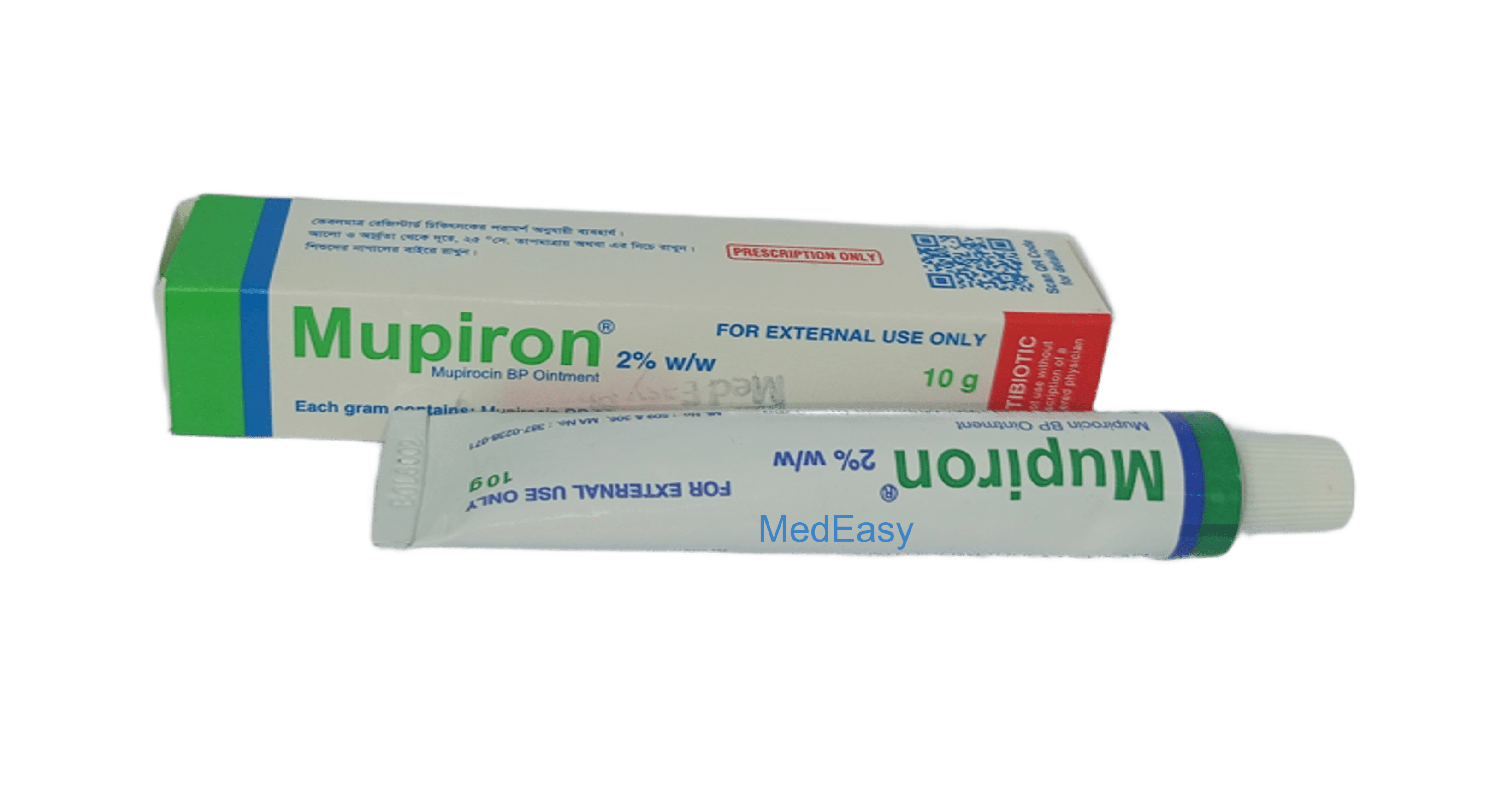
Generic medicine

Mupirocin: Brands, Price & Uses in Bangladesh

Established / FDA-Approved Uses Impetigo: Topical treatment of impetigo caused by susceptible strains of Staphylococcus aureus and Streptococcus pyogenes and more.

Forms:OintmentNasal Ointment

About Mupirocin

Indications of Mupirocin

Established / FDA-Approved Uses

  • Impetigo: Topical treatment of impetigo caused by susceptible strains of Staphylococcus aureus and Streptococcus pyogenes, using Mupirocin ointment or cream applied to the affected skin.
  • Nasal elimination of MRSA carriage: The nasal ointment form of Mupirocin (mupirocin calcium 2% nasal ointment) is indicated in adults and adolescents to reduce/eliminate nasal colonization with methicillin-resistant Staphylococcus aureus (MRSA), typically as part of an infection-control program during institutional outbreaks.

Other Guideline-Supported / Commonly Accepted Uses

  • Secondary skin infections: Minor, superficial secondarily-infected skin lesions (e.g. infected cuts, abrasions, small infected wounds) due to susceptible organisms.
  • Folliculitis and furunculosis: Superficial bacterial skin infections that are commonly treated with topical Mupirocin in clinical practice.
  • MRSA decolonization protocols: Nasal Mupirocin is frequently used, often combined with antiseptic body washes (e.g. chlorhexidine), as part of combination decolonization regimens before certain surgeries or to interrupt outbreaks; this combination use is a standard infection-control practice rather than a standalone FDA label claim.

Mupirocin is not effective against fungal or viral skin infections and should not be used for these conditions.

Dosage & Administration of Mupirocin

IndicationFormulationDose & FrequencyDuration
Impetigo / minor infected skin lesionsMupirocin 2% ointment or creamApply a small amount to the affected area 3 times dailyUp to 10 days; re-evaluate if no improvement in 3-5 days
Nasal MRSA decolonizationMupirocin calcium 2% nasal ointmentApply approximately half of a single-use tube into each nostril twice daily, then gently press the nostrils together for about 1 minute to spread the ointment5 days

General Administration Notes

  • For external (skin) or intranasal use only, depending on formulation; not for oral, ophthalmic, or general mucosal use.
  • Skin ointment/cream may be covered with a gauze dressing if desired.
  • Wash hands before and after application (unless the hands are the treated area).
  • Take exactly as prescribed by your physician; do not stop, extend, skip doses, or share this medicine with others without medical advice.

Side Effects of Mupirocin

Topical (Skin) Ointment/Cream

  • Burning, stinging, or pain at the application site (most common)
  • Itching
  • Rash, dry skin, or contact dermatitis
  • Erythema (redness), tenderness, or swelling at the site
  • Increased wound discharge (exudate)

Nasal Ointment

  • Headache
  • Rhinitis (runny/irritated nose)
  • Nasal/respiratory congestion
  • Sore throat (pharyngitis)
  • Local burning or stinging inside the nose

Serious but rare reactions include severe allergic reactions (anaphylaxis, hives, angioedema/facial swelling) — see Precautions and Warnings.

Contraindications of Mupirocin

Mupirocin is contraindicated in patients with a known history of hypersensitivity to Mupirocin or to any other component of the specific ointment or cream formulation being used.

Frequently Asked Questions about Mupirocin

What is Mupirocin used for?

Mupirocin is a topical antibiotic used to treat impetigo and other minor superficial bacterial skin infections. A separate nasal ointment form of Mupirocin is used to reduce or eliminate MRSA (methicillin-resistant Staphylococcus aureus) carried inside the nose, usually as part of an infection-control program.

How should I apply Mupirocin ointment or cream on the skin?

Clean and dry the affected area, then apply a small amount of Mupirocin to the area 3 times a day for up to 10 days, as directed by your physician. The area may be covered with a gauze dressing if advised. Avoid contact with the eyes.

How is the Mupirocin nasal ointment used differently from the skin ointment?

The nasal ointment is a specially formulated, more concentrated presentation for use only inside the nostrils, not on the skin. About half of one single-use tube is placed in each nostril twice daily for 5 days, and the nostrils are pressed together afterward to spread the ointment. It is not interchangeable with the skin ointment/cream.

Can Mupirocin be used during pregnancy or while breastfeeding?

Systemic absorption of Mupirocin from the skin is minimal and animal studies have not shown fetal harm, but data in pregnant women are limited, so it should be used during pregnancy only if clearly needed and if the potential benefit justifies the potential risk to the fetus. It is not known whether Mupirocin passes into breast milk in significant amounts; avoid applying it directly to the breast/nipple area before nursing, and consult a physician before use while breastfeeding.

What are the common side effects of Mupirocin?

The most common side effects of the skin ointment/cream are burning, stinging, itching, or mild irritation at the application site. The nasal ointment may cause headache, a runny or irritated nose, nasal congestion, or sore throat. Discontinue Mupirocin and consult a physician if severe irritation, rash, or an allergic reaction occurs.

Is it safe to use Mupirocin for longer than prescribed or on large wounds?

No. Mupirocin should be taken exactly as prescribed; do not stop, extend, skip doses, or share this medicine with others without medical advice. It should not be applied to large areas of broken skin or mucous membranes for prolonged periods, since certain formulations contain a polyethylene glycol vehicle that can be absorbed and affect kidney function, especially in people with kidney impairment. Using it for longer than directed can also encourage antibiotic-resistant bacteria to grow.

Disclaimer

The information provided is accurate to the best of our knowledge, but it does not replace professional medical advice. We cannot guarantee its completeness or accuracy, and the absence of specific information about a drug should not be taken as an endorsement. We are not responsible for any consequences arising from this information, so please consult a healthcare professional for any concerns or questions.

DoctorBlogArticles