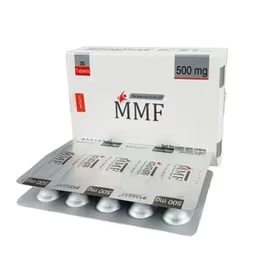
Generic medicine

Mycophenolate Mofetil: Brands, Price & Uses in Bangladesh

Mycophenolate Mofetil is indicated for the following uses: Established / FDA-approved uses Prophylaxis of organ rejection in patients receiving allogeneic kidney transplants and more.

Forms:Tablet

About Mycophenolate Mofetil

Indications of Mycophenolate Mofetil

Mycophenolate Mofetil is indicated for the following uses:

Established / FDA-approved uses

  • Prophylaxis of organ rejection in patients receiving allogeneic kidney transplants, in combination with cyclosporine (or tacrolimus) and corticosteroids.
  • Prophylaxis of organ rejection in patients receiving allogeneic heart transplants, in combination with other immunosuppressants.
  • Prophylaxis of organ rejection in patients receiving allogeneic liver transplants, in combination with other immunosuppressants.

Guideline-supported / commonly used off-label uses

  • Induction and maintenance therapy of lupus nephritis (Class III-V), as part of a combination immunosuppressive regimen, based on treatment guidelines.
  • Other autoimmune and inflammatory conditions (e.g., certain forms of vasculitis, autoimmune hepatitis, some dermatologic autoimmune disorders) where used off-label under specialist supervision.

Mycophenolate Mofetil is always used in combination with other immunosuppressive agents and must be prescribed and monitored by a physician experienced in transplant medicine or the relevant autoimmune condition.

Dosage & Administration of Mycophenolate Mofetil

Dosage of Mycophenolate Mofetil must be individualized according to indication, organ transplanted, and clinical/laboratory response, and should only be adjusted by the treating physician.

Renal transplantation (adults)

  • 1 g orally twice daily (total 2 g/day), usually started within 72 hours of transplantation.

Cardiac transplantation (adults)

  • 1.5 g orally twice daily (total 3 g/day).

Hepatic transplantation (adults)

  • 1.5 g orally twice daily (total 3 g/day).

Lupus nephritis (off-label, per guideline use)

  • Induction phase: approximately 1-1.5 g twice daily, individualized.
  • Maintenance phase: lower doses (e.g., 0.5-1 g twice daily), individualized by response.

Pediatric renal transplant (3 months of age and older)

  • Body-surface-area-based dosing: approximately 600 mg/m² orally twice daily, up to a maximum of 2 g/day, using the oral suspension or tablets as appropriate.

Administration

  • Take on an empty stomach when possible for consistency, though it may be taken with food if gastrointestinal upset occurs.
  • Swallow tablets/capsules whole; do not crush, chew, or open capsules, and avoid inhaling any powder from broken tablets/capsules due to teratogenic potential.
  • Space doses evenly (e.g., every 12 hours).
  • Take exactly as prescribed by your physician; do not stop, change, or skip doses without medical advice, given the risk of organ rejection.

Renal impairment

In patients with severe chronic renal impairment (GFR less than 25 mL/min/1.73 m²) outside the immediate post-transplant period, doses above 1 g twice daily should be avoided, and patients should be monitored closely.

Hepatic impairment

No dose adjustment is required for hepatic transplant recipients with hepatic parenchymal disease, but clinical monitoring is advised.

Side Effects of Mycophenolate Mofetil

Common and serious side effects of Mycophenolate Mofetil include:

Very common

  • Diarrhea and other gastrointestinal disturbances (nausea, vomiting, abdominal pain) - can be severe and dose-limiting.
  • Leukopenia and other blood count abnormalities.
  • Increased susceptibility to bacterial, viral (including CMV, herpes), fungal, and opportunistic infections.

Common

  • Headache, tremor, insomnia.
  • Hypertension, peripheral edema.
  • Elevated liver enzymes.

Serious (less common but important)

  • Severe neutropenia, anemia, thrombocytopenia (requires regular blood monitoring).
  • Increased risk of lymphoma and other malignancies (particularly skin cancers) due to chronic immunosuppression.
  • Progressive multifocal leukoencephalopathy (PML), a rare but serious brain infection.
  • Gastrointestinal bleeding or perforation (rare).
  • Pure red cell aplasia (rare).

Patients should promptly report fever, unusual bruising/bleeding, persistent diarrhea, or signs of infection to their physician.

Contraindications of Mycophenolate Mofetil

Mycophenolate Mofetil is contraindicated in:

  • Patients with known hypersensitivity to Mycophenolate Mofetil, mycophenolic acid, or any component of the formulation.
  • Patients with hypersensitivity to polysorbate 80 (relevant to the intravenous formulation).
  • Pregnancy, except in rare, specific circumstances under direct specialist guidance where no suitable alternative therapy exists (see Pregnancy and Lactation).

Frequently Asked Questions about Mycophenolate Mofetil

What is Mycophenolate Mofetil used for?

Mycophenolate Mofetil is an immunosuppressant medicine used mainly to prevent the body from rejecting a transplanted kidney, heart, or liver. It is used together with other immunosuppressive medicines. It is also used off-label, under specialist supervision, to treat certain autoimmune conditions such as lupus nephritis.

Can I take Mycophenolate Mofetil during pregnancy?

No. Mycophenolate Mofetil is contraindicated during pregnancy because it significantly increases the risk of miscarriage and serious birth defects. If you can become pregnant, you must use effective contraception before, during, and for at least 6 weeks after stopping Mycophenolate Mofetil, and you must tell your doctor immediately if you think you might be pregnant.

What are the most common side effects of Mycophenolate Mofetil?

The most common side effects of Mycophenolate Mofetil are diarrhea and other gastrointestinal upset, low white blood cell counts (leukopenia), and increased susceptibility to infections. Regular blood tests are needed to monitor for these effects, especially during the first few months of treatment.

Can I receive vaccines while taking Mycophenolate Mofetil?

Live vaccines (such as MMR, varicella, or oral polio vaccine) should generally be avoided while taking Mycophenolate Mofetil because your immune response may be weakened and there is a risk of vaccine-related infection. Non-live (inactivated) vaccines can generally be given, but you should discuss timing with your physician.

What should I do if I miss a dose or take too much Mycophenolate Mofetil?

If you miss a dose of Mycophenolate Mofetil, take it as soon as you remember unless it is almost time for your next dose; do not double up doses. If you or someone else has taken too much Mycophenolate Mofetil, seek immediate medical attention or contact a poison control center, as overdose can cause serious low blood counts and gastrointestinal symptoms.

Why does Mycophenolate Mofetil need regular blood tests?

Mycophenolate Mofetil can cause low white blood cell, red blood cell, and platelet counts, which increases the risk of infection and bleeding. Your doctor will order regular complete blood counts, especially during the first year of treatment, to catch and manage these effects early.

Disclaimer

The information provided is accurate to the best of our knowledge, but it does not replace professional medical advice. We cannot guarantee its completeness or accuracy, and the absence of specific information about a drug should not be taken as an endorsement. We are not responsible for any consequences arising from this information, so please consult a healthcare professional for any concerns or questions.

DoctorBlogArticles
