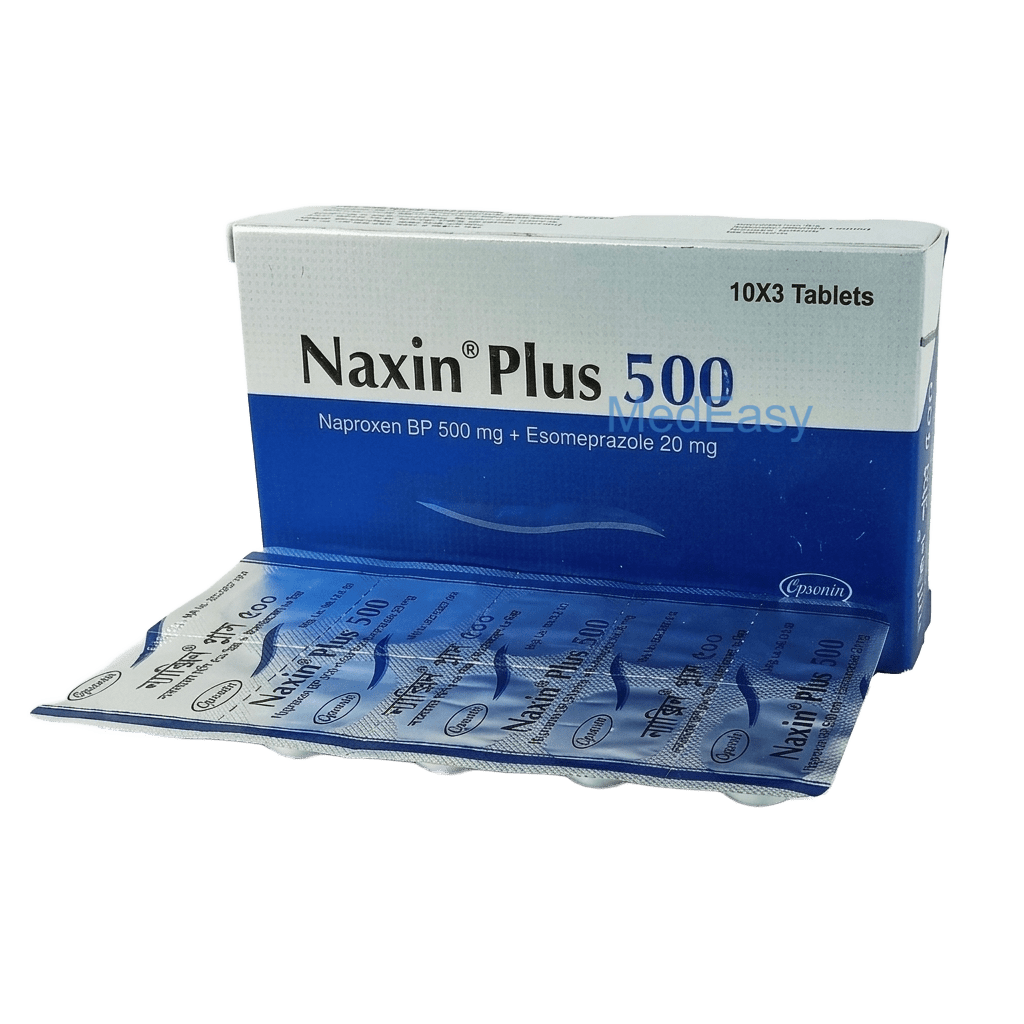
Generic medicine

Naproxen Sodium + Esomeprazole Magnesium: Brands, Price & Uses in Bangladesh

Naproxen Sodium + Esomeprazole Magnesium is a fixed-dose combination product containing an NSAID (naproxen) and a proton pump inhibitor (esomeprazole) and more.

Forms:TabletTablet (Delayed Release)

About Naproxen Sodium + Esomeprazole Magnesium

Indications of Naproxen Sodium + Esomeprazole Magnesium

Naproxen Sodium + Esomeprazole Magnesium is a fixed-dose combination product containing an NSAID (naproxen) and a proton pump inhibitor (esomeprazole), indicated in adult patients who require ongoing NSAID therapy and are at risk of developing NSAID-associated gastric ulcers.

Established / FDA-approved uses

  • Relief of the signs and symptoms of osteoarthritis in patients who require ongoing NSAID therapy and who are at risk of developing NSAID-associated gastric ulcers.
  • Relief of the signs and symptoms of rheumatoid arthritis in patients who require ongoing NSAID therapy and who are at risk of developing NSAID-associated gastric ulcers.
  • Relief of the signs and symptoms of ankylosing spondylitis in patients who require ongoing NSAID therapy and who are at risk of developing NSAID-associated gastric ulcers.

Naproxen Sodium + Esomeprazole Magnesium is not indicated for the initial treatment of acute pain because the delayed-release naproxen component takes longer to reach peak effect; it is intended for patients who need a stable, longer-term NSAID dosing regimen and are also candidates for prophylaxis against NSAID-induced gastric ulcers.

It is not an appropriate on-demand analgesic and should not be used interchangeably with the individual components taken separately, since the specific release characteristics (immediate-release esomeprazole layered over delayed-release naproxen) are designed to work together.

Dosage & Administration of Naproxen Sodium + Esomeprazole Magnesium

Adult dosing

IndicationRecommended dose
Osteoarthritis, rheumatoid arthritis, ankylosing spondylitis (in patients needing ongoing NSAID therapy and at risk of NSAID-associated gastric ulcer)One tablet (naproxen 375 mg/esomeprazole 20 mg or naproxen 500 mg/esomeprazole 20 mg) taken orally twice daily, using the lowest effective naproxen dose for the shortest duration consistent with treatment goals

Administration instructions

  • Swallow tablets whole with liquid; do not split, crush, or chew, as this would disrupt the delayed-release naproxen coating.
  • Take at least 30–60 minutes before a meal so that the immediate-release esomeprazole component can act before food intake; taking it with or after food can reduce esomeprazole's effect.
  • Naproxen Sodium + Esomeprazole Magnesium is not interchangeable with taking naproxen and esomeprazole as two separate products, because the specific release profile and dosing timing of this fixed combination are designed to work together.

Renal and hepatic considerations

See "Use in special populations" for dose caution/avoidance in renal and hepatic impairment.

Side Effects of Naproxen Sodium + Esomeprazole Magnesium

Side effects with Naproxen Sodium + Esomeprazole Magnesium may arise from either the NSAID or PPI component.

Common

  • Dyspepsia, heartburn, abdominal pain, diarrhea, constipation, nausea
  • Headache, dizziness
  • Upper respiratory tract symptoms

Serious (less common but clinically important)

  • Gastrointestinal ulceration, bleeding, or perforation (see Precautions and warnings)
  • Cardiovascular thrombotic events such as myocardial infarction or stroke (see Precautions and warnings)
  • Renal impairment, fluid retention, or elevated blood pressure
  • Hepatic enzyme elevation or hepatotoxicity
  • Hypersensitivity/anaphylactoid reactions and serious skin reactions (e.g., Stevens-Johnson syndrome)
  • Long-term PPI-related effects: hypomagnesemia, vitamin B12 deficiency, increased fracture risk, and Clostridioides difficile-associated diarrhea

Contraindications of Naproxen Sodium + Esomeprazole Magnesium

Naproxen Sodium + Esomeprazole Magnesium is contraindicated in the following situations:

  • Known hypersensitivity to Naproxen Sodium + Esomeprazole Magnesium, naproxen, esomeprazole, other proton pump inhibitors (benzimidazole derivatives), or any component of the formulation.
  • History of asthma, urticaria, or other allergic-type reactions after taking aspirin or other NSAIDs (due to risk of severe, potentially fatal anaphylactoid reactions).
  • Use for the treatment of peri-operative pain in the setting of coronary artery bypass graft (CABG) surgery.
  • Third trimester of pregnancy (NSAID component; risk of premature closure of the fetal ductus arteriosus).
  • Active gastrointestinal bleeding.
  • Concomitant use with rilpivirine-containing products (esomeprazole component reduces rilpivirine absorption, risking loss of virologic control).

Frequently Asked Questions about Naproxen Sodium + Esomeprazole Magnesium

What is Naproxen Sodium + Esomeprazole Magnesium used for?

Naproxen Sodium + Esomeprazole Magnesium is used to relieve the signs and symptoms of osteoarthritis, rheumatoid arthritis, or ankylosing spondylitis in adults who need ongoing NSAID treatment and who are also at risk of developing NSAID-associated stomach ulcers.

How should I take Naproxen Sodium + Esomeprazole Magnesium?

Swallow the tablet whole with water at least 30–60 minutes before a meal. Do not crush, split, or chew it, as this can destroy the delayed-release coating that protects the naproxen component and disrupts the timing needed for the esomeprazole component to work properly.

Can I take Naproxen Sodium + Esomeprazole Magnesium during pregnancy?

Naproxen Sodium + Esomeprazole Magnesium is contraindicated in the third trimester of pregnancy because the NSAID component can cause premature closure of a blood vessel in the fetal heart (the ductus arteriosus). In the first and second trimesters it should be used only if clearly needed and only after a physician has weighed the potential benefit against the potential risk to the fetus.

What are the most serious risks of Naproxen Sodium + Esomeprazole Magnesium?

Like other NSAID-containing medicines, Naproxen Sodium + Esomeprazole Magnesium carries boxed warnings for an increased risk of serious cardiovascular events such as heart attack or stroke, and for serious gastrointestinal events such as bleeding, ulceration, or perforation of the stomach or intestines. The esomeprazole component lowers, but does not remove, the stomach-related risk.

Can Naproxen Sodium + Esomeprazole Magnesium be used together with aspirin or other painkillers?

Combining Naproxen Sodium + Esomeprazole Magnesium with aspirin or other NSAIDs increases the risk of stomach bleeding and ulcers without added benefit, so this combination should generally be avoided; discuss any other pain medicines you are taking with your physician or pharmacist.

What should I do if I miss a dose or take too much Naproxen Sodium + Esomeprazole Magnesium?

If you miss a dose, take it as soon as you remember unless it is almost time for your next dose — do not double up. If you suspect an overdose, seek immediate medical attention or contact a poison control center or emergency services right away rather than trying to manage it at home.

Disclaimer

The information provided is accurate to the best of our knowledge, but it does not replace professional medical advice. We cannot guarantee its completeness or accuracy, and the absence of specific information about a drug should not be taken as an endorsement. We are not responsible for any consequences arising from this information, so please consult a healthcare professional for any concerns or questions.

DoctorBlogArticles