Generic medicine

Nepafenac: Brands, Price & Uses in Bangladesh

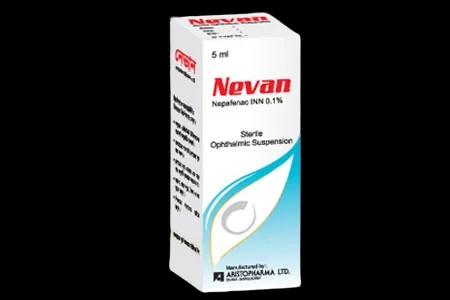
Nepafenac ophthalmic suspension is a nonsteroidal anti-inflammatory drug (NSAID) used in and around the eye.

Forms:Ophthalmic Suspension

About Nepafenac

Indications of Nepafenac

Nepafenac ophthalmic suspension is a nonsteroidal anti-inflammatory drug (NSAID) used in and around the eye. Its approved and evidence-based uses are:

  • Established/FDA-approved use: Treatment of pain and inflammation associated with cataract surgery.
  • Formulation-specific approved use: Certain higher-strength formulations of Nepafenac (0.3%) are also approved for reduction of the risk of postoperative macular edema associated with cataract surgery, particularly in patients with diabetes mellitus.

Nepafenac is intended strictly for short-term perioperative use as directed by an ophthalmologist and is not indicated for chronic or unsupervised long-term use.

Dosage & Administration of Nepafenac

Cataract Surgery — Pain and Inflammation (0.1% suspension, three-times-daily regimen)

  • Instill one drop of Nepafenac in the affected eye(s) three times daily, beginning one day prior to cataract surgery, continued on the day of surgery, and for the first 2 weeks of the postoperative period, as directed by the treating ophthalmologist.

Cataract Surgery — Pain, Inflammation, and Reduction of Macular Edema Risk (0.3% once-daily formulation, where prescribed)

  • Instill one drop of Nepafenac in the affected eye(s) once daily, beginning one day prior to cataract surgery, continued on the day of surgery, and continued through the first 2 weeks of the postoperative period (extended courses of up to 60 days may be used in diabetic patients at the ophthalmologist's discretion, per specific product labeling).

An additional drop may be recommended by the treating physician approximately 30 to 120 minutes prior to surgery for some regimens. Always follow the exact schedule given by the prescribing ophthalmologist, as regimens differ between Nepafenac strengths/products.

Renal/Hepatic Impairment

No dedicated dose adjustment has been established for Nepafenac in renal or hepatic impairment, given its minimal systemic absorption via the ophthalmic route; use with the same caution as in patients with normal organ function, under physician guidance.

Side Effects of Nepafenac

Most side effects of Nepafenac are local, mild, and transient. Reported adverse effects include:

  • Common: Eye pain or discomfort, foreign body sensation, sticky sensation in the eye, blurred or decreased vision, eye redness (conjunctival/ocular hyperemia), tearing, itching, dry eye, capsular opacity.
  • Less common: Increased intraocular pressure, corneal edema, iritis (anterior chamber inflammation).
  • Rare but serious: Keratitis, corneal epithelial breakdown, corneal thinning, erosion, or (very rarely) corneal perforation, especially with prolonged or inappropriate use; delayed or slowed corneal wound healing.

Patients should seek prompt medical attention if there is worsening eye pain, redness, marked change in vision, or the eye drops appear to make symptoms worse rather than better.

Contraindications of Nepafenac

Nepafenac is contraindicated in patients with known hypersensitivity to Nepafenac, any other ingredient of the formulation, or to other nonsteroidal anti-inflammatory drugs (NSAIDs) as a class.

Frequently Asked Questions about Nepafenac

What is Nepafenac eye drop used for?

Nepafenac is an ophthalmic NSAID used to treat pain and inflammation after cataract surgery, and certain formulations are also used to reduce the risk of postoperative macular edema, especially in patients with diabetes.

How should I use Nepafenac eye drops?

Shake the bottle well if it is a suspension, wash your hands, and instill one drop into the affected eye as prescribed — either three times daily or once daily depending on the product strength — starting one day before surgery and continuing for about two weeks afterward, exactly as directed by your ophthalmologist.

Can I wear contact lenses while using Nepafenac?

Contact lens wear is generally not recommended during the Nepafenac treatment course after cataract surgery. Ask your ophthalmologist when it is safe to resume wearing lenses.

Is Nepafenac safe during pregnancy or breastfeeding?

Nepafenac should be used during pregnancy or while breastfeeding only if clearly needed and the potential benefit outweighs the potential risk; always consult your physician first, since NSAIDs as a class carry theoretical fetal risks, particularly in late pregnancy.

What side effects should I watch for with Nepafenac?

Common effects include mild eye discomfort, foreign body sensation, blurred vision, redness, and tearing. Seek prompt medical attention for worsening eye pain, significant vision changes, or persistent redness, as these could indicate rare but serious corneal problems.

Who should not use Nepafenac?

Nepafenac should not be used by anyone with a known hypersensitivity to Nepafenac itself, any ingredient in the formulation, or to other NSAIDs, including a history of aspirin-sensitive asthma.

Disclaimer

The information provided is accurate to the best of our knowledge, but it does not replace professional medical advice. We cannot guarantee its completeness or accuracy, and the absence of specific information about a drug should not be taken as an endorsement. We are not responsible for any consequences arising from this information, so please consult a healthcare professional for any concerns or questions.
DoctorBlogArticles