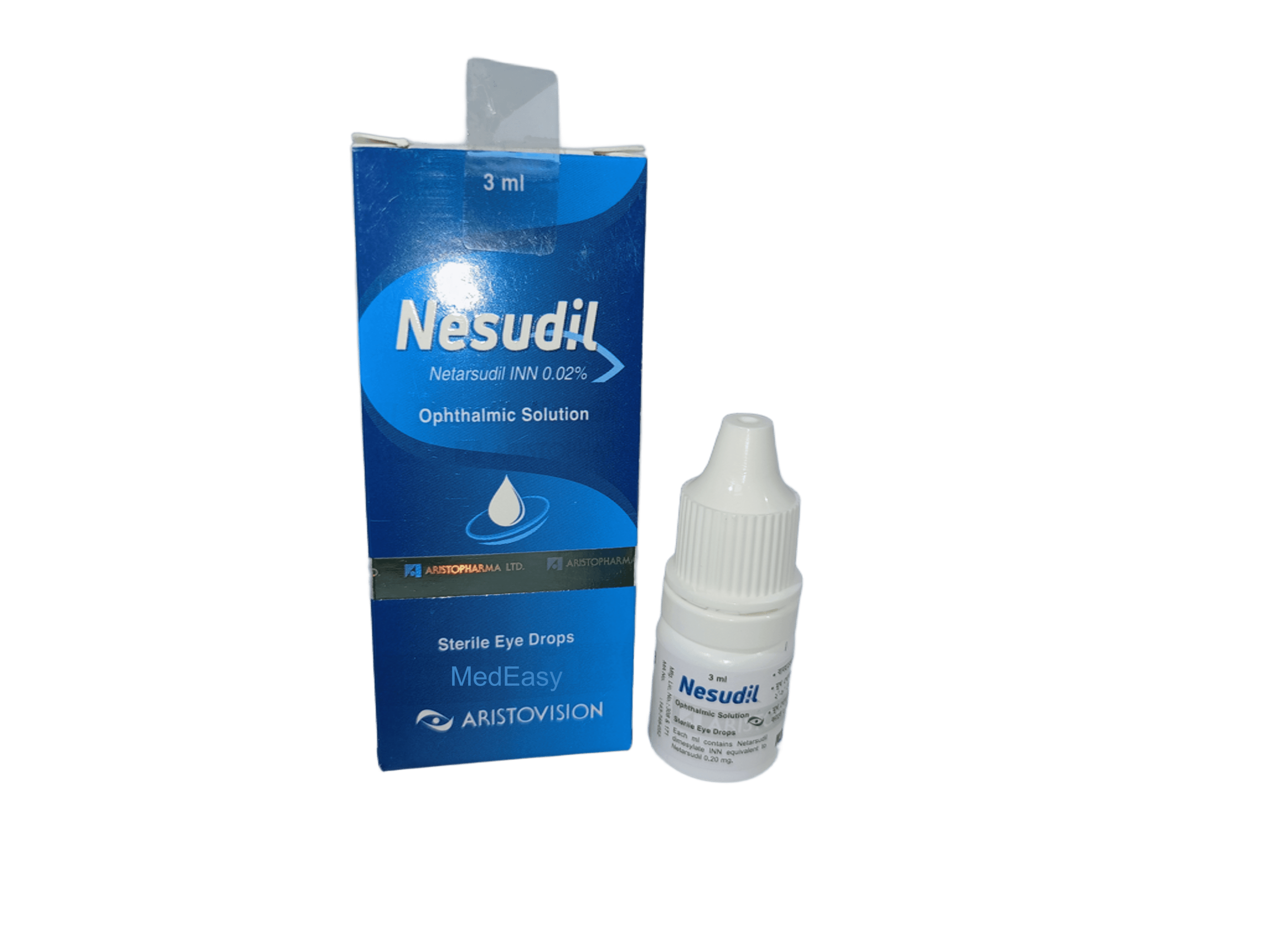
Generic medicine

Netarsudil Dimesylate: Brands, Price & Uses in Bangladesh

Netarsudil Dimesylate ophthalmic solution is indicated for the reduction of elevated intraocular pressure (IOP) in patients with open-angle glaucoma or ocular hypertension.

Forms:Ophthalmic Solution

About Netarsudil Dimesylate

Indications of Netarsudil Dimesylate

Netarsudil Dimesylate ophthalmic solution is indicated for the reduction of elevated intraocular pressure (IOP) in patients with open-angle glaucoma or ocular hypertension. This is the sole FDA-approved (established) indication for Netarsudil Dimesylate.

  • Established/approved use: Once-daily reduction of elevated IOP in open-angle glaucoma and ocular hypertension, used either as a first-line agent or as an add-on to other IOP-lowering eye drops when target pressure is not achieved on existing therapy.

Netarsudil Dimesylate is not approved and should not be used for angle-closure glaucoma, acute angle-closure attacks, or any non-ophthalmic condition.

Dosage & Administration of Netarsudil Dimesylate

Adult Dose

IndicationDoseFrequency
Open-angle glaucoma or ocular hypertensionOne drop in the affected eye(s)Once daily, in the evening

Administration Instructions

  • For topical ophthalmic use only; not for injection or oral use.
  • Instill one drop into the conjunctival sac of the affected eye(s) once daily in the evening.
  • If more than one topical ophthalmic drug is being used, administer the drugs at least 5 minutes apart.
  • Contact lenses should be removed prior to instillation and may be reinserted 15 minutes after administration (see Precautions).
  • If a dose is missed, apply the next dose at the regular scheduled time the following evening; do not double the dose.

Pediatric Dose

Safety and efficacy in pediatric patients have not been established; see Use in Special Populations.

Renal/Hepatic Impairment

No dose adjustment has been established or is expected to be necessary given minimal systemic absorption; specific studies in renal or hepatic impairment have not been conducted.

Side Effects of Netarsudil Dimesylate

The most common adverse reaction with Netarsudil Dimesylate is conjunctival hyperemia (eye redness), which is very common and is the leading cause of treatment discontinuation.

  • Very common: Conjunctival hyperemia (redness).
  • Common: Corneal verticillata (whorl-like corneal deposits; generally asymptomatic and typically reversible upon discontinuation), instillation-site pain, conjunctival hemorrhage, and instillation-site erythema.
  • Less common: Blurred vision, increased lacrimation, erythema of the eyelid, reduced visual acuity, and dry eye.

Patients should be informed that corneal verticillata may occur and should be counseled to report any change in vision.

Contraindications of Netarsudil Dimesylate

Netarsudil Dimesylate is contraindicated in patients with known hypersensitivity to netarsudil dimesylate or to any component of the formulation.

Frequently Asked Questions about Netarsudil Dimesylate

What is Netarsudil Dimesylate used for?

Netarsudil Dimesylate is an eye drop used once daily to reduce elevated intraocular pressure (eye pressure) in people with open-angle glaucoma or ocular hypertension.

How should I use Netarsudil Dimesylate eye drops?

Instill one drop into the affected eye(s) once daily in the evening. If you wear contact lenses, remove them before applying the drop and wait at least 15 minutes before reinserting them.

What are the most common side effects of Netarsudil Dimesylate?

The most common side effect is conjunctival hyperemia (redness of the eye). Other effects include corneal verticillata (whorl-like corneal deposits that are usually reversible after stopping the medicine), stinging or pain at the site of instillation, and small conjunctival hemorrhages.

Can Netarsudil Dimesylate be used during pregnancy or breastfeeding?

Data in pregnant or breastfeeding women are limited. Netarsudil Dimesylate should be used during pregnancy only if the potential benefit justifies the potential risk to the fetus, and a physician should be consulted before use during breastfeeding as well.

Who should not use Netarsudil Dimesylate?

Netarsudil Dimesylate should not be used by anyone with a known hypersensitivity (allergy) to netarsudil dimesylate or any component of the eye drop formulation.

What should I do if I miss a dose or think I have used too much Netarsudil Dimesylate?

If you miss a dose, simply apply the next dose at your regular scheduled evening time; do not double up. If you or someone else has used significantly more than prescribed or swallowed the solution, seek immediate medical attention or contact a poison control center.

Disclaimer

The information provided is accurate to the best of our knowledge, but it does not replace professional medical advice. We cannot guarantee its completeness or accuracy, and the absence of specific information about a drug should not be taken as an endorsement. We are not responsible for any consequences arising from this information, so please consult a healthcare professional for any concerns or questions.

DoctorBlogArticles