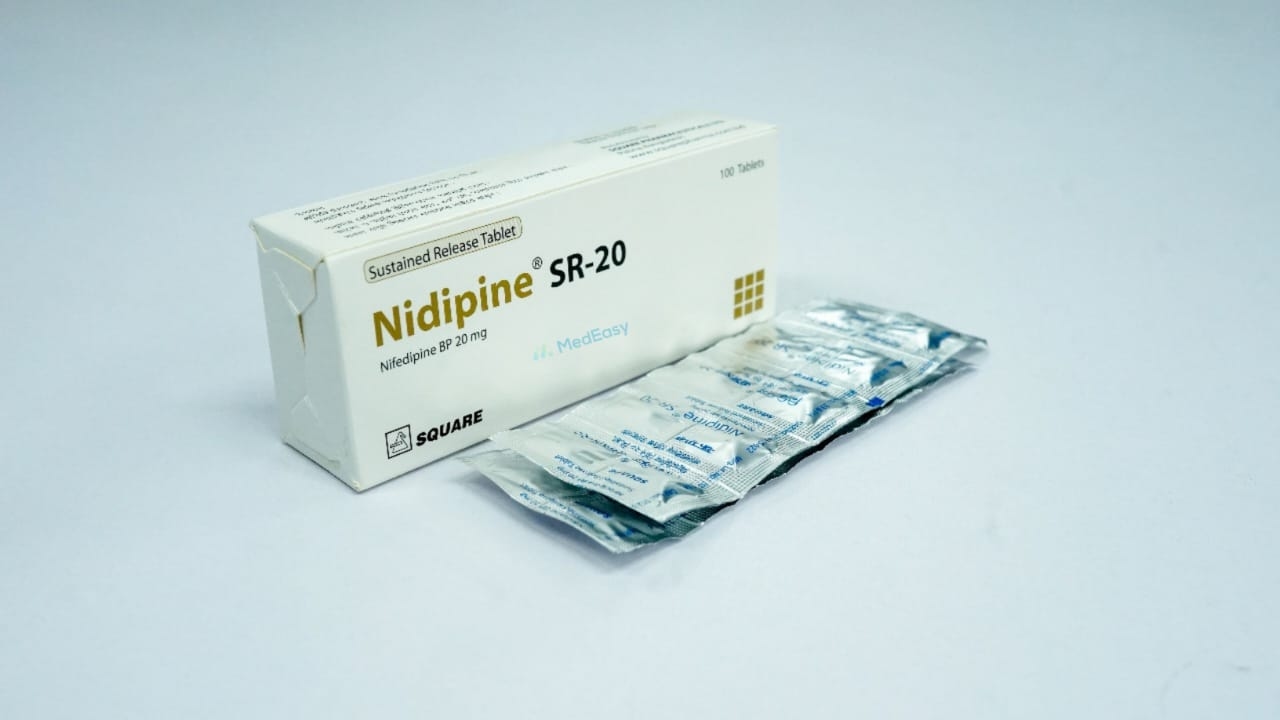
Generic medicine

Nifedipine: Brands, Price & Uses in Bangladesh

Nifedipine is a dihydropyridine calcium channel blocker used for the following indications: Established / FDA-approved uses Hypertension (extended-release formulation only) — used alone or in…

Forms:TabletCapsule

About Nifedipine

Indications of Nifedipine

Nifedipine is a dihydropyridine calcium channel blocker used for the following indications:

Established / FDA-approved uses

  • Hypertension (extended-release formulation only) — used alone or in combination with other antihypertensive agents to lower blood pressure.
  • Chronic stable angina (effort-associated angina) — both immediate-release and extended-release formulations of Nifedipine are approved for management of chronic stable angina.
  • Vasospastic angina (Prinzmetal's or variant angina) — immediate-release Nifedipine capsules are approved for confirmed or suspected vasospastic angina.

Guideline-supported off-label uses

  • Tocolysis for preterm labor — Nifedipine is commonly used off-label, and is supported by obstetric guidelines, as a tocolytic to delay preterm delivery for a short period (typically up to about 48 hours) to allow administration of antenatal corticosteroids or transfer to a facility with neonatal intensive care.
  • Raynaud phenomenon — Nifedipine is used off-label to reduce the frequency and severity of vasospastic episodes.
  • Prevention of high-altitude pulmonary edema (HAPE) in susceptible individuals — Nifedipine is used off-label for high-risk mountaineers.

Note: Immediate-release Nifedipine capsules are not indicated, and should not be used, for treatment of hypertension or hypertensive emergencies (see Precautions and Warnings).

Dosage & Administration of Nifedipine

Dosage of Nifedipine should be individualized by a physician based on indication, response, and tolerability.

IndicationFormulationTypical Adult Dosage
HypertensionExtended-release tabletInitially 30–60 mg once daily; usual maintenance range 30–90 mg once daily. Maximum dose varies by brand (typically 90–120 mg/day); do not exceed the labeled maximum for the specific product.
Chronic stable anginaExtended-release tablet30–60 mg once daily, titrated over 7–14 days; maximum typically 90–120 mg/day depending on product.
Chronic stable / vasospastic anginaImmediate-release capsuleInitially 10 mg three times daily; usual range 10–20 mg three times daily; maximum 180 mg/day. Not recommended for routine use due to safety concerns (see Precautions and Warnings).
Preterm labor tocolysis (off-label)Immediate-release capsule/tabletPer obstetric protocol only, e.g. an initial loading dose followed by a lower maintenance dose for up to approximately 48 hours; must be prescribed and monitored by an obstetric specialist.

Renal / hepatic adjustment

No specific dose adjustment is generally required for renal impairment, though patients should be monitored. In hepatic impairment, Nifedipine clearance is reduced; a lower starting dose and careful monitoring are recommended.

Side Effects of Nifedipine

Common

  • Peripheral edema (swelling of the ankles/feet) — the most common dose-dependent side effect of Nifedipine.
  • Headache
  • Flushing and a sensation of warmth
  • Dizziness or light-headedness
  • Reflex tachycardia or palpitations (more common with immediate-release Nifedipine)

Less common

  • Constipation
  • Nausea
  • Gingival hyperplasia (gum overgrowth) with prolonged use
  • Fatigue or weakness

Seek prompt medical attention for signs of a serious reaction, such as chest pain, fainting, marked swelling, or difficulty breathing, while taking Nifedipine.

Contraindications of Nifedipine

  • Known hypersensitivity to Nifedipine or any component of the formulation.
  • Cardiogenic shock or severe, uncorrected hypotension — Nifedipine further reduces blood pressure and cardiac afterload and can worsen these conditions.

Immediate-release Nifedipine should not be used for treating hypertensive emergencies (see Precautions and Warnings) — this is a formulation-specific restriction rather than a hypersensitivity-type contraindication.

Frequently Asked Questions about Nifedipine

What is Nifedipine used for?

Nifedipine is mainly used to treat high blood pressure (extended-release form) and angina (chest pain due to reduced blood flow to the heart). It is also used off-label by obstetric specialists to help delay preterm labor.

Can I take Nifedipine with grapefruit juice?

No. Grapefruit and grapefruit juice significantly increase blood levels of Nifedipine and raise the risk of side effects such as low blood pressure; avoid grapefruit products while taking Nifedipine.

Can I switch between immediate-release and extended-release Nifedipine on my own?

No. Immediate-release and extended-release Nifedipine have different dosing schedules and safety profiles and are not interchangeable. Only switch formulations under a physician's direction.

Is Nifedipine safe during pregnancy?

Nifedipine should be used in pregnancy only if a physician determines the potential benefit outweighs the potential risk to the fetus. It is used off-label by obstetric specialists in certain situations, such as preterm labor, but should never be self-prescribed during pregnancy.

What are the most common side effects of Nifedipine?

The most common side effect of Nifedipine is swelling of the ankles or feet (peripheral edema), which is dose-dependent. Other common effects include headache, flushing, dizziness, and a fast heartbeat.

What should I do if I miss a dose or take too much Nifedipine?

If you miss a dose, take it as soon as you remember unless it is almost time for the next dose — do not double up. If you or someone else has taken too much Nifedipine, this is a medical emergency: seek immediate medical attention or contact a poison control center/emergency services right away.

Disclaimer

The information provided is accurate to the best of our knowledge, but it does not replace professional medical advice. We cannot guarantee its completeness or accuracy, and the absence of specific information about a drug should not be taken as an endorsement. We are not responsible for any consequences arising from this information, so please consult a healthcare professional for any concerns or questions.

DoctorBlogArticles