8% Off
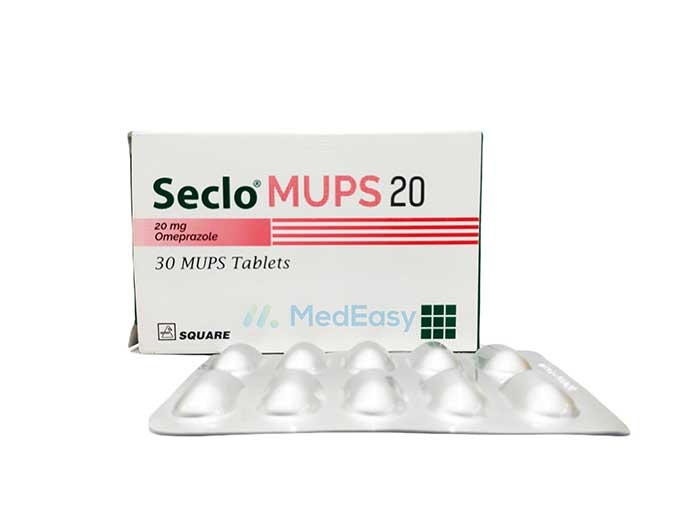
Seclo MUPS20 mg
Square Pharmaceuticals PLC.
৳64.40
Add to cart
Omeprazole [Multiple-Unit Pellet System] is indicated for conditions caused or aggravated by excess gastric acid secretion.
Omeprazole [Multiple-Unit Pellet System] is indicated for conditions caused or aggravated by excess gastric acid secretion. Evidence strength varies by indication:
| Indication | Usual Adult Dose | Typical Duration |
|---|---|---|
| Gastroesophageal reflux disease (GERD), symptomatic | 20 mg once daily | 4–8 weeks |
| Erosive esophagitis, healing | 20 mg once daily | 4–8 weeks (may extend an additional 4 weeks if not fully healed) |
| Erosive esophagitis, maintenance of healing | 20 mg once daily | Long-term, as directed by physician |
| Duodenal ulcer, active | 20 mg once daily | 4 weeks |
| Gastric ulcer, active | 40 mg once daily | 4–8 weeks |
| H. pylori eradication (triple therapy, with clarithromycin + amoxicillin) | 20 mg twice daily | 10–14 days |
| H. pylori eradication (dual therapy, with clarithromycin) | 40 mg once daily | 14 days |
| Pathological hypersecretory conditions (e.g., Zollinger-Ellison syndrome) | 60 mg once daily initially, titrated to response (may require twice-daily dosing at higher total doses) | Individualized, may be long-term |
Pediatric dosing (age 2 years and older, for GERD/erosive esophagitis): approximately 1 mg/kg once daily, commonly dosed as 10 mg once daily for body weight under 20 kg and 20 mg once daily for body weight 20 kg or more, for 4–8 weeks. Safety and efficacy of Omeprazole [Multiple-Unit Pellet System] in children under 1 year of age have not been established, and use under 2 years of age should be individualized by a pediatrician.
Renal impairment: no dosage adjustment is generally required. Hepatic impairment: dose reduction (e.g., to 10–20 mg once daily) should be considered in patients with severe hepatic impairment, as omeprazole clearance is reduced.
Take Omeprazole [Multiple-Unit Pellet System] preferably in the morning, at least 30–60 minutes before a meal, swallowed whole with a glass of water. Do not crush or chew the tablet. For patients unable to swallow tablets, or who require administration via nasogastric/gastric feeding tube, the Omeprazole [Multiple-Unit Pellet System] tablet may be dispersed in a small amount of non-carbonated water (approximately 20–30 mL) — the tablet will disperse within a few minutes into its individual pellets, which should be administered promptly (do not chew or crush the pellets) and the container rinsed and the rinse also administered to ensure the full dose is given.
Common (may affect up to 1 in 10 people): headache, abdominal pain, nausea, diarrhea, vomiting, flatulence, and constipation.
Less common: dizziness, rash, pruritus, dry mouth, and elevated liver enzymes.
Rare but serious (seek medical attention promptly if these occur): severe diarrhea due to Clostridioides difficile infection, low magnesium levels (hypomagnesemia — can present as muscle spasms, irregular heartbeat, or seizures with long-term use), bone fracture of the hip, wrist, or spine with prolonged high-dose use, vitamin B12 deficiency with long-term use, cutaneous or systemic lupus erythematosus, severe skin reactions (e.g., Stevens-Johnson syndrome), acute interstitial nephritis, pancreatitis, and liver failure. See Precautions and Warnings for further detail on long-term risks.
Omeprazole [Multiple-Unit Pellet System] is contraindicated in:
Disclaimer
The information provided is accurate to the best of our knowledge, but it does not replace professional medical advice. We cannot guarantee its completeness or accuracy, and the absence of specific information about a drug should not be taken as an endorsement. We are not responsible for any consequences arising from this information, so please consult a healthcare professional for any concerns or questions.