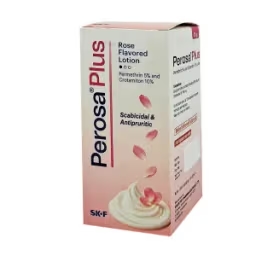
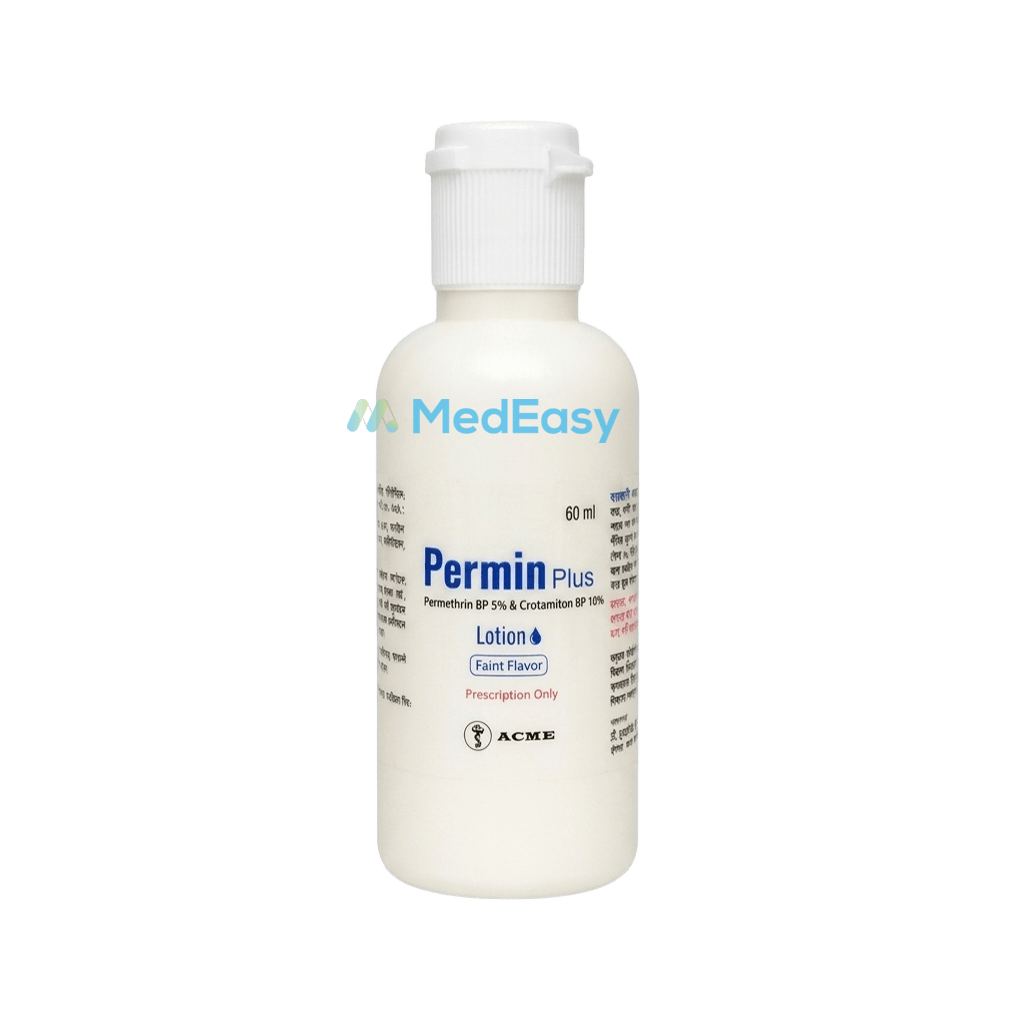
Generic medicine

Permethrin + Crotamiton: Brands, Price & Uses in Bangladesh

Permethrin + Crotamiton is indicated for the topical treatment of scabies caused by infestation with Sarcoptes scabiei .

Forms:Lotion

About Permethrin + Crotamiton

Indications of Permethrin + Crotamiton

Permethrin + Crotamiton is indicated for the topical treatment of scabies caused by infestation with Sarcoptes scabiei.

  • Established use: Eradication of scabies mites and their eggs on the skin. The permethrin component is a pyrethroid scabicide that kills mites, while the crotamiton component provides additional antipruritic (anti-itch) action to relieve the intense itching associated with scabies infestation.
  • Adjunct benefit: Because post-scabetic itching commonly persists for several weeks after mites are eliminated, the antipruritic component of Permethrin + Crotamiton is used as an adjunct to reduce discomfort during this recovery period, not as a substitute for completing the full scabicidal treatment course.

Permethrin + Crotamiton is not indicated for the treatment of head lice, body lice, or pubic lice; single-agent, lower-strength permethrin products are used for those indications.

Dosage & Administration of Permethrin + Crotamiton

General Instructions

Permethrin + Crotamiton is for external use on the skin only. It should be applied as directed by a physician or pharmacist, typically as follows:

PopulationApplication Instructions
Adults and adolescentsApply a thin, even layer of Permethrin + Crotamiton over the entire body from the neck down to the soles of the feet, paying attention to skin folds, between fingers and toes, and under nails. Leave on the skin for the period advised by the physician (commonly 8-14 hours, e.g. overnight), then wash off thoroughly with water.
Infants and young childrenUnder medical supervision, application may need to include the scalp, face, and ears (avoiding the eyes and mouth), since scabies can affect the head in young children. Use should be guided and supervised by a physician.
ElderlySame general application principle as adults; apply to the entire body surface as scabies may also involve the scalp and face in elderly or immunocompromised patients, under physician guidance.

Treatment Course

A single application is often sufficient; however, a physician may advise a second application after about one week if live mites are still observed, in line with standard scabies management. All household and close physical contacts should be treated at the same time, even if asymptomatic, to prevent re-infestation, and bedding/clothing should be laundered.

See Precautions and Warnings for guidance on persistent post-treatment itching, which does not by itself indicate treatment failure.

Side Effects of Permethrin + Crotamiton

Most side effects of Permethrin + Crotamiton are local skin reactions at the site of application. These may include:

  • Mild burning, stinging, or tingling sensation on application
  • Skin redness (erythema) or irritation
  • Itching, which can be difficult to distinguish from the natural post-scabies itch that persists during healing (see Precautions and Warnings)
  • Dryness or mild rash
  • Rare allergic contact dermatitis

Systemic side effects are rare given minimal absorption through intact skin, but should be reported to a physician if they occur, especially in infants or if applied to broken skin.

Contraindications of Permethrin + Crotamiton

Permethrin + Crotamiton is contraindicated in patients with:

  • Known hypersensitivity to permethrin, crotamiton, other pyrethroids/pyrethrins, or to any excipient in the formulation.
  • Known hypersensitivity to chrysanthemums or ragweed, given the structural relationship of permethrin to pyrethrins derived from chrysanthemum flowers, which carries a risk of cross-sensitivity.

Permethrin + Crotamiton should not be applied to broken, raw, weeping, or acutely inflamed skin, or near the eyes and mucous membranes, without specific medical guidance, as these are precautions rather than absolute contraindications.

Frequently Asked Questions about Permethrin + Crotamiton

What is Permethrin + Crotamiton used for?

Permethrin + Crotamiton is a topical combination medicine used to treat scabies, a skin infestation caused by the Sarcoptes scabiei mite. It kills the mites and also helps relieve the intense itching that scabies causes.

How should I apply Permethrin + Crotamiton?

Apply a thin layer of Permethrin + Crotamiton to clean, dry skin covering the entire body from the neck down (or as directed by your physician, which may include the scalp and face in infants), leave it on for the recommended time (commonly 8-14 hours, such as overnight), then wash it off thoroughly. Always follow your physician's specific instructions.

Why am I still itching after using Permethrin + Crotamiton?

Itching can persist for several weeks after successful treatment with Permethrin + Crotamiton because the body continues to react to dead mites and eggs left in the skin even after the infestation has been cleared. This is expected and does not necessarily mean the treatment failed. Do not reapply Permethrin + Crotamiton repeatedly for itching alone; consult your physician if itching is severe or does not improve over several weeks.

Can Permethrin + Crotamiton be used during pregnancy or breastfeeding?

Permethrin + Crotamiton should be used during pregnancy or breastfeeding only if clearly needed and under a physician's guidance, weighing the potential benefit against any potential risk, since data on the combination product in pregnancy and lactation are limited.

Is Permethrin + Crotamiton safe for children?

Permethrin + Crotamiton can be used in children, including infants, but only under close medical supervision, since the treated area and duration may need to be adjusted and safety in very young infants is not as well established as in adults.

Who should not use Permethrin + Crotamiton?

Permethrin + Crotamiton should not be used by anyone with a known allergy to permethrin, crotamiton, other pyrethroid insecticides, or to chrysanthemum/ragweed plants, due to the risk of cross-sensitivity. It should also not be applied to broken, raw, or acutely inflamed skin, or near the eyes and mucous membranes, without a physician's specific advice.

Disclaimer

The information provided is accurate to the best of our knowledge, but it does not replace professional medical advice. We cannot guarantee its completeness or accuracy, and the absence of specific information about a drug should not be taken as an endorsement. We are not responsible for any consequences arising from this information, so please consult a healthcare professional for any concerns or questions.

DoctorBlogArticles