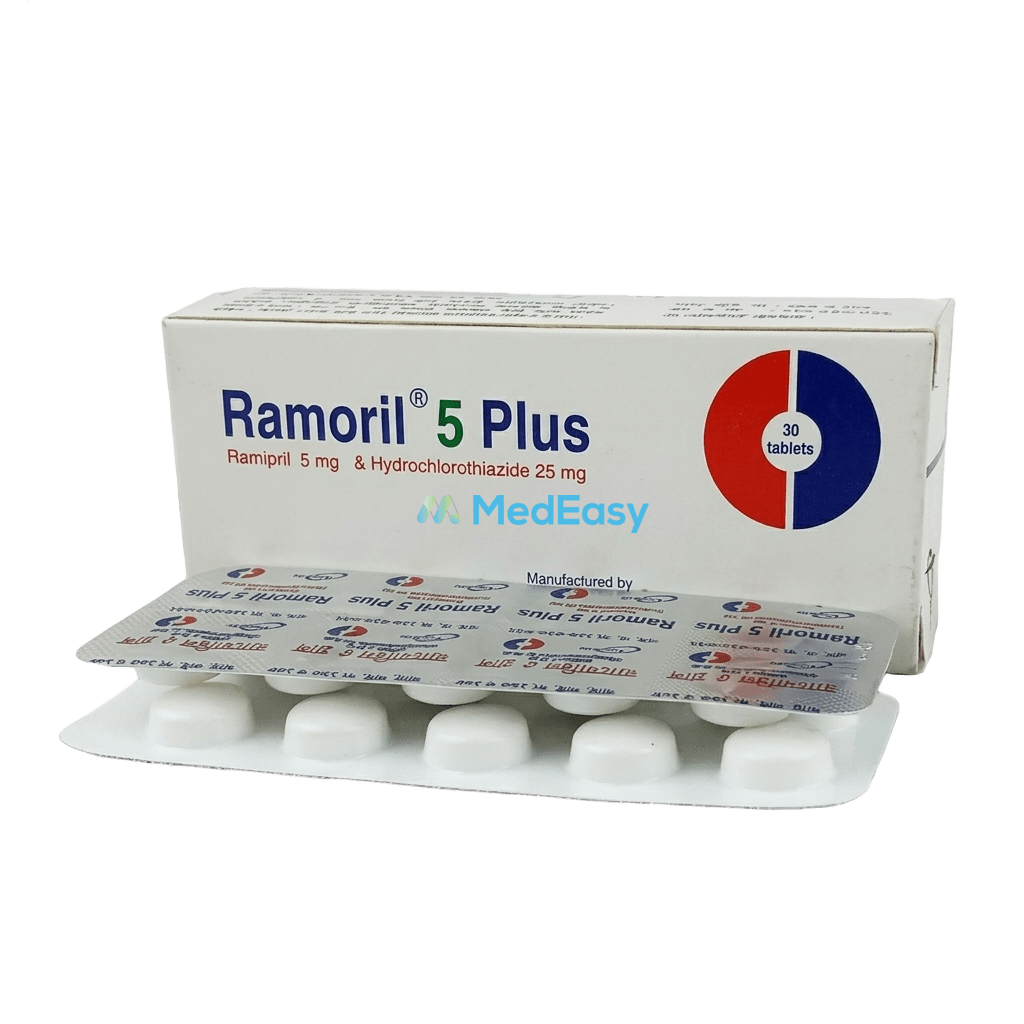
Generic medicine

Ramipril + Hydrochlorothiazide: Brands, Price & Uses in Bangladesh

Ramipril + Hydrochlorothiazide is a fixed-dose combination of an angiotensin-converting enzyme (ACE) inhibitor and a thiazide diuretic and more.

Forms:Tablet

About Ramipril + Hydrochlorothiazide

Indications of Ramipril + Hydrochlorothiazide

Ramipril + Hydrochlorothiazide is a fixed-dose combination of an angiotensin-converting enzyme (ACE) inhibitor and a thiazide diuretic, indicated for:

  • Established use: Treatment of hypertension (high blood pressure) in adult patients who are not adequately controlled on either component alone, or as a continuation therapy in patients already stabilised on the individual components given in the same proportion.

Ramipril + Hydrochlorothiazide is not recommended as initial therapy for hypertension; it is intended for patients whose blood pressure requires treatment with both agents, generally after dose titration of the individual components.

Dosage & Administration of Ramipril + Hydrochlorothiazide

General Dosing Principles

Ramipril + Hydrochlorothiazide is administered orally, once daily, typically in the morning, with or without food. It should generally be used only after patients have been titrated on the individual components.

IndicationDose
Hypertension - starting doseOne tablet of the lowest strength (e.g., 2.5 mg ramipril / 12.5 mg hydrochlorothiazide) once daily
Hypertension - titrationMay be increased after 2-4 weeks based on blood pressure response, up to a maximum of 10 mg ramipril / 25 mg hydrochlorothiazide daily
Renal impairment (CrCl 30-60 mL/min)Use lower-strength tablets; closer monitoring of renal function and electrolytes required

Doses should be individualised based on blood pressure response and tolerability. See Use in Special Populations for renal/hepatic considerations.

Side Effects of Ramipril + Hydrochlorothiazide

Common and important side effects of Ramipril + Hydrochlorothiazide include:

  • Very common/common: dizziness, headache, persistent dry cough, hypotension (especially after the first dose), fatigue, and gastrointestinal disturbances (nausea, vomiting).
  • Electrolyte disturbances: hyperkalemia (from ramipril) or hypokalemia, hyponatremia, and hypomagnesemia (from hydrochlorothiazide); net potassium effect varies by patient.
  • Uncommon but important: angioedema (of the face, lips, tongue, glottis, and/or larynx) - a rare but potentially life-threatening reaction requiring immediate discontinuation and emergency medical attention if airway involvement occurs.
  • Other effects: hyperuricemia and gout flares, photosensitivity reactions, hyperglycemia, hyperlipidemia, and rarely, blood dyscrasias.

Patients should seek urgent medical care for swelling of the face/throat, difficulty breathing, or severe skin reactions.

Contraindications of Ramipril + Hydrochlorothiazide

Ramipril + Hydrochlorothiazide is contraindicated in patients with:

  • Known hypersensitivity to ramipril, hydrochlorothiazide, any other ACE inhibitor, or any component of the formulation.
  • Hypersensitivity to sulfonamide-derived drugs (due to the hydrochlorothiazide component).
  • History of angioedema related to previous treatment with an ACE inhibitor.
  • Hereditary or idiopathic angioedema.
  • Anuria.
  • Pregnancy (see Pregnancy and Lactation).
  • Concomitant use with aliskiren in patients with diabetes mellitus.

Frequently Asked Questions about Ramipril + Hydrochlorothiazide

What is Ramipril + Hydrochlorothiazide used for?

Ramipril + Hydrochlorothiazide is used to treat high blood pressure (hypertension) in patients who need combination therapy with both an ACE inhibitor and a thiazide diuretic, typically after being stabilised on the individual components.

How should I take Ramipril + Hydrochlorothiazide?

Ramipril + Hydrochlorothiazide should be taken orally once daily, preferably in the morning, at the same time each day, with or without food, exactly as prescribed by your physician.

Can I take Ramipril + Hydrochlorothiazide during pregnancy?

No. Ramipril + Hydrochlorothiazide is contraindicated during pregnancy because it can cause serious injury or death to the developing fetus. If you become pregnant while taking this medicine, stop it and contact your physician immediately.

What are the common side effects of Ramipril + Hydrochlorothiazide?

Common side effects include dizziness, headache, persistent dry cough, low blood pressure, fatigue, and changes in blood potassium or sodium levels. Seek urgent medical care if you notice swelling of the face, lips, tongue, or throat, or have difficulty breathing, as this may indicate a rare but serious reaction called angioedema.

Who should not take Ramipril + Hydrochlorothiazide?

People with a known allergy to ramipril, hydrochlorothiazide, other ACE inhibitors, or sulfonamide drugs; those with a history of angioedema; patients with anuria; pregnant women; and patients with diabetes who are also taking aliskiren should not take Ramipril + Hydrochlorothiazide.

What should I do if I miss a dose or take too much Ramipril + Hydrochlorothiazide?

If you miss a dose, take it as soon as you remember unless it is almost time for your next dose - do not double up. If you suspect an overdose of Ramipril + Hydrochlorothiazide, seek immediate medical attention or contact emergency services or a poison control center right away.

Disclaimer

The information provided is accurate to the best of our knowledge, but it does not replace professional medical advice. We cannot guarantee its completeness or accuracy, and the absence of specific information about a drug should not be taken as an endorsement. We are not responsible for any consequences arising from this information, so please consult a healthcare professional for any concerns or questions.


DoctorBlogArticles