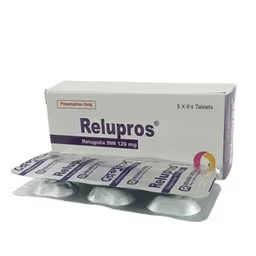
Generic medicine

Relugolix: Brands, Price & Uses in Bangladesh

Advanced Prostate Cancer (Monotherapy, Adult Men) Relugolix is an FDA-approved oral gonadotropin-releasing hormone (GnRH) receptor antagonist used as androgen deprivation therapy for the treatment…

Forms:Tablet

About Relugolix

Indications of Relugolix

Advanced Prostate Cancer (Monotherapy, Adult Men)

Relugolix is an FDA-approved oral gonadotropin-releasing hormone (GnRH) receptor antagonist used as androgen deprivation therapy for the treatment of adult patients with advanced prostate cancer.

Uterine Fibroids and Endometriosis (Women, as Part of a Fixed-Dose Combination Product)

Relugolix is also FDA-approved as a component of a fixed-dose combination tablet (with estradiol and norethindrone acetate) for two established indications in premenopausal women:

  • Management of heavy menstrual bleeding associated with uterine fibroids.
  • Management of moderate to severe pain associated with endometriosis.

Relugolix is not approved as monotherapy in women; in the women's-health indications it is always combined with estradiol and norethindrone acetate to offset bone loss and protect the endometrium.

Dosage & Administration of Relugolix

Advanced Prostate Cancer (Monotherapy)

StepDose
Day 1 (loading dose)360 mg (three 120 mg tablets) by mouth, once
Day 2 onward (maintenance)120 mg by mouth, once daily, at approximately the same time each day

If a dose is missed, it should be taken as soon as remembered on the same day; two doses should not be taken on the same day to make up for a missed dose.

Uterine Fibroids / Endometriosis (Fixed-Dose Combination Product)

ParameterRecommendation
DoseOne tablet (Relugolix 40 mg + estradiol 1 mg + norethindrone acetate 0.5 mg) by mouth, once daily
InitiationStart within the first 7 days of menstrual bleeding onset
DurationLimit continuous use to 24 months, because of the risk of bone loss that may not be fully reversible

If a dose is missed, it should be taken as soon as remembered on the same day, then the regular daily schedule resumed the next day; doses should not be doubled.

Important: the monotherapy and combination-product regimens use different tablet strengths and are not interchangeable. See Contraindications and Precautions and Warnings for population-specific restrictions.

Side Effects of Relugolix

Monotherapy in Men (Prostate Cancer)

Very common (≥10%): hot flushes, elevated blood glucose, increased triglycerides, musculoskeletal pain, anemia, fatigue, constipation, and diarrhea.

Combination Product in Women (Fibroids / Endometriosis)

Common: hot flushes/vasomotor symptoms, headache, abnormal uterine bleeding, mood changes, nausea, decreased libido, and hair thinning (alopecia).

Less common but serious: thromboembolic events, uterine fibroid prolapse/expulsion, significant mood disturbance including depression.

Contraindications of Relugolix

Relugolix Monotherapy (Prostate Cancer)

  • Known hypersensitivity to Relugolix or any component of the formulation.

Relugolix Fixed-Dose Combination Product (Uterine Fibroids / Endometriosis)

  • Known hypersensitivity to Relugolix, estradiol, norethindrone acetate, or any component of the formulation.
  • Pregnancy.
  • Undiagnosed abnormal uterine bleeding.
  • Current or history of breast cancer or other known or suspected hormone-sensitive malignancy.
  • Known osteoporosis.
  • Current or history of venous or arterial thromboembolic or thrombotic disorders.
  • Hepatic impairment or active liver disease.
  • Uncontrolled hypertension.

Frequently Asked Questions about Relugolix

What is Relugolix used for?

Relugolix is a GnRH receptor antagonist. As monotherapy, it is used to treat advanced prostate cancer in men by lowering testosterone. As part of a fixed-dose combination tablet with estradiol and norethindrone acetate, it is used in women to treat heavy menstrual bleeding from uterine fibroids and pain from endometriosis.

How is Relugolix taken?

For prostate cancer, Relugolix is taken as a 360 mg loading dose on day one, then 120 mg once daily. For the combination product, one tablet is taken once daily, started within 7 days of the onset of a menstrual period. Tablets are swallowed whole and can be taken with or without food, at about the same time each day.

Can Relugolix be used during pregnancy?

The Relugolix combination product used for fibroids/endometriosis is contraindicated in pregnancy and can cause early pregnancy loss; a non-hormonal contraceptive should be used during treatment. Men taking Relugolix monotherapy whose partner could become pregnant should use effective contraception during treatment and for 2 weeks afterward, because Relugolix can be present in semen and cause fetal harm.

What are the main risks to be aware of with Relugolix?

Depending on the product, Relugolix can cause QT prolongation and cardiovascular effects (monotherapy in men), and an increased risk of blood clots, bone loss, and mood changes including depression (combination product in women). Bone mineral density loss can occur with either use during prolonged treatment, so the combination product is limited to 24 months.

Are there important drug interactions with Relugolix?

Yes. Drugs that inhibit P-glycoprotein (such as cyclosporine or erythromycin) can raise Relugolix levels, and dosing should be separated by at least 6 hours if such a drug is unavoidable. Strong combined P-glycoprotein/CYP3A inducers (such as rifampin) can lower Relugolix levels and reduce effectiveness. Always tell your physician about all medicines you are taking.

What should I do if I take too much Relugolix?

Seek immediate medical attention or contact a poison control center. Reported overdose effects include nausea, vomiting, breast tenderness, abdominal pain, drowsiness, fatigue, and withdrawal bleeding. Do not attempt to treat an overdose at home without medical guidance.

Disclaimer

The information provided is accurate to the best of our knowledge, but it does not replace professional medical advice. We cannot guarantee its completeness or accuracy, and the absence of specific information about a drug should not be taken as an endorsement. We are not responsible for any consequences arising from this information, so please consult a healthcare professional for any concerns or questions.

DoctorBlogArticles