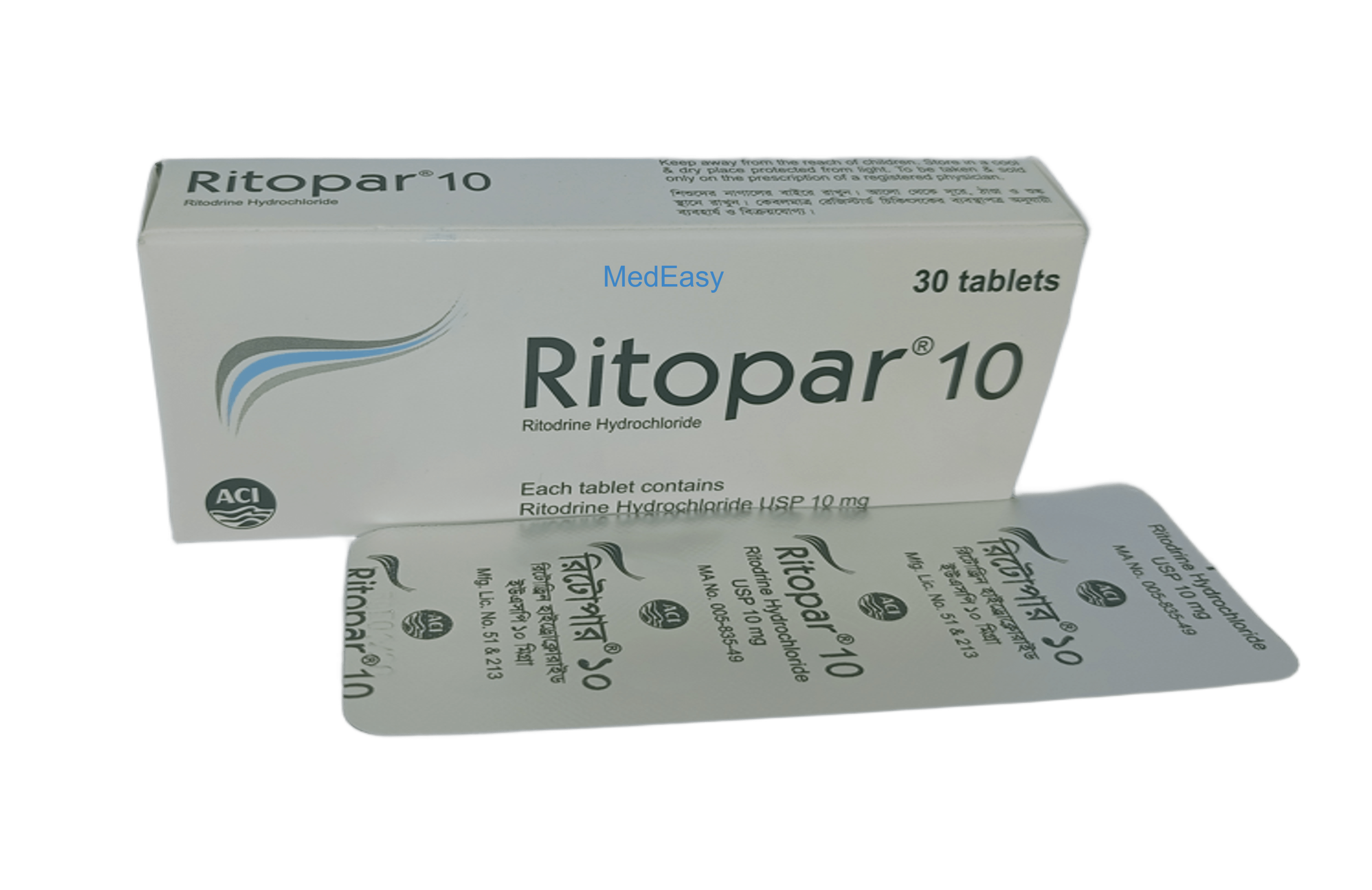
Generic medicine

Ritodrine Hydrochloride: Brands, Price & Uses in Bangladesh

Ritodrine Hydrochloride is a beta2-adrenergic agonist tocolytic agent.

Forms:TabletIM/IV Injection

About Ritodrine Hydrochloride

Indications of Ritodrine Hydrochloride

Ritodrine Hydrochloride is a beta2-adrenergic agonist tocolytic agent.

Established use

  • Short-term (short-course) management of uncomplicated preterm labor in women who are hemodynamically stable, to inhibit uterine contractions and delay delivery, typically after 20 weeks and before approximately 36 weeks of gestation.
  • Used primarily to gain time (generally 24-48 hours) so that antenatal corticosteroids can be given for fetal lung maturation and/or the mother can be transferred to a facility with appropriate neonatal intensive care.

Important context

The use of Ritodrine Hydrochloride for tocolysis has declined substantially in many countries because of its maternal cardiovascular safety profile (including pulmonary edema and arrhythmia risk) and the availability of alternative tocolytics (e.g., calcium channel blockers, oxytocin receptor antagonists) that are generally better tolerated. Ritodrine Hydrochloride is not indicated, and should not be used, for prolonged or maintenance tocolysis, as evidence does not support a meaningful reduction in preterm birth with extended use beyond the acute short-term period.

Dosage & Administration of Ritodrine Hydrochloride

General principles

Ritodrine Hydrochloride must be administered only in a hospital setting under continuous specialist obstetric and cardiac monitoring. Treatment is generally initiated intravenously and, where oral continuation is used, is followed by a limited course of oral therapy; maintenance tocolysis beyond the acute period is not recommended.

RouteTypical regimen
Intravenous infusionInitiated at a low infusion rate (e.g., approximately 0.05-0.1 mg/minute), increased gradually at intervals (e.g., every 10-20 minutes) according to uterine response and maternal heart rate/blood pressure, up to a maximum recommended infusion rate, until contractions are controlled. Infusion is typically continued for a defined period (commonly around 12-48 hours) after contractions have stopped, then tapered.
Oral continuation (where used)May be started shortly before discontinuing the intravenous infusion, at intervals such as every few hours for the first day, then extended dosing intervals, up to a defined maximum daily dose. Oral maintenance beyond the acute period has not been shown to meaningfully prolong pregnancy and is generally discouraged by current obstetric guidance.

Exact rates, increments, maximum doses and duration must follow the treating physician's protocol and the approved product label, with continuous maternal cardiac/fluid status and fetal heart rate monitoring throughout intravenous administration of Ritodrine Hydrochloride.

Side Effects of Ritodrine Hydrochloride

Adverse effects of Ritodrine Hydrochloride are largely an extension of its beta-adrenergic activity and are common, particularly with intravenous administration.

Common maternal effects

  • Tachycardia and palpitations
  • Tremor, nervousness, restlessness, headache
  • Nausea and vomiting
  • Flushing and mild hypotension
  • Hypokalemia and hyperglycemia (usually transient)

Serious effects (require prompt medical attention)

  • Pulmonary edema (see Precautions and Warnings)
  • Chest pain, dyspnea, or signs suggestive of cardiac ischemia/arrhythmia
  • Severe hypotension

Fetal/neonatal effects

  • Fetal and neonatal tachycardia
  • Neonatal hypoglycemia, particularly if Ritodrine Hydrochloride was administered close to delivery

Contraindications of Ritodrine Hydrochloride

Ritodrine Hydrochloride is contraindicated in:

  • Known hypersensitivity to Ritodrine Hydrochloride or any component of the formulation.
  • Pregnancy before 20 weeks of gestation.
  • Conditions in which continuation of pregnancy is hazardous to the mother or fetus, including antepartum hemorrhage requiring immediate delivery, eclampsia or severe pre-eclampsia, intrauterine fetal death, chorioamnionitis, and umbilical cord compression.
  • Maternal cardiac disease or cardiac arrhythmias.
  • Uncontrolled maternal hyperthyroidism.
  • Uncontrolled maternal diabetes mellitus.

Frequently Asked Questions about Ritodrine Hydrochloride

What is Ritodrine Hydrochloride used for?

Ritodrine Hydrochloride is used to briefly delay preterm labor (labor starting too early, generally between 20 and about 36 weeks of pregnancy) so that medicines to help the baby's lungs mature can be given and, if needed, the mother can be moved to a hospital with a neonatal intensive care unit.

Is Ritodrine Hydrochloride safe to use for a long time during pregnancy?

No. Ritodrine Hydrochloride is intended only for short-term use (typically around 24-48 hours) under close hospital monitoring. It is not recommended for prolonged or repeated "maintenance" use, as this has not been shown to meaningfully prevent preterm birth and increases the risk of side effects.

What are the most serious risks of Ritodrine Hydrochloride?

The most serious risk is fluid accumulation in the lungs (pulmonary edema), which is more likely when Ritodrine Hydrochloride is given together with corticosteroid injections and intravenous fluids. Ritodrine Hydrochloride can also cause a fast heart rate, palpitations, chest pain, and changes in blood sugar or potassium levels. Because of these risks, Ritodrine Hydrochloride must only be given in a hospital with continuous heart rate and fluid monitoring.

Can Ritodrine Hydrochloride be used before 20 weeks of pregnancy?

No. Ritodrine Hydrochloride is contraindicated before 20 weeks of gestation and in situations where continuing the pregnancy would be dangerous for the mother or baby, such as severe bleeding, severe pre-eclampsia/eclampsia, or signs that the baby is not doing well.

Will Ritodrine Hydrochloride affect the baby?

Ritodrine Hydrochloride can cause a temporarily faster heart rate in the baby, and if given close to delivery, the newborn may have low blood sugar that needs to be monitored after birth. Your medical team will monitor the baby's heart rate throughout treatment.

Can Ritodrine Hydrochloride be used while breastfeeding?

Because Ritodrine Hydrochloride is usually used only during hospital management of preterm labor and data on its passage into breast milk are limited, it should be used during breastfeeding only if clearly needed, with your physician's guidance.

Disclaimer

The information provided is accurate to the best of our knowledge, but it does not replace professional medical advice. We cannot guarantee its completeness or accuracy, and the absence of specific information about a drug should not be taken as an endorsement. We are not responsible for any consequences arising from this information, so please consult a healthcare professional for any concerns or questions.

DoctorBlogArticles