7% Off
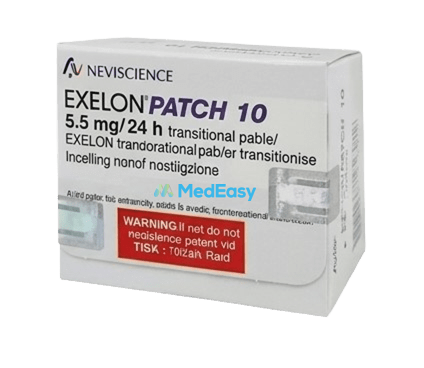
Exelon Patch 109.5 mg/24
Novartis (Bangladesh) Ltd.
৳6249.60
Out Of Stock
Rivastigmine Tartrate is a cholinesterase inhibitor indicated for the treatment of the following conditions: Established / FDA-approved uses Mild to moderate dementia of the Alzheimer's type (oral…
Rivastigmine Tartrate is a cholinesterase inhibitor indicated for the treatment of the following conditions:
Rivastigmine Tartrate is not approved for severe Alzheimer's disease, vascular dementia, or other forms of cognitive impairment; use in these settings is not supported by robust evidence and is not recommended outside of specialist guidance.
The following describes the recommended dosing and titration schedule for Rivastigmine Tartrate in its oral and transdermal patch formulations.
| Step | Dose | Notes |
|---|---|---|
| Starting dose | 1.5 mg twice daily | Taken with meals (morning and evening) |
| Titration | Increase by 1.5 mg twice daily | At intervals of at least 2 weeks, based on tolerability |
| Usual maintenance range | 3 mg to 6 mg twice daily | Individualize to lowest effective, tolerated dose |
| Maximum dose | 6 mg twice daily (12 mg/day) | Do not exceed |
| Step | Dose | Notes |
|---|---|---|
| Starting dose | 4.6 mg/24 hours | Apply one patch daily |
| Titration | Increase to 9.5 mg/24 hours | After a minimum of 4 weeks, if well tolerated |
| Further titration (Alzheimer's disease only, if needed) | Up to 13.3 mg/24 hours | After a minimum of 4 weeks on 9.5 mg/24 hours, if additional benefit is needed and the dose is tolerated |
Administration: Apply the patch once daily to clean, dry, hairless, intact skin on the upper or lower back, upper arm, or chest; press firmly for about 30 seconds. Rotate application sites and do not reapply to the same site within 14 days. Remove the previous patch before applying a new one and never wear more than one patch at a time to avoid overdose. Avoid exposing the patch to external heat sources (heating pads, direct sunlight, sauna) as this may increase drug absorption.
If treatment with either the oral or transdermal formulation is interrupted for more than a few days, therapy should be restarted at the lowest dose and re-titrated to reduce the risk of severe gastrointestinal adverse effects; do not resume at the previously tolerated dose without medical guidance.
The most commonly reported adverse effects of Rivastigmine Tartrate are gastrointestinal and are more frequent with oral dosing and during dose titration:
Gastrointestinal effects are dose-related and can usually be minimized with slow titration and administration with food; persistent vomiting or signs of dehydration warrant prompt medical attention.
Rivastigmine Tartrate is contraindicated in patients with:
Disclaimer
The information provided is accurate to the best of our knowledge, but it does not replace professional medical advice. We cannot guarantee its completeness or accuracy, and the absence of specific information about a drug should not be taken as an endorsement. We are not responsible for any consequences arising from this information, so please consult a healthcare professional for any concerns or questions.