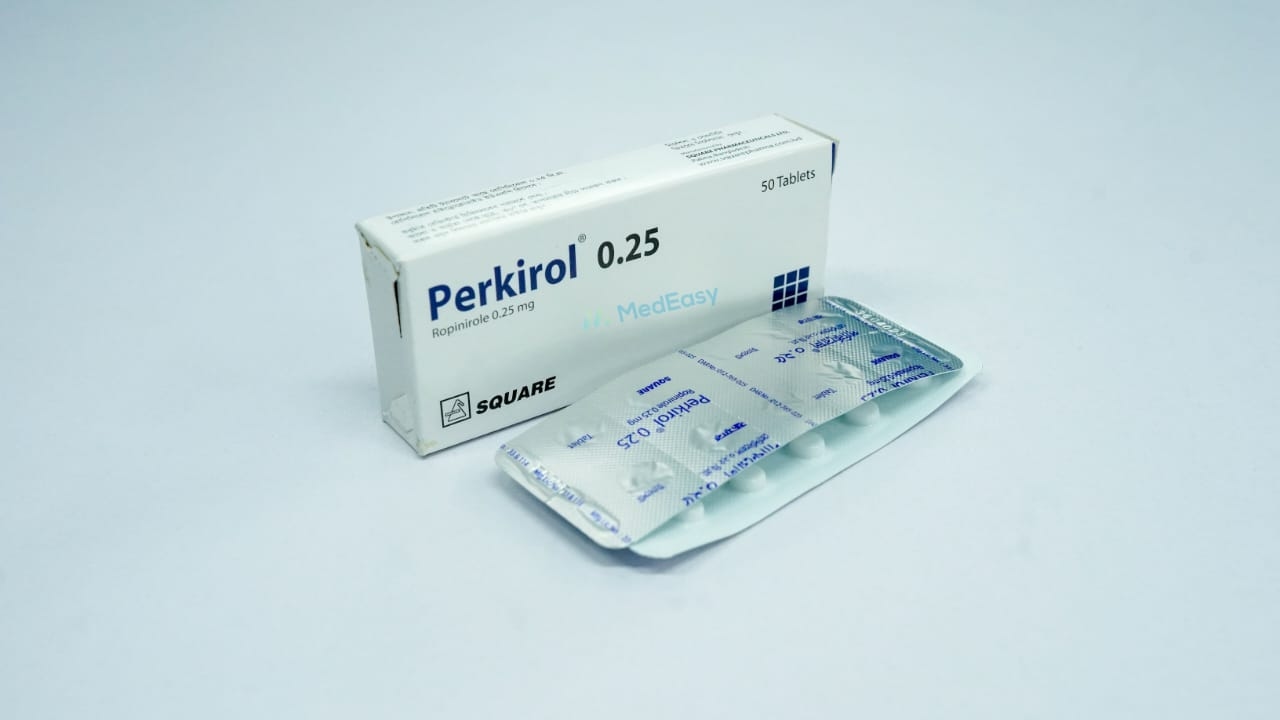
Generic medicine

Ropinirole: Brands, Price & Uses in Bangladesh

Ropinirole is a non-ergot dopamine agonist used in the following settings: Established / FDA-approved uses Idiopathic Parkinson's disease - as monotherapy in early disease and more.

Forms:Tablet

About Ropinirole

Indications of Ropinirole

Ropinirole is a non-ergot dopamine agonist used in the following settings:

Established / FDA-approved uses

  • Idiopathic Parkinson's disease - as monotherapy in early disease, or in combination with levodopa in more advanced disease to reduce "off" time and control motor fluctuations.
  • Moderate-to-severe primary Restless Legs Syndrome (RLS) - immediate-release Ropinirole; extended-release Ropinirole is approved only for Parkinson's disease, not for RLS.

Not established / not recommended

  • Ropinirole is not indicated for drug-induced or secondary parkinsonism, and evidence supporting use outside the above two indications is insufficient; it should not be used off-label without specialist guidance.

Dosage & Administration of Ropinirole

Parkinson's disease (immediate-release tablets)

WeekDose
Week 10.25 mg three times daily
Week 20.5 mg three times daily
Week 30.75 mg three times daily
Week 41 mg three times daily

After week 4, the daily dose may be increased by up to 1.5 mg/day on a weekly basis up to a dose of 9 mg/day, then by up to 3 mg/day weekly, to a usual maintenance range of 3-24 mg/day in three divided doses, individualized to response and tolerability. Ropinirole should be tapered gradually rather than stopped abruptly (see Precautions).

Parkinson's disease (extended-release tablets)

Initial dose: 2 mg once daily for 1-2 weeks, then increased in increments of 2 mg/day at weekly or longer intervals, up to a usual maintenance range of 2-24 mg once daily, based on response and tolerability. Extended-release tablets must be swallowed whole.

Restless Legs Syndrome (immediate-release tablets only)

TimingDose
Day 1-20.25 mg once daily, 1-3 hours before bedtime
Day 3-70.5 mg once daily
Week 20.75 mg once daily
Week 31 mg once daily

Dose may be titrated further thereafter if needed, up to a maximum of 4 mg once daily. Doses higher than those studied for RLS have not shown added benefit and increase the risk of augmentation (see Precautions).

Hepatic impairment

Ropinirole has not been well studied in hepatic impairment; since it is extensively metabolized by the liver, use with caution and consider a lower starting dose and slower titration in patients with hepatic impairment.

Renal impairment

No dose adjustment is generally needed in mild-to-moderate renal impairment. Use in severe renal impairment or in patients on dialysis has not been well studied for the immediate-release product and is not recommended for the extended-release product; specialist guidance is required.

Missed dose / discontinuation

If a dose of Ropinirole is missed, it should generally be skipped and the next dose taken at the usual time rather than doubling up, unless a physician advises otherwise. Ropinirole must never be stopped abruptly (see Precautions).

Side Effects of Ropinirole

Common side effects

  • Nausea, dizziness, drowsiness/somnolence
  • Vomiting, dyspepsia
  • Insomnia, fatigue, headache
  • Orthostatic hypotension, peripheral edema, syncope
  • Hallucinations and confusion (more frequent in elderly patients)

Serious side effects (seek medical attention)

  • Sudden onset of sleep during daily activities, including driving, without warning drowsiness
  • New or worsening impulse control problems (compulsive gambling, hypersexuality, binge eating, compulsive shopping)
  • Severe dyskinesia when used with levodopa
  • Symptoms of dopamine agonist withdrawal syndrome or a neuroleptic malignant-like syndrome (fever, muscle rigidity, confusion) if Ropinirole is stopped abruptly
  • Augmentation (earlier onset or worsening of restless legs symptoms) with long-term RLS treatment

Contraindications of Ropinirole

Ropinirole is contraindicated in patients with known hypersensitivity to Ropinirole or any component of the formulation. There are no other well-established absolute contraindications; conditions such as hepatic or renal impairment, elderly age, or a history of psychiatric symptoms require caution and dose adjustment rather than avoidance (see Precautions and Use in Special Populations).

Frequently Asked Questions about Ropinirole

What is Ropinirole used for?

Ropinirole is used to treat the motor symptoms of Parkinson's disease (alone or with levodopa) and to relieve moderate-to-severe primary Restless Legs Syndrome.

How should I take Ropinirole?

Take Ropinirole exactly as prescribed, at the same time(s) each day, with or without food. Extended-release tablets must be swallowed whole and never crushed or chewed. Do not stop taking Ropinirole suddenly without talking to your doctor, since abrupt discontinuation can cause a withdrawal syndrome with fever and confusion.

Can Ropinirole make me suddenly fall asleep?

Yes. Some patients taking Ropinirole have fallen asleep suddenly during daily activities, including driving, sometimes without warning. Use caution when driving or operating machinery, especially after starting treatment or increasing the dose.

Can Ropinirole cause unusual urges or behaviors?

Yes. Ropinirole has been associated with impulse control problems such as compulsive gambling, hypersexuality, binge eating, or compulsive shopping. Tell your doctor immediately if you or your family notice these behaviors, as the dose may need to be reduced or the medicine stopped.

Is Ropinirole safe during pregnancy or breastfeeding?

Ropinirole should be used in pregnancy only if the potential benefit justifies the potential risk to the baby, and only under medical supervision. It may also reduce breast milk production, so breastfeeding mothers should consult their physician before use.

Does smoking affect how Ropinirole works?

Yes. Smoking speeds up the breakdown of Ropinirole in the body, so if you start or stop smoking while taking Ropinirole, your doctor may need to adjust your dose.

What should I do if I take too much Ropinirole?

An overdose of Ropinirole can cause nausea, vomiting, dizziness, hallucinations, and low blood pressure. Seek immediate medical attention or contact emergency services/poison control rather than trying to manage it at home.

Disclaimer

The information provided is accurate to the best of our knowledge, but it does not replace professional medical advice. We cannot guarantee its completeness or accuracy, and the absence of specific information about a drug should not be taken as an endorsement. We are not responsible for any consequences arising from this information, so please consult a healthcare professional for any concerns or questions.
DoctorBlogArticles