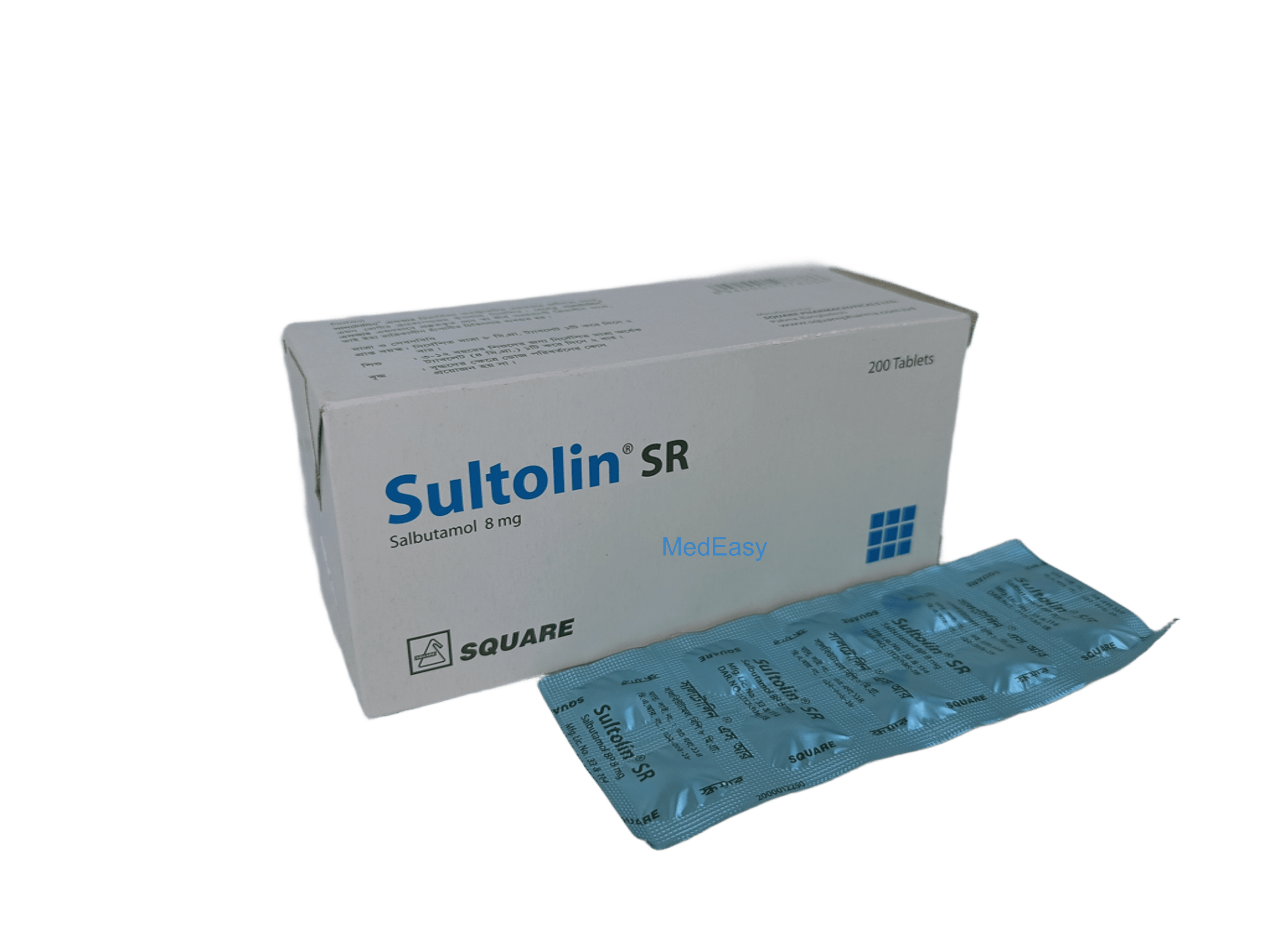
Generic medicine

Salbutamol: Brands, Price & Uses in Bangladesh

Salbutamol is a short-acting beta-2 adrenergic agonist (SABA) bronchodilator used for the relief and prevention of bronchospasm in reversible obstructive airway disease.

Forms:TabletSyrupRespirator SolutionInhalation Capsule

About Salbutamol

Indications of Salbutamol

Salbutamol is a short-acting beta-2 adrenergic agonist (SABA) bronchodilator used for the relief and prevention of bronchospasm in reversible obstructive airway disease.

Established / FDA-Approved Uses

  • Relief of acute bronchospasm (rescue/reliever therapy) in patients with asthma and chronic obstructive pulmonary disease (COPD), approved for patients 4 years of age and older for the inhaler.
  • Prevention of exercise-induced bronchospasm when taken shortly before exertion.

Guideline-Supported Uses

  • As the preferred as-needed reliever medication in stepwise asthma management guidelines (e.g. GINA), used alongside, not instead of, regular anti-inflammatory (inhaled corticosteroid) therapy.
  • Nebulized Salbutamol for symptomatic relief of bronchospasm during acute asthma or COPD exacerbations, including in hospital and emergency settings.

Adjunct / Combination Therapy Uses

  • Nebulized Salbutamol, often combined with ipratropium bromide, as adjunct bronchodilator therapy in acute severe asthma and COPD exacerbations.
  • As adjunct therapy (with intravenous dextrose/insulin and other standard measures), under specialist supervision, in the emergency management of hyperkalaemia.

Off-Label Use

  • Salbutamol tablets/syrup are used off-label as a tocolytic-adjacent bronchodilator in some regions, and nebulized Salbutamol has been trialed in bronchiolitis; however, evidence does not support routine use in bronchiolitis and this is not a recommended standard use.

Salbutamol is a bronchodilator only; it does not treat underlying airway inflammation and is not a substitute for inhaled corticosteroids in persistent asthma.

Dosage & Administration of Salbutamol

Inhaler (Metered-Dose Inhaler, 100 mcg/actuation) - Adults and Children ≥4 years

IndicationDose
Relief of acute bronchospasm1-2 inhalations (100-200 mcg) repeated every 4-6 hours as needed; some patients may respond to 1 inhalation every 4 hours
Prevention of exercise-induced bronchospasm2 inhalations 15-30 minutes before exercise

Nebulizer Solution

Age groupDoseFrequency
Adults and children ≥12 years2.5-5 mg diluted in normal salineUp to 4 times daily, or as directed for acute exacerbations
Children <12 years2.5 mg (weight/age-based, under medical supervision)Up to 4 times daily

Oral Tablets / Syrup

Age groupDose
Adults and children >12 years2-4 mg, 3-4 times daily (maximum single dose 8 mg where tolerated, under medical advice)
Children 6-12 years2 mg (5 mL syrup), 3-4 times daily
Children 2-6 years1-2 mg (2.5 mL syrup), 3-4 times daily

Intravenous Injection/Infusion (Hospital Use Only)

For severe acute bronchospasm unresponsive to inhaled therapy, Salbutamol may be given as a slow intravenous injection or infusion (typically 3-20 micrograms/minute), diluted as directed, under continuous medical and cardiac monitoring.

Doses should always be individualized to the lowest effective amount. An increasing need for Salbutamol indicates deteriorating asthma/COPD control and requires prompt medical reassessment of the overall treatment plan (see Precautions and Warnings).

Side Effects of Salbutamol

The most commonly reported side effects of Salbutamol are dose-related and include:

  • Fine tremor (especially of the hands), nervousness, and headache
  • Palpitations and tachycardia
  • Muscle cramps
  • Throat irritation, cough, and dry mouth (with inhaled forms)
  • Dizziness and restlessness

Less commonly, Salbutamol can cause hypokalemia (particularly with high or frequent doses), hyperglycemia, and peripheral vasodilation. Rarely, it can cause a life-threatening paradoxical bronchospasm or hypersensitivity reactions (see Precautions and Warnings and Contraindications). Seek prompt medical attention for chest pain, irregular heartbeat, or worsening breathing difficulty after use.

Contraindications of Salbutamol

Salbutamol is contraindicated in patients with known hypersensitivity to salbutamol or any component of the formulation. Prior hypersensitivity reactions have included urticaria, angioedema, rash, bronchospasm, and anaphylaxis.

Frequently Asked Questions about Salbutamol

What is Salbutamol used for?

Salbutamol is used to relieve and prevent bronchospasm (airway narrowing) in people with asthma or COPD, and to prevent exercise-induced bronchospasm when taken shortly before physical activity.

How quickly does Salbutamol work?

Inhaled Salbutamol usually starts working within 5-15 minutes, with peak effect around 1-2 hours and a duration of action of about 3-6 hours, making it suitable as a fast-acting reliever medicine.

Can Salbutamol be used during pregnancy?

Inhaled Salbutamol is generally continued during pregnancy as needed for asthma control, since poorly controlled asthma poses a greater risk to mother and baby than appropriately used reliever therapy. It should still be used only if the potential benefit justifies the potential risk, and under a physician's guidance, as adequate controlled studies in pregnant women are lacking.

What should I do if I need Salbutamol more often than usual?

Needing Salbutamol more frequently than prescribed, or needing it every day, can be a sign that your asthma or COPD is not well controlled. Do not simply increase the dose or frequency on your own; contact your physician promptly for reassessment of your treatment plan.

What are the common side effects of Salbutamol?

Common side effects of Salbutamol include fine tremor (especially of the hands), palpitations, fast heartbeat, headache, nervousness, and muscle cramps. Most are mild and dose-related. Seek medical attention if you experience chest pain, irregular heartbeat, or worsening breathing difficulty.

What should I do if I accidentally take too much Salbutamol?

An overdose of Salbutamol can cause a fast or irregular heartbeat, chest pain, tremor, seizures, and low potassium levels. If an overdose is suspected, seek immediate medical attention or contact a poison control center right away.

Disclaimer

The information provided is accurate to the best of our knowledge, but it does not replace professional medical advice. We cannot guarantee its completeness or accuracy, and the absence of specific information about a drug should not be taken as an endorsement. We are not responsible for any consequences arising from this information, so please consult a healthcare professional for any concerns or questions.

DoctorBlogArticles