10% Off
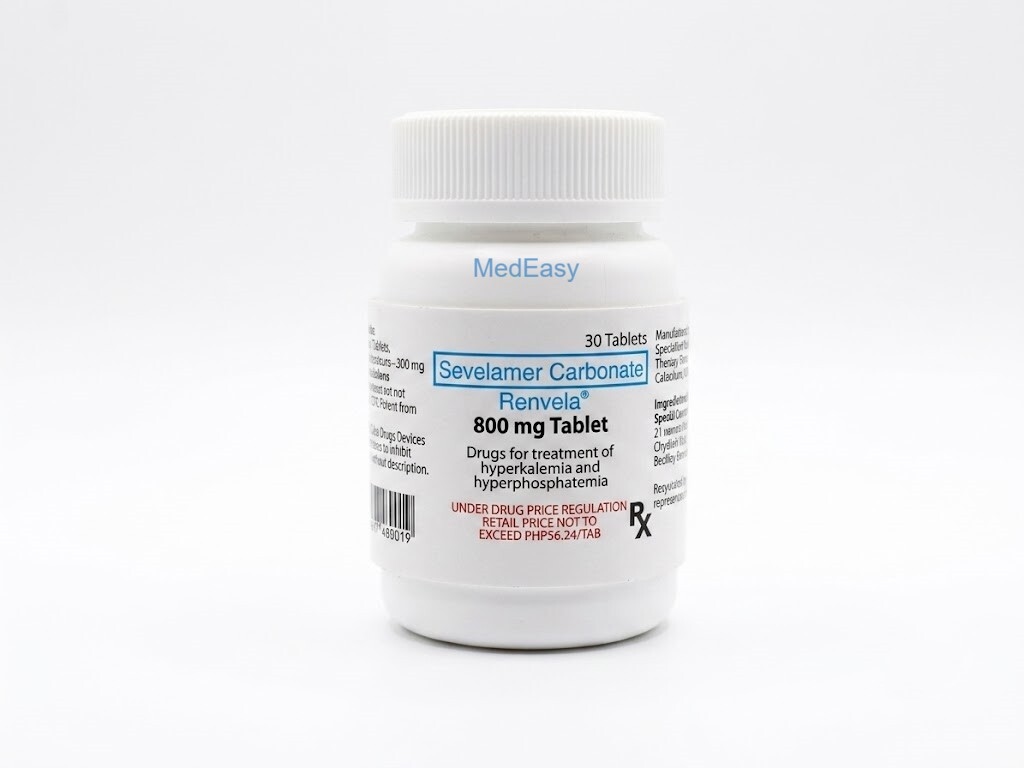
Sevel800 mg
ACME Laboratories Ltd.
৳558.00
Add to cart
Sevelamer Carbonate is a non-calcium, non-absorbed phosphate-binding agent indicated for the control of serum phosphorus (hyperphosphatemia) in patients with chronic kidney disease (CKD).
Sevelamer Carbonate is a non-calcium, non-absorbed phosphate-binding agent indicated for the control of serum phosphorus (hyperphosphatemia) in patients with chronic kidney disease (CKD).
Sevelamer Carbonate is not approved for patients without hyperphosphatemia or with normal renal function.
| Baseline Serum Phosphorus | Starting Dose of Sevelamer Carbonate |
|---|---|
| 5.5-7.5 mg/dL (1.8-2.4 mmol/L) | 800 mg three times daily with meals |
| ≥7.5 mg/dL (≥2.4 mmol/L) | 1600 mg three times daily with meals |
The dose of Sevelamer Carbonate is then titrated upward or downward by 800 mg per meal at intervals of about 2 weeks, based on serum phosphorus levels, until an acceptable phosphorus level is reached. Average maintenance doses of approximately 6-7 grams per day (in divided doses with meals) are commonly used.
Sevelamer Carbonate may be substituted for sevelamer hydrochloride on a gram-for-gram basis, with serum phosphorus monitored to confirm continued control.
| Body Surface Area (BSA) | Starting Dose of Sevelamer Carbonate |
|---|---|
| 0.75-1.2 m² | 800 mg per meal |
| >1.2 m² | 1600 mg per meal |
Doses of Sevelamer Carbonate are given three times daily with meals and titrated every 2 weeks initially, based on serum phosphorus response.
The most common side effects of Sevelamer Carbonate seen in clinical trials are gastrointestinal and generally dose-related:
Less common but more serious gastrointestinal events have been reported with Sevelamer Carbonate and other phosphate-binder resins, including dysphagia, tablet retention in the esophagus, bowel obstruction, bleeding, ulceration, perforation, and colitis; some cases required hospitalization or surgery. Seek prompt medical attention for severe abdominal pain, persistent vomiting, or inability to pass stool or gas while taking Sevelamer Carbonate.
Hypersensitivity reactions such as rash and pruritus have been reported post-marketing with Sevelamer Carbonate.
Sevelamer Carbonate is contraindicated in:
Disclaimer
The information provided is accurate to the best of our knowledge, but it does not replace professional medical advice. We cannot guarantee its completeness or accuracy, and the absence of specific information about a drug should not be taken as an endorsement. We are not responsible for any consequences arising from this information, so please consult a healthcare professional for any concerns or questions.