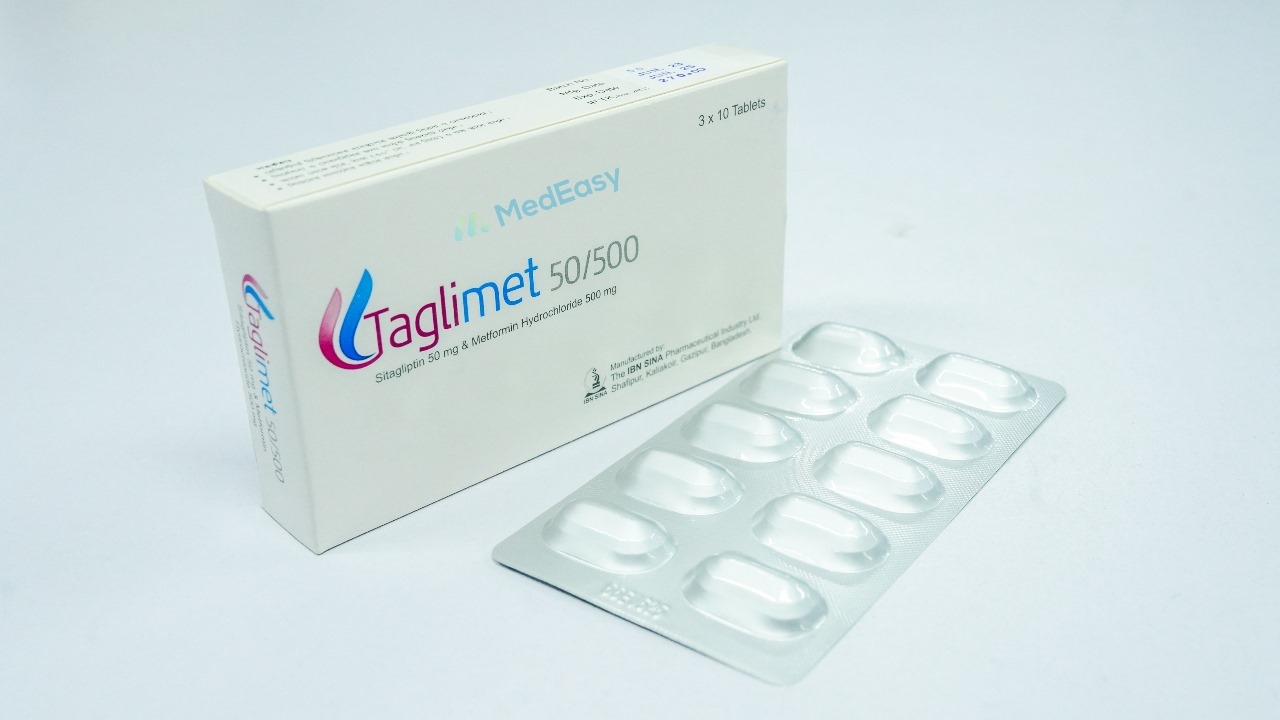
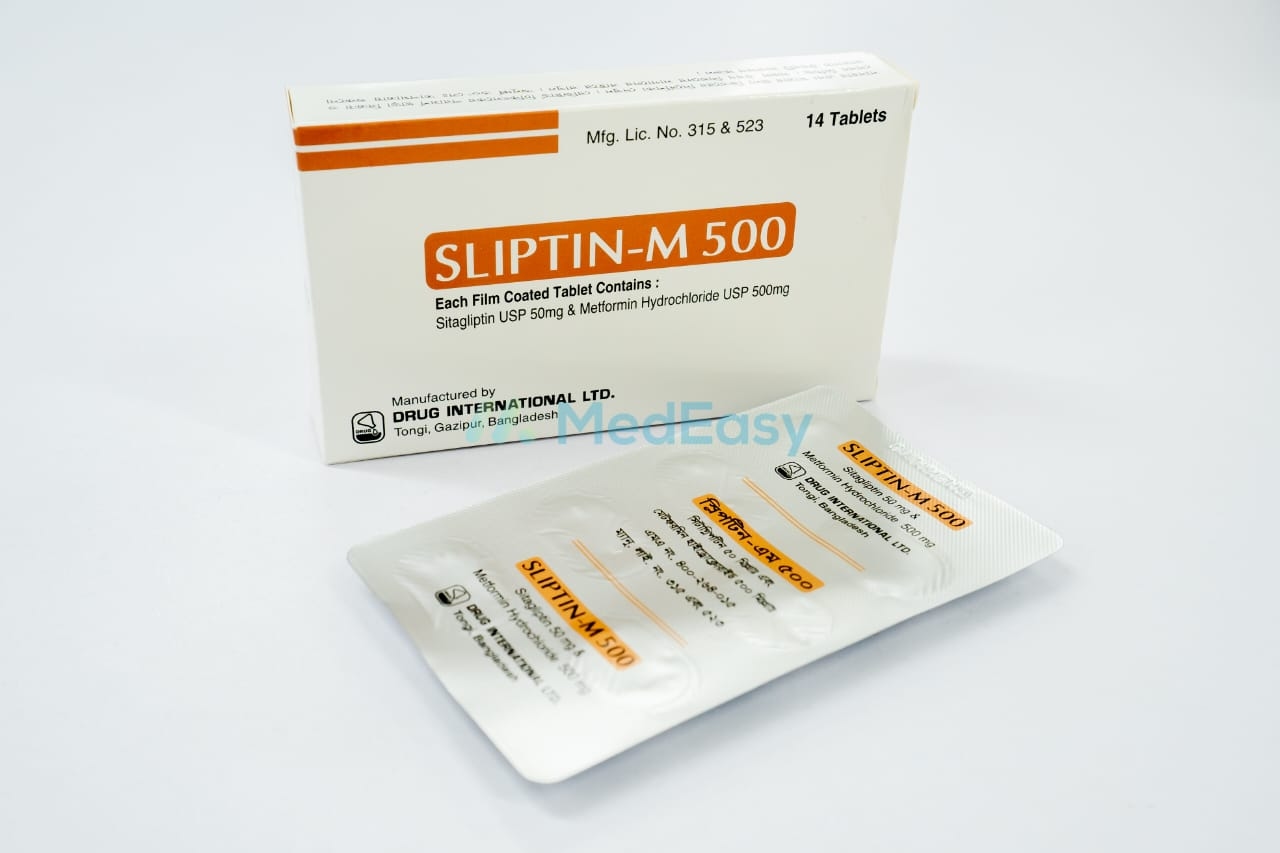
What is Sitagliptin + Metformin Hydrochloride used for?
+
Sitagliptin + Metformin Hydrochloride is used, along with diet and exercise, to help control blood sugar levels in adults with type 2 diabetes. Sitagliptin + Metformin Hydrochloride combines two medicines, sitagliptin and metformin, that work in different ways to lower blood sugar; Sitagliptin + Metformin Hydrochloride is not used for type 1 diabetes or diabetic ketoacidosis.
How is Sitagliptin + Metformin Hydrochloride usually taken?
+
Sitagliptin + Metformin Hydrochloride is usually taken twice daily with meals, swallowed whole with water, to help reduce stomach upset. The exact dose depends on individual factors such as current diabetes treatment and kidney function, and should be prescribed by a doctor.
What is the maximum recommended dose of Sitagliptin + Metformin Hydrochloride?
+
The maximum recommended daily dose of Sitagliptin + Metformin Hydrochloride is 100 mg of sitagliptin and 2000 mg of metformin, usually divided into two doses taken with meals. A doctor determines the right dose for each patient based on blood sugar control and kidney function.
Can Sitagliptin + Metformin Hydrochloride be taken with milk?
+
Sitagliptin + Metformin Hydrochloride is generally taken with meals rather than with a specific drink, and taking Sitagliptin + Metformin Hydrochloride with food (which may include milk) can help reduce stomach upset. There is no specific restriction on having milk with Sitagliptin + Metformin Hydrochloride, but Sitagliptin + Metformin Hydrochloride should always be taken as part of a meal, following a doctor's instructions.
What are the common side effects of Sitagliptin + Metformin Hydrochloride?
+
The most common side effects of Sitagliptin + Metformin Hydrochloride include diarrhea, nausea, flatulence, stomach discomfort, indigestion, headache, and upper respiratory tract infection. Low blood sugar (hypoglycemia) can occur, particularly when Sitagliptin + Metformin Hydrochloride is combined with insulin or a sulfonylurea (see Side Effects for the full list, including rare but serious reactions).
Is Sitagliptin + Metformin Hydrochloride safe to use during pregnancy?
+
There is not enough data to confirm the safety of Sitagliptin + Metformin Hydrochloride during pregnancy, and Sitagliptin + Metformin Hydrochloride should only be used if a doctor decides the benefit clearly outweighs the risk, since uncontrolled diabetes itself carries risks for mother and baby. Anyone who is pregnant or planning pregnancy while taking Sitagliptin + Metformin Hydrochloride should discuss their treatment with a doctor (see Pregnancy and Lactation).
Can children take Sitagliptin + Metformin Hydrochloride?
+
No. Safety and effectiveness of Sitagliptin + Metformin Hydrochloride have not been established in children, and Sitagliptin + Metformin Hydrochloride is not recommended for pediatric use (see Pediatric Uses).
What medicines can interact with Sitagliptin + Metformin Hydrochloride?
+
Sitagliptin + Metformin Hydrochloride can interact with iodinated contrast dyes used in imaging, alcohol, certain diuretics or seizure medicines (carbonic anhydrase inhibitors), some drugs that reduce metformin clearance, and other diabetes medicines such as insulin or sulfonylureas, which can increase the risk of low blood sugar or lactic acidosis. Always tell your doctor about all medicines, supplements, and health conditions before starting Sitagliptin + Metformin Hydrochloride (see Interaction).
What should I do if I miss a dose of Sitagliptin + Metformin Hydrochloride?
+
If a dose of Sitagliptin + Metformin Hydrochloride is missed, take it as soon as remembered unless it is almost time for the next dose, in which case the missed dose should be skipped. Do not take two doses together to make up for a missed one; if doses are missed often, consult a doctor.