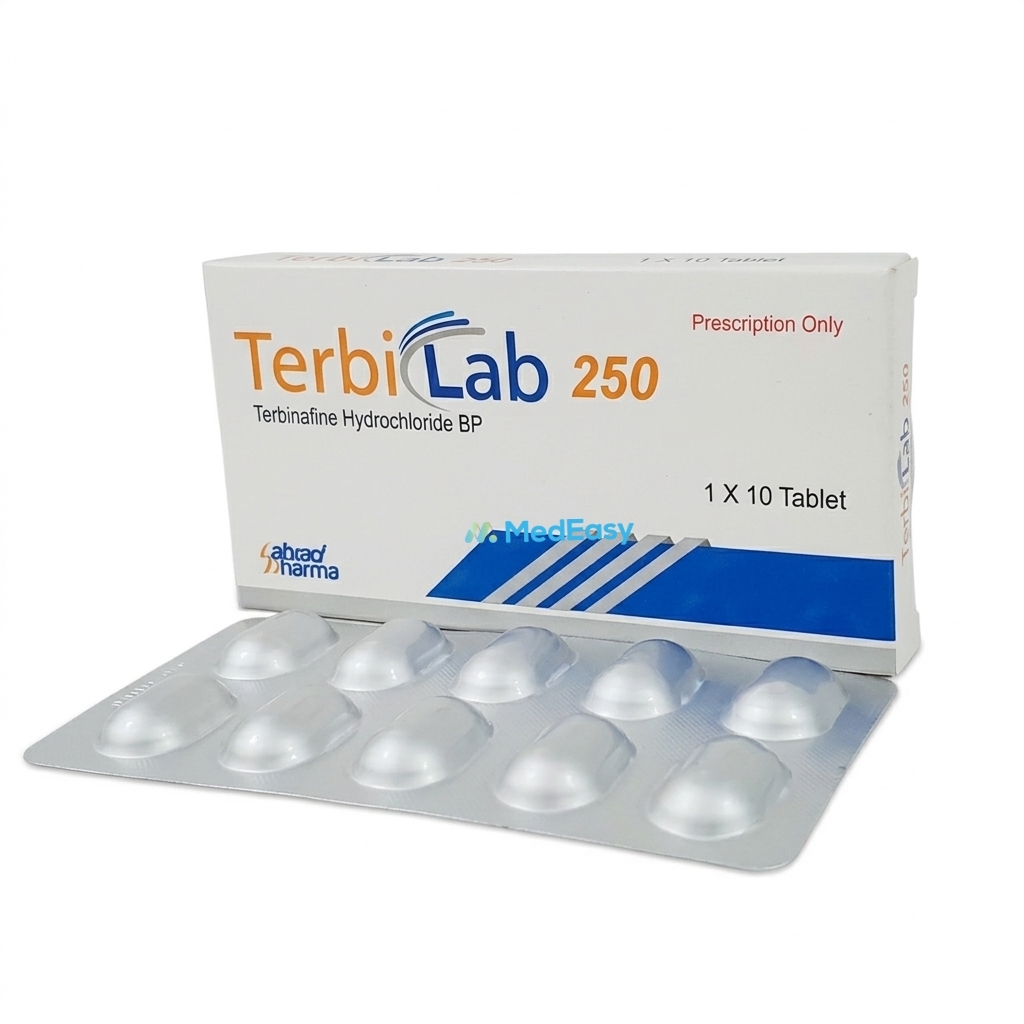
Generic medicine

Terbinafine: Brands, Price & Uses in Bangladesh

Terbinafine is an allylamine antifungal used to treat infections caused by dermatophyte fungi.

Forms:Tablet

About Terbinafine

Indications of Terbinafine

Terbinafine is an allylamine antifungal used to treat infections caused by dermatophyte fungi. Its indications can be classified by strength of evidence as follows:

Established / Approved Uses

  • Onychomycosis (fungal nail infection): Oral Terbinafine is indicated for the treatment of onychomycosis of the toenail or fingernail caused by dermatophytes (tinea unguium), confirmed by laboratory testing (KOH preparation or culture) where appropriate.
  • Tinea pedis, tinea cruris, tinea corporis: Topical Terbinafine (cream, gel, or spray) is indicated for superficial dermatophyte skin infections including athlete's foot, jock itch, and ringworm of the body. Oral Terbinafine may also be used for more extensive or refractory cases.
  • Tinea capitis (scalp ringworm): Oral Terbinafine granules are indicated in pediatric patients for tinea capitis caused by susceptible dermatophytes.

Uses Requiring Clinical Judgment / Extent-Dependent

Choice between topical and oral Terbinafine for tinea pedis, cruris, and corporis depends on the extent, severity, and site of infection, and response to prior topical therapy.

Off-Label Use

Terbinafine is sometimes used off-label for other dermatophyte or selected non-dermatophyte fungal skin infections at a physician's discretion; such use should be guided by clinical assessment and, where possible, mycological confirmation.

Dosage & Administration of Terbinafine

Dosing of Terbinafine depends on the indication, formulation, and patient's age/weight. Always follow the prescribing physician's instructions.

IndicationFormulationTypical Adult DoseTypical Duration
Onychomycosis, toenailOral tablet250 mg once daily12 weeks
Onychomycosis, fingernailOral tablet250 mg once daily6 weeks
Tinea pedis / cruris / corporisTopical cream/gel/sprayApply once or twice daily to affected area and surrounding skin1–4 weeks depending on site
Tinea pedis / cruris / corporis (extensive)Oral tablet250 mg once daily2–6 weeks
Tinea capitis (pediatric, ≥4 years)Oral granulesWeight-based (see Pediatric Uses)6 weeks

Oral Terbinafine tablets may be taken with or without food. Oral granules should be sprinkled on a spoonful of non-acidic, soft food (e.g., mashed potato) and swallowed without chewing. Topical Terbinafine should be applied to clean, dry skin, extending slightly beyond the visible edge of the rash; hands should be washed after application unless the hands themselves are being treated.

For hepatic and renal considerations, see Use in Special Populations.

Side Effects of Terbinafine

Common side effects of Terbinafine (mostly with oral use) include headache, gastrointestinal upset (diarrhea, dyspepsia, nausea, abdominal pain), and mild skin rash. Topical Terbinafine may cause local irritation, burning, redness, or itching at the application site.

Less common but serious side effects include:

  • Hepatotoxicity, including rare cases of liver failure requiring transplant or resulting in death (oral use) — see Precautions and Warnings.
  • Taste and smell disturbance or loss, which may be prolonged or, rarely, permanent (oral use).
  • Rare serious skin reactions, including Stevens-Johnson syndrome and toxic epidermal necrolysis.
  • Rare blood dyscrasias (e.g., neutropenia, agranulocytosis) with prolonged oral use.
  • Rare mood changes or depressive symptoms have been reported with oral use.

Patients should seek prompt medical attention for any severe rash, jaundice, dark urine, persistent nausea, or unusual bleeding/bruising.

Contraindications of Terbinafine

Terbinafine is contraindicated in:

  • Patients with known hypersensitivity to Terbinafine or any component of the formulation.
  • Patients with chronic or active liver disease (applies to oral Terbinafine, due to the risk of hepatotoxicity).

Frequently Asked Questions about Terbinafine

How does Terbinafine work to treat fungal infections?

Terbinafine works by blocking an enzyme called squalene epoxidase that fungi need to build their cell membranes. This causes the fungal cells to die, clearing the infection over the course of treatment.

How long does it take for Terbinafine to cure a nail infection?

Oral Terbinafine is typically taken for 6 weeks for fingernail infections and 12 weeks for toenail infections. Visible nail improvement continues for several months after treatment ends as the nail grows out, since Terbinafine does not repair already-damaged nail immediately.

Can I stop taking Terbinafine once my symptoms improve?

No. You should complete the full course of Terbinafine exactly as prescribed by your physician, even if your skin or nail appears better before the course ends. Stopping early can allow the fungal infection to return or become harder to treat.

What are the serious side effects of Terbinafine I should watch for?

Seek medical attention promptly if you notice yellowing of the skin or eyes, dark urine, persistent nausea, unusual tiredness, a severe or spreading skin rash, or a change in taste or smell while taking Terbinafine, as these may indicate liver problems or a serious skin reaction.

Is Terbinafine safe to use during pregnancy or breastfeeding?

Terbinafine should be used during pregnancy only if clearly needed, since data on its safety in pregnant women are limited; oral use is generally avoided unless no suitable alternative exists. Terbinafine passes into breast milk, so breastfeeding mothers should consult a physician before use.

Can Terbinafine interact with other medicines I am taking?

Yes. Terbinafine can increase levels of certain drugs such as some antidepressants and beta-blockers, and drugs like rifampin can reduce its effectiveness. Always tell your physician or pharmacist about all medicines you are taking before starting Terbinafine.

Disclaimer

The information provided is accurate to the best of our knowledge, but it does not replace professional medical advice. We cannot guarantee its completeness or accuracy, and the absence of specific information about a drug should not be taken as an endorsement. We are not responsible for any consequences arising from this information, so please consult a healthcare professional for any concerns or questions.

DoctorBlogArticles