
Generic medicine

Tobramycin: Brands, Price & Uses in Bangladesh

Tobramycin is an aminoglycoside antibiotic active against susceptible aerobic gram-negative bacteria, most notably Pseudomonas aeruginosa .

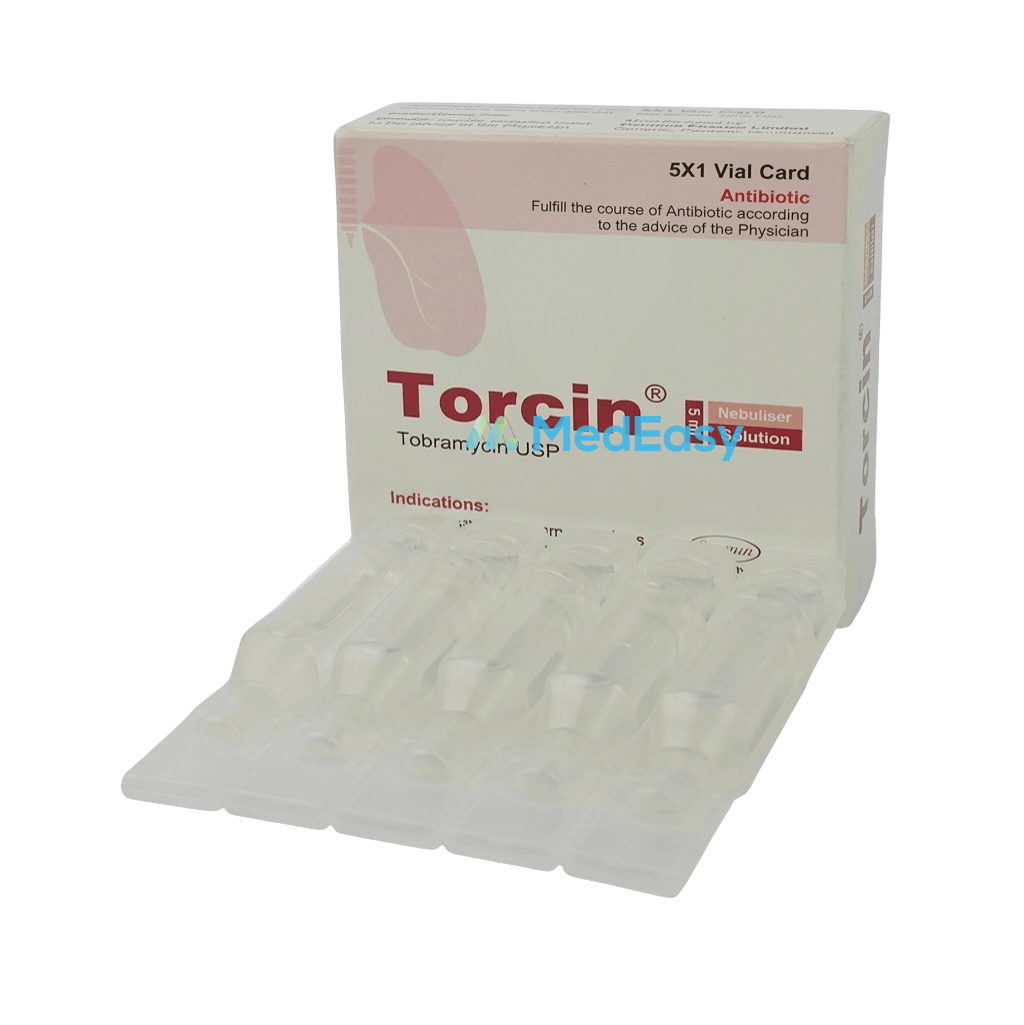
Forms:Ophthalmic SolutionOphthalmic OintmentNebuliser Solution

About Tobramycin

Indications of Tobramycin

Tobramycin is an aminoglycoside antibiotic active against susceptible aerobic gram-negative bacteria, most notably Pseudomonas aeruginosa. In Bangladesh, Tobramycin is marketed mainly as an ophthalmic solution/ointment and as a nebuliser (inhalation) solution; injectable (systemic) Tobramycin is used internationally for serious infections but is primarily a hospital-procured product rather than a common retail item locally.

Established / FDA-approved indications

  • Ophthalmic (eye drops/ointment): Treatment of superficial bacterial infections of the eye and its adnexa (e.g., bacterial conjunctivitis, keratitis, blepharitis) caused by susceptible organisms such as Staphylococcus aureus, Streptococcus pneumoniae, Pseudomonas aeruginosa, Haemophilus influenzae, and Escherichia coli.
  • Inhalation (nebuliser solution): Management of chronic pulmonary infection due to Pseudomonas aeruginosa in patients with cystic fibrosis, approved for patients 6 years of age and older.
  • Systemic (intravenous/intramuscular injection): Treatment of serious infections caused by susceptible strains of gram-negative bacteria, including septicaemia, complicated urinary tract infection, lower respiratory tract infection, meningitis, intra-abdominal infection, and skin/bone/soft-tissue infection, generally as part of a combination regimen for severe or life-threatening infection.

Guideline-supported / adjunct use

  • Often combined with a beta-lactam antibiotic for empirical or documented gram-negative sepsis, febrile neutropenia, or endocarditis due to susceptible organisms, in line with hospital antibiotic stewardship protocols.

Tobramycin is not effective against most gram-positive anaerobes or viral/fungal eye infections and should be reserved for infections proven or strongly suspected to be caused by susceptible bacteria.

Dosage & Administration of Tobramycin

Ophthalmic (Eye) Use

SeverityOphthalmic Solution (0.3%)Ophthalmic Ointment (0.3%)
Mild to moderate infection1-2 drops into the affected eye(s) every 4 hoursSmall ribbon (~1.25 cm) applied 2-3 times daily
Severe infection2 drops every hour until improvement, then reduce frequencyApplied every 3-4 hours until improvement, then reduce

Typical course of ophthalmic Tobramycin: 7-10 days, or as directed by the treating physician; do not use for longer than necessary.

Inhalation (Nebuliser Solution) - Cystic Fibrosis with Pseudomonas aeruginosa

One 300 mg/5 ml ampoule of Tobramycin inhaled via a hand-held nebuliser twice daily (morning and evening), doses spaced as close to 12 hours apart as possible and never less than 6 hours apart, in repeating cycles of 28 days on treatment followed by 28 days off treatment. Approved for patients 6 years of age and older.

Systemic (Intravenous/Intramuscular) Use - Serious Gram-Negative Infections

PopulationUsual Dose
Adults, normal renal function (serious infection)3 mg/kg/day in 3 equally divided doses every 8 hours
Adults, life-threatening infectionUp to 5 mg/kg/day in 3-4 divided doses, reduced to 3 mg/kg/day as soon as clinically indicated
Children (>1 week old)6-7.5 mg/kg/day in 3-4 equally divided doses
Neonates (≤1 week old)Up to 4 mg/kg/day in 2 equal doses every 12 hours

Renal Impairment (Systemic Use)

Dose or dosing interval of systemic Tobramycin must be individualized based on creatinine clearance and, wherever possible, guided by serum Tobramycin level monitoring (peak and trough concentrations); a reduced maintenance dose or extended dosing interval is used after an initial loading dose in patients with renal impairment.

Antibiotic stewardship: Take/use Tobramycin exactly as prescribed by your physician; do not stop, extend, skip doses, or share this medicine with others without medical advice, as inappropriate use can worsen infection and promote antibiotic resistance.

Side Effects of Tobramycin

Ophthalmic use

  • Local burning, stinging, or itching after instillation
  • Conjunctival redness/hyperaemia
  • Eyelid swelling or itching (hypersensitivity)
  • Transient blurred vision

Inhalation (nebuliser) use

  • Voice alteration (hoarseness)
  • Tinnitus (usually reversible)
  • Cough, bronchospasm/wheeze
  • Taste disturbance

Systemic (injectable) use

  • Nephrotoxicity (rising serum creatinine, reduced urine output)
  • Ototoxicity - auditory (hearing loss, which may be irreversible) and/or vestibular (dizziness, vertigo, unsteadiness)
  • Neuromuscular blockade (muscle weakness, respiratory difficulty) in predisposed patients
  • Injection-site pain or phlebitis
  • Rash or other hypersensitivity reactions

The risk and severity of systemic toxicities are much lower with topical ophthalmic Tobramycin and generally low with inhaled Tobramycin, and are mainly a concern with systemic/injectable Tobramycin.

Contraindications of Tobramycin

Known hypersensitivity to Tobramycin or to any other aminoglycoside antibiotic, or to any excipient of the specific product being used.

Frequently Asked Questions about Tobramycin

What is Tobramycin used for?

Tobramycin is an antibiotic used to treat bacterial eye infections (as drops or ointment), to control chronic lung infection with Pseudomonas aeruginosa in cystic fibrosis (as an inhaled nebuliser solution), and, in hospital settings, to treat serious systemic gram-negative bacterial infections by injection.

Can Tobramycin eye drops cause the same serious side effects as the injection?

No. Ophthalmic Tobramycin has minimal systemic absorption, so serious risks such as kidney damage and hearing loss associated with injectable Tobramycin are very unlikely with proper eye-drop use; local irritation is the most common issue.

Is Tobramycin safe during pregnancy?

Tobramycin should be used in pregnancy only if clearly needed and if your physician determines that the potential benefit justifies the potential risk to the baby, since aminoglycosides can cross the placenta; always consult your physician before use.

What are the most serious risks of injectable Tobramycin?

The most serious risks are kidney damage (nephrotoxicity) and hearing/balance damage (ototoxicity), which can be irreversible, as well as neuromuscular blockade in susceptible patients. Your physician will monitor kidney function and, where possible, blood levels of Tobramycin during treatment.

Can I stop taking Tobramycin once I feel better?

No. Take/use Tobramycin exactly as prescribed by your physician and complete the full course; do not stop, extend, skip doses, or share this medicine with others without medical advice, as doing so can allow the infection to return and promote antibiotic resistance.

How is the inhaled form of Tobramycin used for cystic fibrosis?

Tobramycin nebuliser solution is inhaled twice daily using a nebuliser device, in repeating cycles of 28 days on treatment followed by 28 days off treatment, as prescribed by a physician.

Disclaimer

The information provided is accurate to the best of our knowledge, but it does not replace professional medical advice. We cannot guarantee its completeness or accuracy, and the absence of specific information about a drug should not be taken as an endorsement. We are not responsible for any consequences arising from this information, so please consult a healthcare professional for any concerns or questions.
DoctorBlogArticles