10% Off
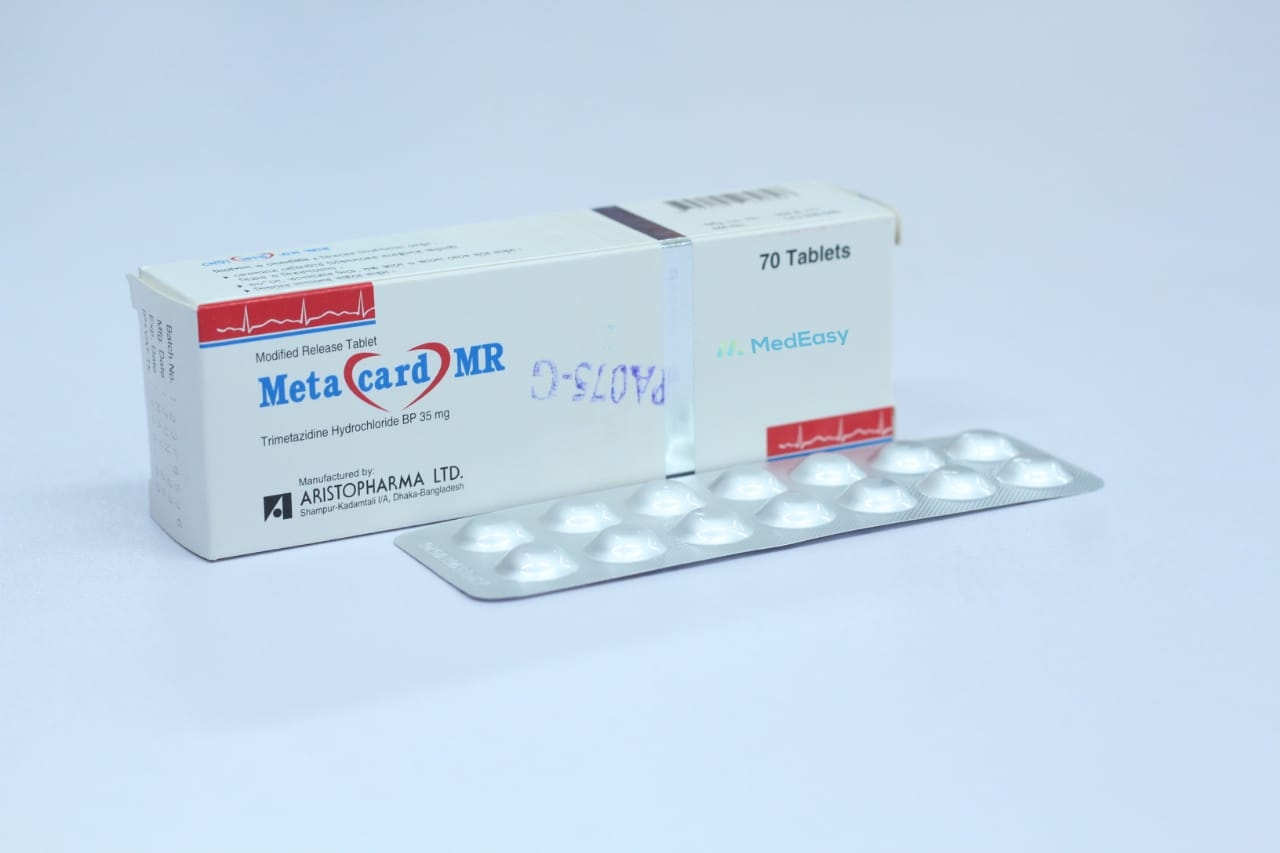
Metacard MR35 mg
Aristopharma Ltd.
৳126.00
Add to cart
Trimetazidine Dihydrochloride is indicated as add-on (adjunct) therapy for the symptomatic treatment of adult patients with stable angina pectoris who are inadequately controlled by and more.
Trimetazidine Dihydrochloride is indicated as add-on (adjunct) therapy for the symptomatic treatment of adult patients with stable angina pectoris who are inadequately controlled by, or are intolerant to, first-line antianginal therapies (such as beta-blockers or calcium channel blockers).
Full antianginal benefit is generally assessed after about three months of treatment; if no adequate response is seen, the physician may reconsider therapy.
| Formulation | Dose |
|---|---|
| Modified-release (MR) tablet 35 mg | One tablet twice daily, with meals (morning and evening) |
| Immediate-release tablet 20 mg | One tablet three times daily, with meals |
| Creatinine Clearance | Recommended Dose |
|---|---|
| 30–60 mL/min (moderate impairment) | 35 mg once daily (morning) or 20 mg twice daily |
| Below 30 mL/min (severe impairment) | Contraindicated — see Contraindications |
Elderly patients, particularly those with reduced renal function, should be dosed cautiously; the renal-impairment dosing schedule above should be applied if creatinine clearance is reduced.
No well-established dose adjustment has been defined for hepatic impairment; use with caution and physician supervision.
Antianginal benefit with Trimetazidine Dihydrochloride should be reassessed after approximately three months of treatment; if no symptomatic improvement is observed, the physician should consider discontinuing therapy.
Adverse effects reported with Trimetazidine Dihydrochloride are usually mild and transient. Common effects include:
Important (uncommon/rare) effects: Movement disorders — parkinsonian symptoms (tremor, rigidity, akinesia), gait instability, restless legs syndrome — have been reported, usually reversible after discontinuation (see Precautions and Warnings). Other rare effects include palpitations, extrasystoles, tachycardia, hypotension, and, very rarely, hepatic disorders and severe skin reactions (e.g., acute generalized exanthematous pustulosis).
Trimetazidine Dihydrochloride is contraindicated in patients with:
Disclaimer
The information provided is accurate to the best of our knowledge, but it does not replace professional medical advice. We cannot guarantee its completeness or accuracy, and the absence of specific information about a drug should not be taken as an endorsement. We are not responsible for any consequences arising from this information, so please consult a healthcare professional for any concerns or questions.