
Generic medicine

Vecuronium Bromide: Brands, Price & Uses in Bangladesh

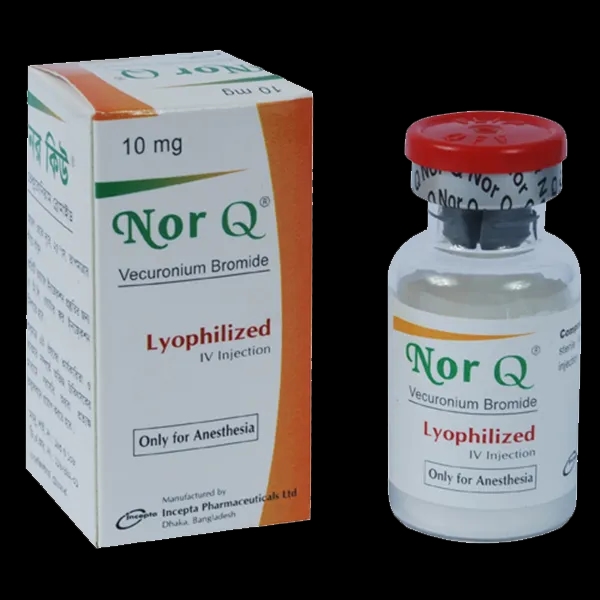
Vecuronium Bromide is an FDA-approved, established treatment indicated as an adjunct to general anesthesia for the following uses: Facilitation of endotracheal intubation: Vecuronium Bromide is used…

Forms:IV Injection

About Vecuronium Bromide

Indications of Vecuronium Bromide

Vecuronium Bromide is an FDA-approved, established treatment indicated as an adjunct to general anesthesia for the following uses:

  • Facilitation of endotracheal intubation: Vecuronium Bromide is used to produce the skeletal muscle relaxation required for smooth and rapid endotracheal tube placement during induction of general anesthesia.
  • Skeletal muscle relaxation during surgery: Vecuronium Bromide provides sustained muscle relaxation to facilitate surgical procedures under general anesthesia.
  • Facilitation of mechanical ventilation: Vecuronium Bromide is used in the intensive care setting as an adjunct to provide muscle relaxation in mechanically ventilated patients when required.

Vecuronium Bromide has no sedative, analgesic, or anesthetic properties of its own and must always be given together with adequate general anesthesia or sedation and analgesia.

Dosage & Administration of Vecuronium Bromide

Vecuronium Bromide is administered only as an intravenous injection or infusion by, or under the direct supervision of, an anesthesiologist or clinician experienced in the use of neuromuscular blocking agents and airway management, with facilities for immediate tracheal intubation and mechanical ventilation available at all times.

Adult Dosing

PurposeDoseNotes
Initial (intubating) dose0.08-0.1 mg/kg IV bolusProduces intubation conditions in approximately 2.5-3 minutes
Initial dose with prior succinylcholine0.04-0.06 mg/kg IVProvides approximately 25-40 minutes of muscle relaxation
Initial dose with volatile (inhalation) anestheticsReduced by approximately 15% (0.06-0.085 mg/kg)Volatile anesthetics potentiate neuromuscular blockade
Maintenance dose0.01-0.015 mg/kg IVGiven at approximately 12-15 minute intervals, guided by twitch response monitoring
Continuous IV infusionApproximately 0.8-1.2 mcg/kg/min (range up to 1.4 mcg/kg/min)Initiated after early spontaneous recovery from an initial bolus, titrated to maintain the desired degree of twitch suppression

Pediatric Dosing

  • Children 1-10 years: may require a slightly higher initial dose than adults and more frequent maintenance dosing.
  • Infants 7 weeks to 1 year: generally more sensitive to Vecuronium Bromide on a mg/kg basis, with a longer time to recovery; dosing should be individualized and closely monitored.
  • Neonates and infants under 7 weeks: safety and effectiveness have not been established; use only with extreme caution and continuous neuromuscular monitoring.
  • Children 10-16 years: dosing is generally similar to that used in adults.

Renal and Hepatic Impairment

  • Renal impairment: no clinically significant prolongation of action is expected when the patient is otherwise well prepared; however, individual response should still be monitored.
  • Hepatic impairment: recovery time may be prolonged because Vecuronium Bromide undergoes some hepatic metabolism and biliary excretion; dose reduction and close monitoring of neuromuscular function are recommended.

Dosing should always be individualized and guided by peripheral nerve stimulator (twitch) monitoring where available. See Reconstitution for preparation instructions and Use in Special Populations for dosing in obesity and other conditions.

Side Effects of Vecuronium Bromide

The most significant risk associated with Vecuronium Bromide is an extension of its expected pharmacological action beyond the period needed, resulting in prolonged skeletal muscle weakness or paralysis, including of the respiratory muscles, which can lead to respiratory insufficiency or apnea if not properly managed with ventilatory support.

Other reported side effects include:

  • Skin flushing
  • Hypotension
  • Tachycardia or, less commonly, bradycardia
  • Bronchospasm
  • Rash or urticaria

Rare but serious: severe anaphylactic or anaphylactoid reactions, which can be life-threatening, have been reported with Vecuronium Bromide and other neuromuscular blocking agents. Prolonged use in the intensive care unit has been associated with prolonged muscle weakness, myopathy, and muscle atrophy that may take an extended period to resolve.

Contraindications of Vecuronium Bromide

Vecuronium Bromide is contraindicated in patients with a known history of hypersensitivity to vecuronium bromide or the bromide ion. There are no other well-established absolute contraindications to Vecuronium Bromide; conditions such as hepatic/renal impairment, myasthenia gravis, electrolyte imbalance, and obesity are important precautions requiring dose adjustment and enhanced monitoring rather than absolute contraindications (see Precautions and Warnings).

Frequently Asked Questions about Vecuronium Bromide

What is Vecuronium Bromide used for?

Vecuronium Bromide is used as an adjunct to general anesthesia to relax skeletal muscles, making it easier to place a breathing tube (endotracheal intubation) and to keep muscles relaxed during surgery or while a patient is on a ventilator. It does not put you to sleep or relieve pain by itself.

Will I be awake or feel pain while receiving Vecuronium Bromide?

No. Vecuronium Bromide only relaxes and paralyzes the muscles; it has no effect on consciousness or pain. It is always given together with general anesthesia or adequate sedation and pain relief, and only in a hospital or operating-room setting by trained anesthesia staff.

Who should not receive Vecuronium Bromide?

Vecuronium Bromide should not be given to anyone with a known allergy (hypersensitivity) to vecuronium bromide or the bromide ion. Extra caution is needed, though not an absolute prohibition, in people with liver or kidney problems, certain nerve-muscle diseases such as myasthenia gravis, electrolyte imbalances, or significant obesity.

What are the possible side effects of Vecuronium Bromide?

Vecuronium Bromide can cause skin flushing, low blood pressure, changes in heart rate, and bronchospasm. The main risk is that its muscle-relaxing effect can last longer than intended, causing prolonged weakness or difficulty breathing, which is why it is only given where breathing can be supported with a ventilator. Rare but serious allergic (anaphylactic) reactions have also been reported.

Can Vecuronium Bromide be used during pregnancy or breastfeeding?

Vecuronium Bromide should be used during pregnancy only if clearly needed, such as during cesarean section under an anesthesiologist's care, since safety data in pregnancy are limited. It is not known whether it passes into breast milk, so caution is advised and a physician should be consulted before breastfeeding after receiving this medicine.

What happens if too much Vecuronium Bromide is given?

An overdose of Vecuronium Bromide can cause prolonged, profound muscle paralysis and difficulty or inability to breathe on one's own. This is a medical emergency that requires immediate attention from the treating medical team, who will support breathing with a ventilator and may give a reversal medicine; because Vecuronium Bromide is only given in a monitored hospital setting, the medical team is already present to manage this promptly.

Disclaimer

The information provided is accurate to the best of our knowledge, but it does not replace professional medical advice. We cannot guarantee its completeness or accuracy, and the absence of specific information about a drug should not be taken as an endorsement. We are not responsible for any consequences arising from this information, so please consult a healthcare professional for any concerns or questions.
DoctorBlogArticles