Generic medicine

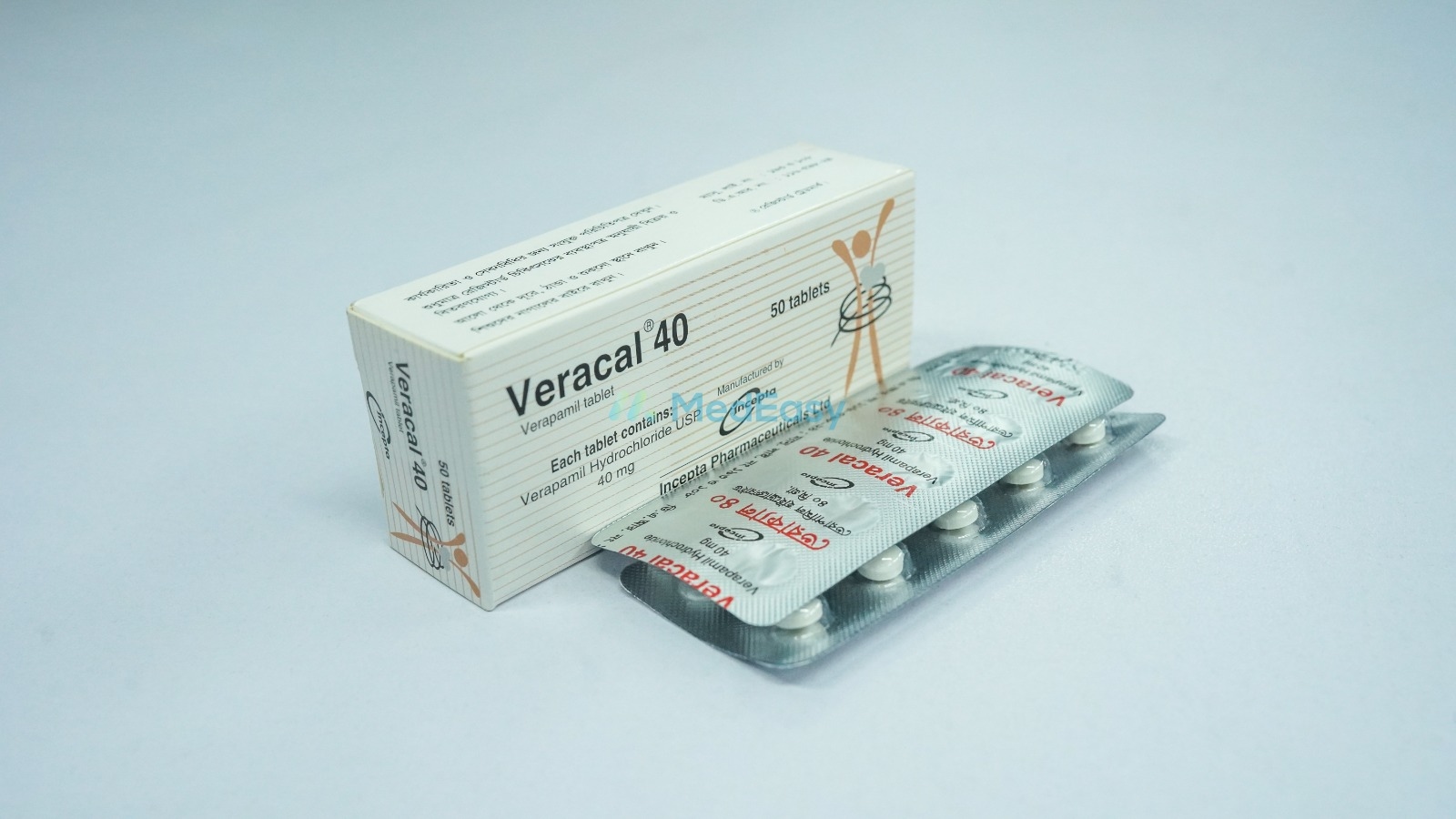
Verapamil Hydrochloride: Brands, Price & Uses in Bangladesh

Verapamil Hydrochloride is a non-dihydropyridine calcium channel blocker used for the following indications and more.

Forms:TabletIV Infusion

About Verapamil Hydrochloride

Indications of Verapamil Hydrochloride

Verapamil Hydrochloride is a non-dihydropyridine calcium channel blocker used for the following indications, classified by strength of evidence:

Established/FDA-approved uses

  • Hypertension: management of essential hypertension, either alone or in combination with other antihypertensive agents.
  • Angina: chronic stable (effort-associated) angina, and vasospastic (Prinzmetal's variant) angina; also used for unstable angina at rest.
  • Supraventricular arrhythmias: control of ventricular rate in chronic atrial fibrillation or atrial flutter; prophylaxis of repetitive paroxysmal supraventricular tachycardia (PSVT); rapid conversion of PSVT to normal sinus rhythm (intravenous formulation).

Adjunct/combination-therapy use

Verapamil Hydrochloride is frequently combined with a thiazide diuretic, an ACE inhibitor, or a long-acting nitrate when a single agent does not adequately control blood pressure or angina symptoms.

Off-label uses (not FDA-approved; based on limited evidence/clinical experience)

  • Prophylaxis of migraine and cluster headache.
  • Symptomatic treatment of hypertrophic cardiomyopathy.

The decision to use Verapamil Hydrochloride for any indication, especially off-label ones, should be individualized by a physician.

Dosage & Administration of Verapamil Hydrochloride

Dosage of Verapamil Hydrochloride must be individualized based on indication, formulation, patient response, and tolerability. Typical adult dosing ranges are summarized below; always follow the prescribing physician's instructions.

IndicationTypical adult dose
Hypertension (immediate-release)80 mg three times daily, titrated to response (usual range 240-480 mg/day in divided doses)
Hypertension (sustained-release)120-240 mg once daily, may be increased up to 480 mg/day
Chronic stable / vasospastic angina80-120 mg three times daily (immediate-release); up to 480 mg/day in divided or sustained-release doses
Supraventricular arrhythmia prophylaxis (oral)240-480 mg/day in divided doses
Acute PSVT (intravenous, adult)5-10 mg (0.075-0.15 mg/kg) IV over at least 2 minutes; a repeat dose of 10 mg may be given after 15-30 minutes if needed, under continuous cardiac monitoring

Renal and hepatic impairment

Dose reduction and careful titration are recommended in patients with hepatic impairment, as Verapamil Hydrochloride clearance is significantly reduced (up to 70% of normal). Caution and slower titration are also advised in significant renal impairment.

Missed dose

If a dose of Verapamil Hydrochloride is missed, it should be taken as soon as remembered unless it is close to the time of the next dose, in which case the missed dose should be skipped. Doses should not be doubled.

Side Effects of Verapamil Hydrochloride

Side effects of Verapamil Hydrochloride vary by formulation and dose. Constipation is notably common and characteristic of Verapamil Hydrochloride among calcium channel blockers.

Common

  • Constipation
  • Peripheral edema (swelling of the ankles/feet)
  • Headache
  • Dizziness or lightheadedness
  • Fatigue
  • Flushing
  • Nausea

Less common but clinically important

  • Bradycardia (slow heart rate)
  • Hypotension (low blood pressure)
  • AV block (first-, second-, or third-degree)
  • Worsening of heart failure symptoms in susceptible patients
  • Elevated liver enzymes
  • Gingival hyperplasia (with long-term use)

Patients should seek prompt medical attention for signs of very slow heartbeat, severe dizziness/fainting, or worsening shortness of breath while taking Verapamil Hydrochloride.

Contraindications of Verapamil Hydrochloride

Verapamil Hydrochloride is contraindicated in patients with:

  • Known hypersensitivity to Verapamil Hydrochloride or any component of the formulation.
  • Severe left ventricular dysfunction (e.g., decompensated heart failure).
  • Hypotension (systolic blood pressure less than 90 mmHg) or cardiogenic shock.
  • Sick sinus syndrome or second- or third-degree atrioventricular (AV) block, except in patients with a functioning artificial pacemaker.
  • Atrial fibrillation or atrial flutter associated with an accessory bypass tract (e.g., Wolff-Parkinson-White syndrome or Lown-Ganong-Levine syndrome), as Verapamil Hydrochloride can accelerate the ventricular rate via the accessory pathway.
  • Concomitant use of intravenous beta-blockers (particularly intravenous Verapamil Hydrochloride together with an intravenous beta-blocker), due to the risk of severe hypotension, bradycardia, and asystole.

Frequently Asked Questions about Verapamil Hydrochloride

What is Verapamil Hydrochloride used for?

Verapamil Hydrochloride is used to treat high blood pressure (hypertension), certain types of chest pain (angina, including exercise-induced and vasospastic angina), and to control heart rate in certain fast heart rhythm conditions such as atrial fibrillation, atrial flutter, and paroxysmal supraventricular tachycardia.

How should I take Verapamil Hydrochloride?

Immediate-release tablets of Verapamil Hydrochloride are usually taken multiple times a day with or without food, while sustained/extended-release forms are usually taken once or twice daily and must be swallowed whole, not crushed or chewed. Always follow your physician's specific instructions and do not change your dose without medical advice.

What are the common side effects of Verapamil Hydrochloride?

The most common side effects of Verapamil Hydrochloride include constipation, swelling of the ankles or feet, headache, dizziness, fatigue, and flushing. Less commonly, it can cause a slow heart rate, low blood pressure, or heart conduction problems. Contact your doctor promptly if you experience severe dizziness, fainting, a very slow pulse, or worsening shortness of breath.

Who should not take Verapamil Hydrochloride?

Verapamil Hydrochloride should not be used by people who are allergic to it, who have severe heart failure, very low blood pressure or cardiogenic shock, certain heart conduction disorders (sick sinus syndrome or second-/third-degree AV block without a pacemaker), atrial fibrillation/flutter with an accessory conduction pathway (such as Wolff-Parkinson-White syndrome), or who are receiving an intravenous beta-blocker at the same time as intravenous Verapamil Hydrochloride. Always disclose your full medical history to your physician before starting this medicine.

Can Verapamil Hydrochloride be taken during pregnancy or breastfeeding?

Verapamil Hydrochloride should be used during pregnancy only if the potential benefit justifies the potential risk to the fetus, and it does pass into breast milk. Pregnant or breastfeeding women should consult their physician before starting or continuing Verapamil Hydrochloride, so that risks and benefits can be weighed for their specific situation.

What should I do if I miss a dose or take too much Verapamil Hydrochloride?

If you miss a dose of Verapamil Hydrochloride, take it as soon as you remember unless it is nearly time for your next dose, in which case skip the missed dose - do not double up. If you or someone else has taken too much Verapamil Hydrochloride and shows signs such as severe dizziness, fainting, a very slow heartbeat, or confusion, seek emergency medical care or contact a poison control center immediately.

Disclaimer

The information provided is accurate to the best of our knowledge, but it does not replace professional medical advice. We cannot guarantee its completeness or accuracy, and the absence of specific information about a drug should not be taken as an endorsement. We are not responsible for any consequences arising from this information, so please consult a healthcare professional for any concerns or questions.
DoctorBlogArticles
